
 John Ward
The Short Version
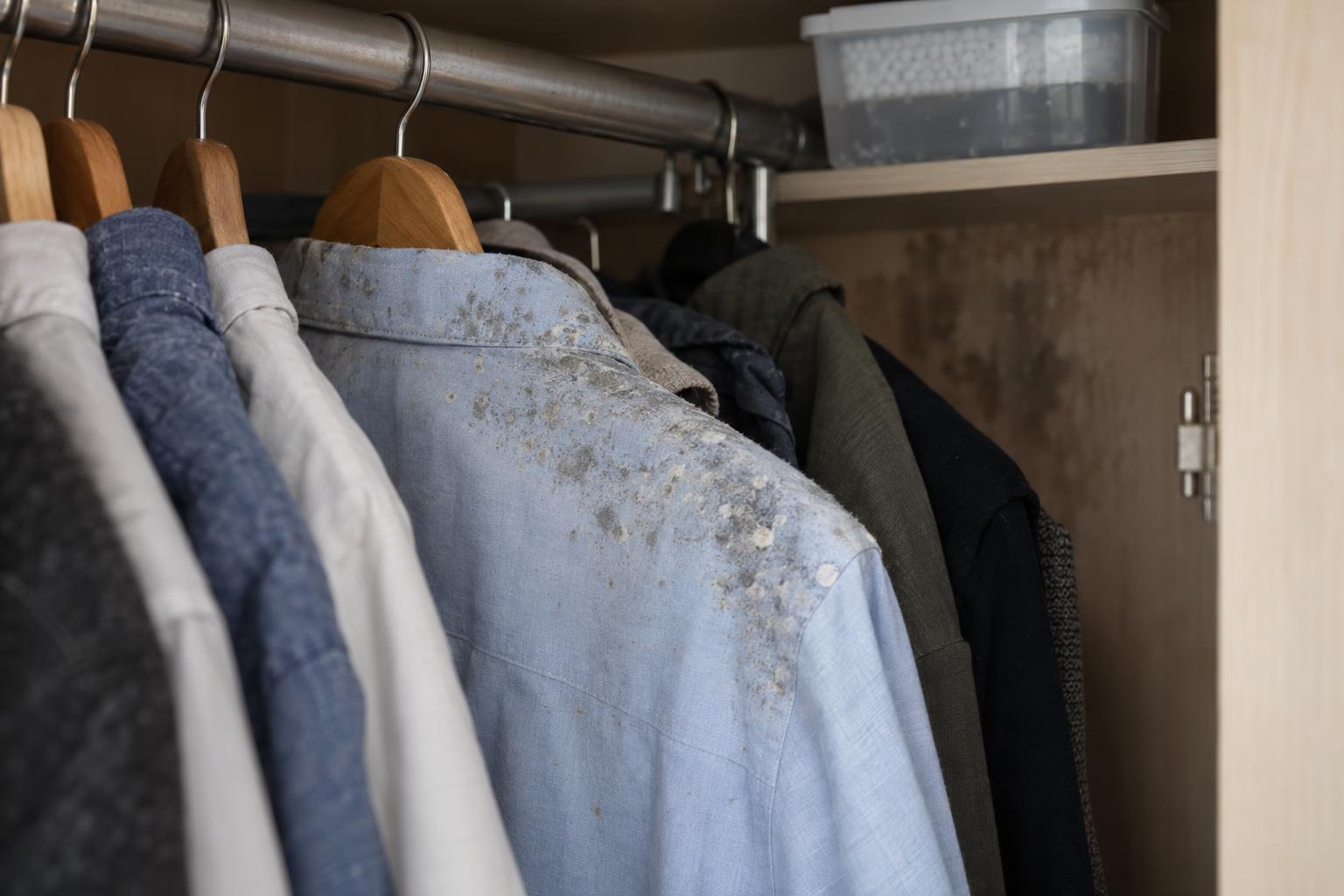
You pull out a shirt you have not worn in a month and it is speckled grey and smells of damp. Here is the answer, and one part of it is the opposite of what most people do. Brush the growth off outdoors first, then wash at the hottest temperature the care label allows, with detergent and an appropriate bleach: oxygen bleach for colours and delicates, chlorine bleach only on whites that are safe for it. Then check the item while it is still wet, because heat sets a mould stain permanently and a tumble dryer will lock in anything you missed.
That sequence follows the guidance published by the University of Georgia's textiles extension service, which exists to tell people how to save clothes rather than how to sell them detergent. The washing part is not complicated and you do not need a special product for it.
The Singapore part is where this gets more useful. If one shirt at the back of the cupboard has gone spotty, that is laundry. If several things in the same wardrobe have gone spotty, the clothes are a symptom and the cupboard is the problem, and washing everything will simply buy you a few weeks. We will get to how to tell the difference, because that is the bit the laundry guides leave out.
Key Takeaways
- Wash at the hottest temperature the care label allows, with oxygen bleach for colours or chlorine bleach for safe whites
- Never tumble dry or iron until the stain is gone, because heat sets mould stains permanently
- Singapore averages 84% relative humidity outdoors, and mould needs only about 60% to grow
- Damp laundry left in the machine can start to smell within 24 to 48 hours
- If several items in one wardrobe are affected, or it returns within weeks, the problem is the room and not the clothes
Why Clothes Mould So Fast in Singapore
Mould is not unusual here, and it is not a sign that you are unclean. It is a straightforward consequence of the numbers. Singapore's average relative humidity sits around 84%, and during prolonged rain it reaches saturation. The US Environmental Protection Agency recommends keeping indoor humidity below 60 percent, ideally between 30 and 50 percent. A closed wardrobe in an unairconditioned bedroom sits well above that line for most of the year.
84%
Singapore average relative humidity
60%
Level above which mould grows
24-48h
Damp laundry starts to smell
Add the other three things mould needs and a wardrobe supplies all of them. It is dark. It is still, because nothing moves the air between packed hangers. And cotton, linen and viscose are plant fibres, which is to say food. A bedroom that gets air conditioning for eight hours overnight and none for the other sixteen is worse than one with no aircon at all, because the cool surfaces collect condensation each morning as warm damp air returns.
This is also why the back corner goes first, and why the clothes you wear every week never seem to be affected. Air movement and daylight are doing the work. The dress you wore once in March and pushed to the end of the rail had neither.
Mould or Mildew, and Does It Matter
People search for both and it causes a lot of confusion, so here is the honest answer: for laundry purposes, the distinction does not change what you do. "Mildew" is a common name for growth that sits flat on a surface and usually looks white, grey or yellowish and powdery. "Mould" tends to describe growth that is fuzzier, raised, and darker. Both are fungi. Both come off the same way on a washable fabric.
What does matter is how deep it has gone. Powdery growth sitting on the surface of a cotton shirt will usually brush and wash out. Growth that has been there long enough to feed on the fibre leaves a stain behind after the fungus itself is dead, and that stain is a different problem with a different solution, covered further down.
Does the colour tell you anything?
Not reliably, and be sceptical of anyone who says it does. Dark growth on clothing is not automatically the black mould people worry about, and you cannot identify a species by eye. For a washable garment it also does not matter, because the treatment is the same either way. Handle all of it with the same sensible care.
Before You Put Anything in the Machine
Two things happen before the wash, and skipping either one is what turns a small job into a bigger one.
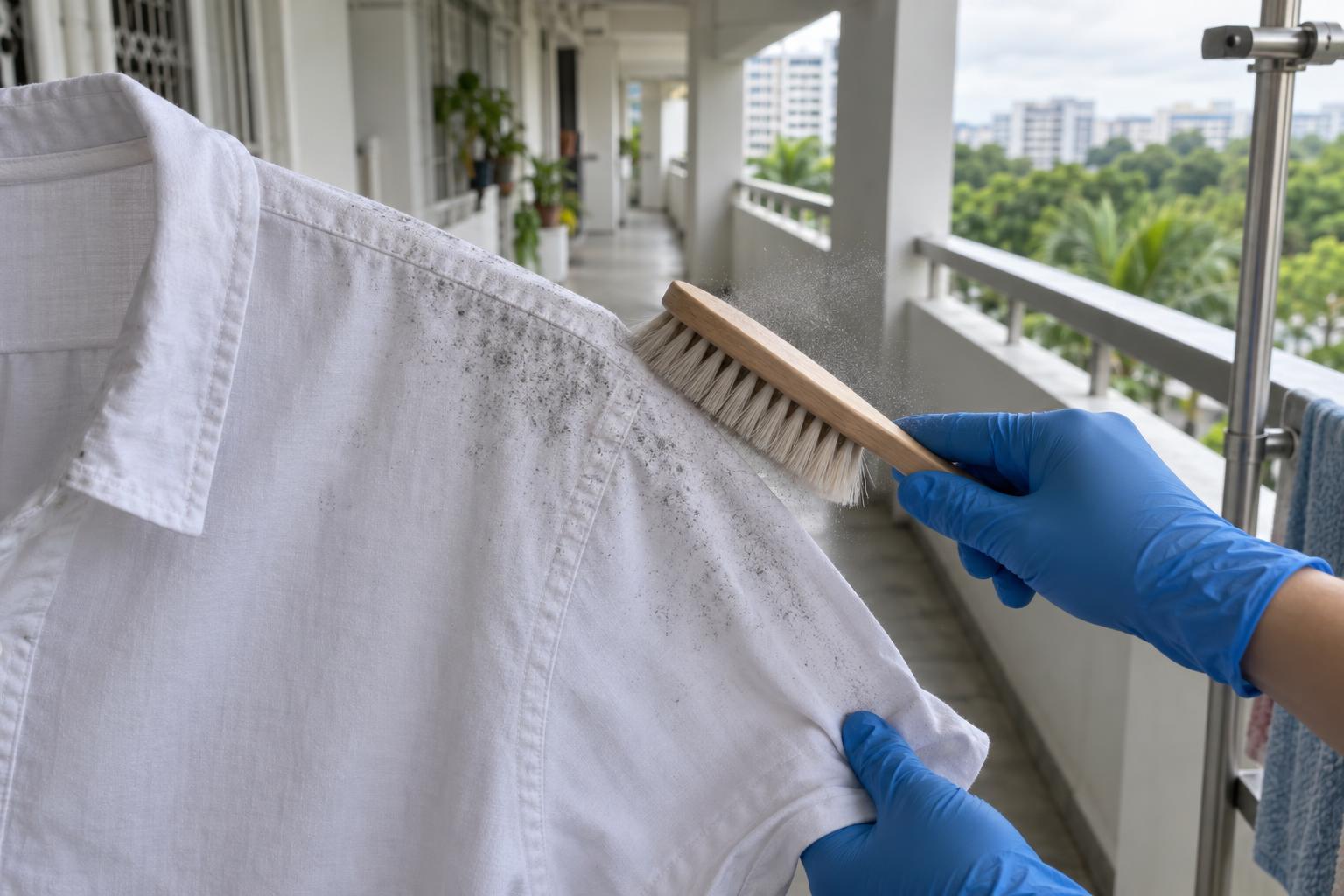
First, take the item outside. A corridor, a service yard, a balcony. Brushing mould off indoors puts the spores into the room you sleep in, and the extension guidance is explicit about doing this out of doors. Brush the loose growth off with a dry brush, away from your face, and away from any air conditioner intake.
Second, read the care label before you choose anything. This sounds like filler advice and it is not: the label determines the maximum temperature, and temperature is the single biggest factor in whether the wash works. It also tells you whether chlorine bleach is safe, which on most coloured and delicate items it is not.
Do not wash it with everything else
Wash affected items separately, or at least together and apart from the rest of the laundry. A mouldy towel washed with clean clothes distributes the problem rather than solving it. If the load is large, run an empty hot cycle afterwards before washing anything clean.
Sensible precautions
Wear gloves and work in moving air while you brush. If you have asthma or a known mould allergy, get someone else to do the brushing part, or at minimum wear a properly fitted mask. The washing itself is harmless once the item is in the machine.
Washing It Out, Step by Step
Brush the growth off outdoors
Dry brush, outside, away from your face and away from aircon intakes. Do not wet it first, because wet growth smears into the weave instead of lifting off.
Check the care label and set the temperature
Hottest the fabric allows. Hot water does most of the work. If the label says 30 degrees, respect it and lean on the bleach and the soak instead.
Pre-treat the affected patches
Work a non-ammonia detergent into the spots and leave it a few minutes before the item goes in. This matters more on older growth.
Soak if the marks are established
Ten to fifteen minutes in a solution of a quarter cup of chlorine bleach to three quarters of a cup of water, on white bleach-safe fabric only. For colours, use an oxygen bleach at the dose on the packet.
Wash with detergent and the right bleach
Oxygen bleach for colours and delicates. Chlorine bleach only for whites where the label permits it. Never combine bleach with an ammonia-based cleaner.
Inspect it wet, before it goes near heat
This is the step people skip. Look at the fabric in good light while it is still damp. If any mark remains, treat it again and rewash now.
Dry it fully, in sunlight if you can
Sun helps with both residual stain and smell. Whatever you do, get it bone dry before it goes back in the cupboard. Half dry is how this starts again.
Do not put it straight back
Leave it out in a ventilated room for a day or two and watch it. Then deal with the wardrobe before the clothes return to it.
Never tumble dry or iron a stain you can still see
Heat sets mould staining permanently. The extension guidance is unambiguous about not drying an item before the stain is removed. A garment that would have come clean on a second wash becomes a rag the moment it goes through a hot dryer with the mark still in it. Check it wet, every time.
Different Fabrics, Different Rules
The method above is written for ordinary washable clothing. Where fabrics differ is in how much heat and how much bleach they will take, which is really a question of how much of the work the wash can do for you.
What to expect by fabric type. Always defer to the care label over this table.
| Fabric | Water temperature | Bleach | Realistic outcome |
|---|---|---|---|
| White cotton and linen | Hottest the label allows | Chlorine bleach if label permits | Usually comes out completely, including the stain |
| Coloured cotton and denim | Warm to hot per label | Oxygen bleach only | Growth comes out; a faint stain may remain on light colours |
| Polyester and synthetic blends | Warm, per label | Oxygen bleach | Good. Synthetics are not food, so growth sits on the surface and lifts easily |
| Wool and cashmere | Cold or cool, hand wash | Neither. Wool detergent only | Fair if caught early. Heat and chlorine both destroy wool |
| Silk and viscose | Cool, hand wash | Neither | Variable. Patch test anything, and consider a dry cleaner for a good piece |
| Leather, suede and nubuck | Do not wash | No | Different method entirely. Do not put leather in water |
Two notes on that table. Synthetics are the easy case and people are often surprised: polyester is not organic material, so mould growing on a sports shirt is feeding on body oils and detergent residue sitting on the fibre rather than the fibre itself. It washes off well.
Leather is the opposite, and it is the one thing on this list you must not treat as laundry. Water and machine washing wreck it, and the correct approach is to dry it, vacuum the growth off rather than wiping it, and only then consider alcohol on a cloth. We have written that up separately in our guide to removing mould from leather bags, shoes and furniture, including why the museum conservation method beats what most leather brands recommend.
Mould keeps coming back in the same cupboard?
If washing fixes it for a few weeks and then it returns, something in the room is holding moisture. A virtual inspection is free and takes about fifteen minutes on video.
When the Stain Stays
There are two separate problems and it helps to name them. Killing and removing the growth is one. Removing the mark it leaves behind is the other, and on an item that sat in the cupboard for months the second one may not fully resolve.
For white bleach-safe fabric, a second soak in the bleach solution above usually finishes the job. For coloured or delicate items where chlorine is not an option, the extension services recommend an older approach that works genuinely well in this climate: moisten the mark with lemon juice and salt, then dry the item in direct sunlight. Rinse thoroughly afterwards. The combination of the acid and ultraviolet light lifts staining that a normal wash will not, and sunlight is the one resource Singapore never runs short of.
Patience beats strength
Repeat before you escalate. A mould stain that is lighter after the first treatment will usually keep lightening with a second and third round of the same treatment. What does not work is jumping to a harsher chemical on a fabric that cannot take it, which ends with a hole instead of a stain.
Getting the Musty Smell Out
Sometimes the clothes look clean and still smell wrong. That smell is not always mould. Slow-drying laundry also grows odour-producing bacteria, which is why clothes dried indoors during a wet week smell musty without a spot on them. The practical answer is the same in both cases: heat, acid and proper drying.
Run the item through a wash with a cup of white vinegar in place of fabric softener, then wash again normally with detergent. Vinegar handles residual odour well and rinses out clean. Baking soda in the drum is a reasonable alternative. If the smell survives two goes, the fabric is holding growth deeper than the wash is reaching, and you are into the question in the next section.
Then dry it properly. In our climate that means sun, or a dryer, or a fan in a room with the aircon on and the door shut. Air-drying a heavy garment in still humid air takes long enough for the smell to come straight back.
Persistent smell in the whole wardrobe
If everything in the cupboard smells musty rather than one or two items, you are smelling the cupboard, not the clothes. Empty it, check the back panel and the wall behind it, and read the last section of this article before you rewash a full wardrobe.
Check the Machine Itself
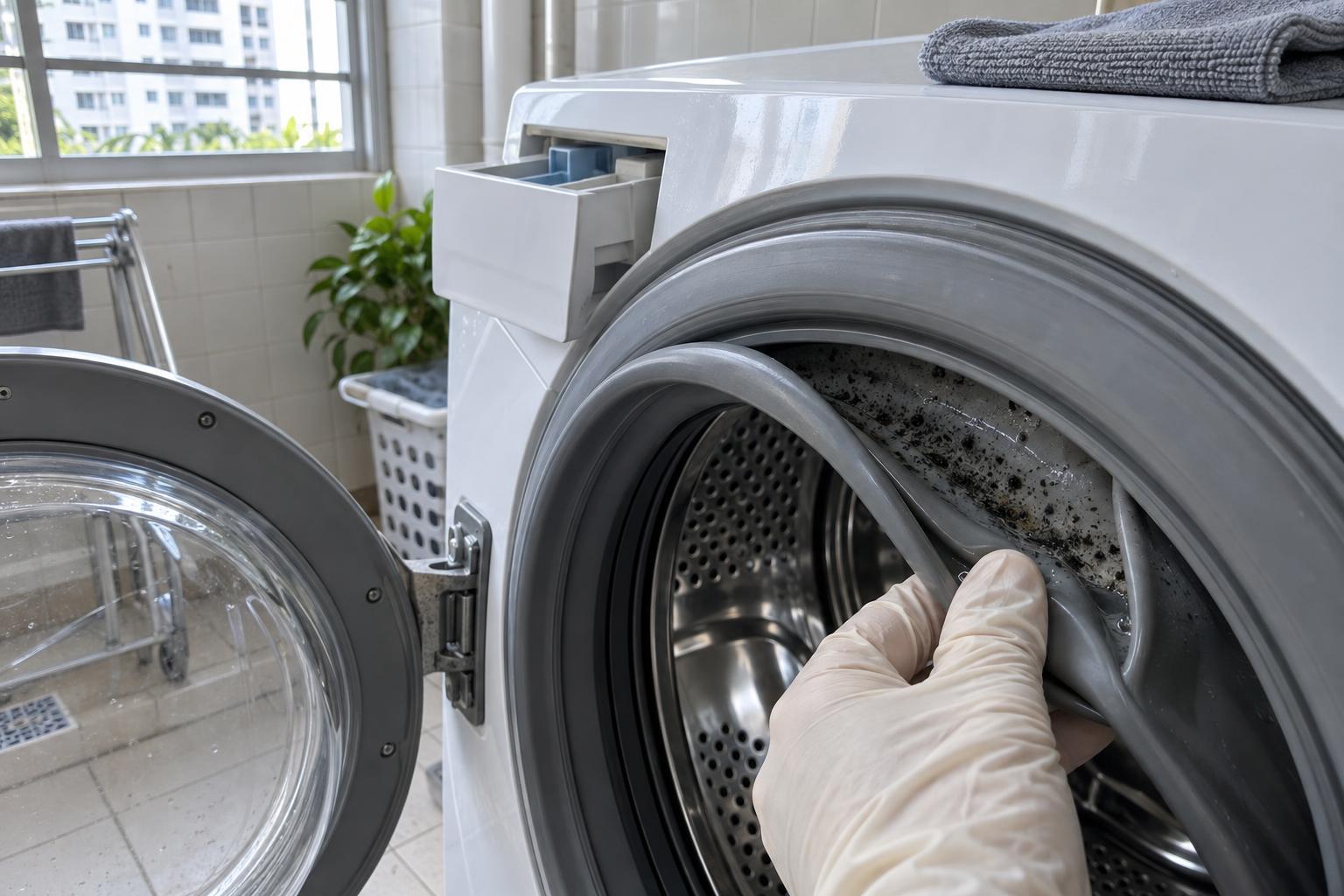
This is worth thirty seconds of your time and it explains a surprising number of recurring cases. Front-loading washing machines have a rubber door seal with a fold in it, and in this climate that fold holds water between washes. Pull it back and look. Black speckling in there means every load you wash is picking up what lives in the gasket.
Wipe the seal dry after each wash, leave the door ajar between loads so the drum can dry, and run a hot empty cycle with vinegar or a machine cleaner periodically. Also stop leaving finished laundry sitting in the drum. Damp clothes in a warm sealed machine begin to smell within 24 to 48 hours, which lines up with the same 24 to 48 hour window the EPA gives for mould taking hold on wet materials generally.
The room around the machine
If your machine sits in an enclosed kitchen yard or a service balcony with the door usually shut, that whole space is a humidity trap. Leaving that door open while the machine runs and for an hour afterwards does more than any cleaning product.
What Is Genuinely Beyond Saving
Most clothing caught early is salvageable, and we would rather you washed something twice than threw it out. But some things are not worth the effort, and the EPA's position on porous materials is the reason: mould grows into the spaces and crevices of porous materials, which can make it difficult or impossible to remove completely.
Where the line falls on washable versus not.
| Item | Verdict | Why |
|---|---|---|
| Washable clothing, caught early | Save it | Surface growth on a garment that can take a hot wash comes out |
| Towels and bed linen | Usually save | They take high heat and bleach well, which is most of the battle |
| Heavily affected item, growth through the weave | Judgement call | Try once properly. If a hot wash with bleach leaves it patchy and smelly, let it go |
| Foam-backed or padded items | Usually discard | Growth inside the padding cannot be reached by washing |
| Mattresses and large upholstery | Do not attempt at home | Porous, unwashable and too large to dry properly here |
| Anything still smelling after two proper washes | Discard | The smell is growth you have not reached |
One extra consideration rather than a rule: if someone in the household has asthma or a diagnosed mould allergy, the balance shifts toward discarding borderline items rather than keeping them. That is a comfort and household decision for you to make, not a medical one for us to make for you.
Keeping It Out of the Wardrobe
Washing clothes is the easy part. Not doing it again every three months is the useful part, and the whole job is to get that cupboard below 60% relative humidity and keep some air moving through it.
Never put anything away damp
The most common single cause. Clothes off an indoor drying rack in wet weather are often not as dry as they feel. Give them longer than you think.
Stop packing the rail tight
Air cannot move between garments crammed together. A few centimetres between items is worth more than most products you can buy.
Pull storage off external walls
A wardrobe flush against a wall that gets afternoon sun or shares a surface with a bathroom collects condensation on its back panel. A few centimetres of gap lets it breathe.
Vent the doors, or leave them open
If the cupboard has solid doors, open them for a few hours when you run the aircon. Louvred doors or a vented panel are better still.
Manage the moisture absorbers
Silica gel and tub-style absorbers work, but they saturate fast in this humidity and then do nothing. Replace or dry them on a schedule rather than when you remember.
Run a dehumidifier in the room, not a fan
A fan moves humid air around. A dehumidifier removes water. For a bedroom that holds damp, this is the intervention that actually changes the number.
Check the back corner once a month
Thirty seconds. The items you never wear are your early warning system, because they will show growth before anything else does.

The one number to aim for
Below 60% relative humidity in the room, and ideally between 30 and 50 percent, per EPA guidance. A cheap hygrometer costs very little and turns this from guesswork into something you can see. If the reading in your bedroom sits at 75% all day, no amount of washing is going to hold the line.
When It Is Not About the Clothes
Everything above assumes the clothes are the problem. Often they are not, and this is the part the laundry guides have no reason to tell you.
Mould needs a moisture source. In a wardrobe, the usual source is simply humid stagnant air, and the prevention list above fixes it. But sometimes the source is the building: a wall that stays damp because of a leak on the other side of it, a bathroom that vents into a bedroom, an aircon unit draining poorly, or condensation on a wall that never gets a chance to dry. In those cases you can wash every garment you own and the growth will return, because you have treated the symptom.
The pattern tells you which one you are dealing with. One or two items at the back of a packed cupboard is laundry. Any of the following suggests the room instead:
- Several items across the same wardrobe are affected at once, not just the forgotten ones
- It comes back within weeks of a proper wash and a proper dry
- There is visible growth on the wardrobe's back panel, or on the wall behind it
- The room itself smells musty when you walk in after being out
- The wall behind or beside the cupboard feels cool or damp to the touch
- More than one cupboard or room in the home shows the same thing
If you recognise two or more of those, the useful next step is finding the moisture source rather than rewashing the wardrobe. That is a building assessment, and it is a different job from cleaning. Our mould inspection service covers visual inspection with humidity and surface moisture readings, which is what identifies where the water is coming from. If you would rather start with something quick and free, a virtual inspection over video is often enough for us to tell you which of the two situations you are in.
Not sure whether it is the clothes or the cupboard?
Send us a photo on WhatsApp and we will tell you honestly whether this is a laundry job or something worth looking at properly.
Frequently Asked Questions
Does washing at 30 degrees kill mould on clothes?
Can I just use vinegar instead of bleach?
Will mould on my clothes make me ill?
Why do my clothes smell musty even though they look clean?
Should I dry clean mould-affected clothes instead?
How do I stop it happening again?
When should I call someone about it?
A note on what we do and do not clean
Mold Busters Singapore treats mould in buildings: finding the moisture source, assessing affected areas and remediating them. We are not a laundry, and we will not take your clothes. The reason this guide exists is that mouldy clothes are very often the first visible sign of a room that is holding too much moisture, and that part is our job.