
 John Ward
The Short Version
You pull the wardrobe out to find a dropped earring and the back panel is covered in grey-green fuzz. Or the teak dining chairs you stored over the holidays come out spotted white. Here's the direct answer. To clean mould on wood, wipe sealed or varnished wood with mild detergent and water, then dry it completely. On raw wood, brush the growth off outdoors, treat it with undiluted white vinegar for at least 15 minutes, dry it fully, and lightly sand any stain that's left. Skip the bleach. And if the wood is soft when you press it, you're not looking at mould any more, you're looking at rot.
That's the whole method in four sentences, but the details change a lot depending on what the wood is. A laminate wardrobe door, a raw plywood shelf and a solid teak tabletop behave nothing alike, and the one-size-fits-all recipes on page one of Google (most of them from forums and overseas cleaning blogs) don't tell you that. The good news comes from the US Forest Service's Wood Handbook: mould and stain fungi "affect the strength of the wood only slightly." Mould on wood is mostly a cleaning job, not a write-off.
This guide works through each type of wood, then the cleaning steps, the items people ask us about most, and how to tell when a piece really can't be saved.
Key Takeaways
- Sealed, varnished or laminated wood: mild detergent and water, then dry. That's what the US EPA recommends for finished wood
- Raw wood: brush off outdoors, undiluted vinegar for at least 15 minutes, dry fully, sand any stain that remains
- Mould barely weakens wood. Soft, crumbly or cracked wood is rot, a different and more serious problem
- On open-grained hardwoods like oak, the stain can sit too deep to sand out even after the mould is dead
- Above about one square metre, or if it keeps coming back, the moisture source is the real job
First, What Kind of Wood Is It?
This one question decides how you clean it. Wood with a finish on it (varnish, lacquer, paint or a laminate face) keeps mould on the surface, where a damp cloth can reach it. Raw wood lets the fungus grow into the grain. And among raw woods, the Wood Handbook draws a line that most cleaning guides miss.
"On softwoods, though the fungus may penetrate deeply, the discoloring surface growth often can easily be brushed or surfaced off. However, on large-pored hardwoods (for example, oaks), the wood beneath the surface growth is commonly stained too deeply to be surfaced off."
— USDA Forest Products Laboratory, Wood Handbook, Chapter 14
Match the method to the surface. The first row covers most of what we see in HDB flats and condos.
| Surface | Typical examples in a Singapore home | What the mould is doing | What to do |
|---|---|---|---|
| Sealed, varnished or laminated | Built-in wardrobe and kitchen cabinet doors, varnished tables and chairs, laminate shelves | Sitting on the finish, not in the wood | Detergent and water, wipe, dry. Usually done in one go |
| Raw or oiled softwood, plywood, particleboard | Back panels and insides of wardrobes, drawer bases, shelf undersides, pine furniture | Growing into the surface, but the visible growth usually lifts off | Brush off, vinegar, dry, light sand, then seal |
| Open-grained hardwood | Solid oak and similar coarse-grained furniture, older dining sets | The fungus is killed easily, but a stain can stay in the pores | Clean to kill it, then accept a mark or refinish |
| Soft, crumbly or cracked wood | Cabinet bases by the sink, door frames near the floor, anything that has been wet | Probably rot, not just mould | Stop cleaning and find the water. See the save-or-replace section |
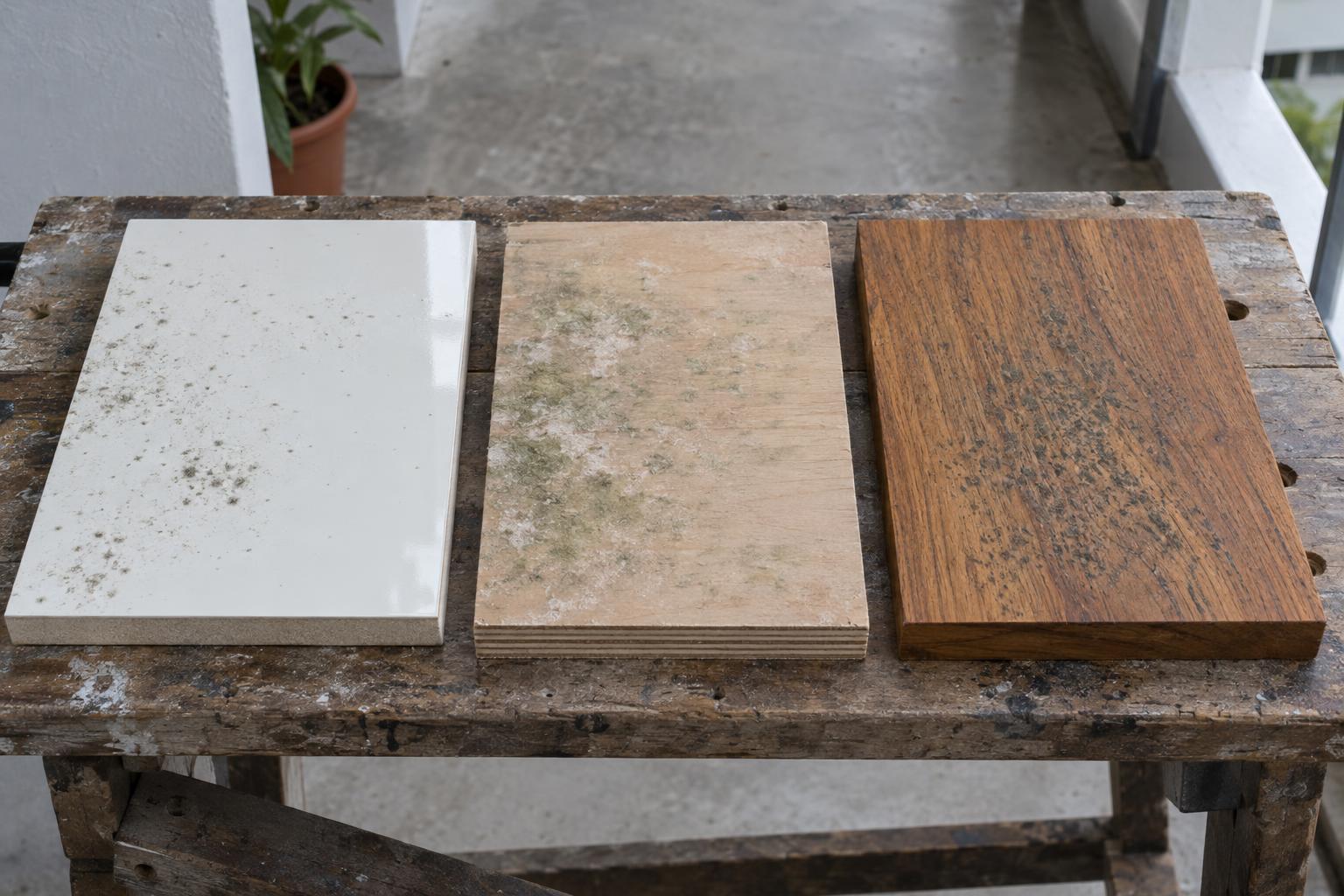
Here's the Singapore twist. Most "wood" in an HDB flat or condo is built-in carpentry: plywood or particleboard with a laminate face on the parts you see. The fronts wipe clean. The unfinished back panels and raw edges are where mould actually takes hold, usually on the side facing an exterior wall or a cold aircon wall, where you'd never think to look.
Why Wood Goes Mouldy Here
Wood soaks up moisture from the air and gives it back again, settling at a level that tracks the humidity around it. The Wood Handbook is clear about what that means in a humid climate: water vapour in humid air "will not wet wood sufficiently to support significant decay, but it will permit development of some mold fungi." In other words, you don't need a leak to get mould on furniture here. Just air.
78.6%
Average daily humidity at Changi, 2016 to 2025
~91%
Average daily peak humidity over the same years
20%
Wood moisture content the Wood Handbook treats as a safe margin
48 hrs
How fast our team says mould can start, per The Straits Times
The first two numbers come from the National Environment Agency's annual humidity records for Changi. The daily average looks moderate. The peak is the part that matters for a wardrobe in a closed room overnight with the aircon off. Fully air-dried wood, says the handbook, "usually will have a moisture content not exceeding 20% and should provide a reasonable margin of safety against fungal damage." Long, humid nights in a room nobody airs out eat into that margin.
This isn't a new problem, and it isn't always the owner's fault. In 2017 The Straits Times reported on a Kallang family whose two-month-old wardrobes grew mould on their external back panels. The retailer declined to replace them, saying the mould "existed due to the environment." The Consumers Association of Singapore told the paper it had received 38 complaints about mouldy furniture in five years.
From Our Experience
When The Straits Times asked our Feng Huinan about that case, his point was that mould on furniture depends on more than the furniture: how porous the material is, how often the aircon runs, and how often and for how long the family travels. Mould can start within 48 hours, so moisture brought into the home matters (dry the floor quickly after mopping), and so does dust, which carries spores. That still holds, and the travel point is the one people miss. A flat shut up for a holiday, aircon off, windows closed, wardrobe doors shut, is close to ideal conditions for the back of a wardrobe.
Before You Start
Disturbing mould puts spores in the air, and dry-brushing indoors spreads them around the room you're trying to clean. Take the piece outside or onto the balcony if you can. If you can't, open the windows and close the door to the rest of the flat.
Protect yourself first
The US EPA's advice for cleaning a small area of mould is an N-95 mask, gloves and eye protection (properly fitted goggles). Never mix bleach with cleaning products that contain ammonia. If anyone in the home has asthma, a weakened immune system or is recovering from illness, keep them out of the room while you work.
You'll need a soft brush, microfibre cloths, a bucket of water with a little mild detergent or dish soap, undiluted white vinegar in a spray bottle, fine sandpaper (around 120 to 180 grit) for raw wood, and a fan. A vacuum with a HEPA filter is a bonus, not a requirement.
One size check before you begin. If the mould covers more than about one square metre (roughly 10 square feet), you're past a DIY clean. That's the same threshold we use across our guide to what kills mould, and it's where the EPA starts recommending containment.
Cleaning Mould off Wood, Step by Step
For sealed or laminated wood you can stop after step four. For raw wood, carry on to the end.
Move it outside and brush off the loose growth
Use a soft brush or a HEPA vacuum with a brush head, working away from yourself. On a built-in wardrobe you can't move, pull it a little away from the wall and work with the window open.
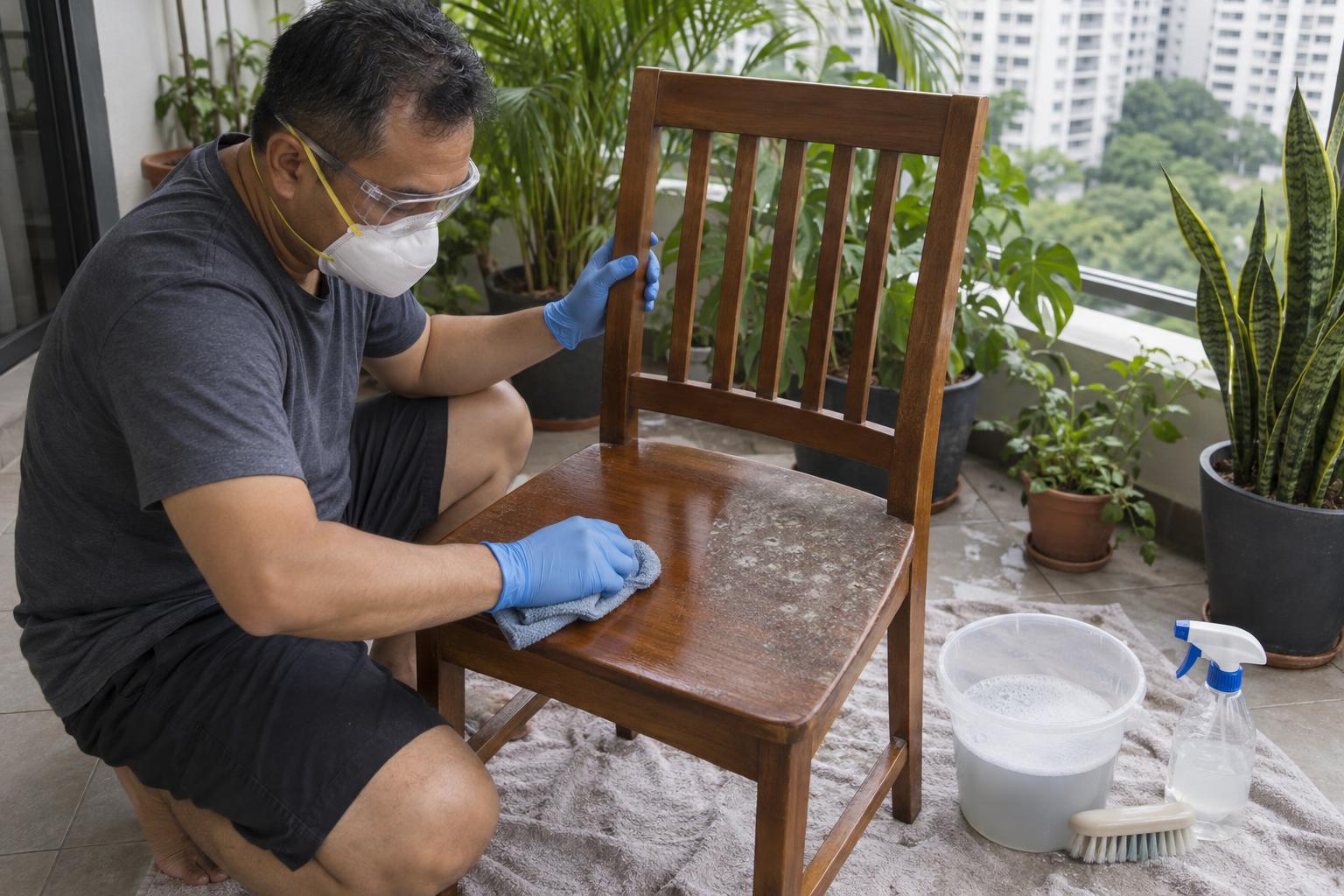
Wipe with mild detergent and water
The EPA's guidance for finished wood is exactly this: mild detergent and clean water, then allow it to dry. Wring the cloth out well. You want it damp, not wet, because soaking wood is how this started.
Treat raw wood with vinegar and leave it
Spray undiluted white vinegar onto raw or oiled wood and leave it for at least 15 minutes, longer on established growth. Test a hidden spot first on anything with a dark finish. On sealed wood, step two is usually enough.
Dry it completely
A fan across the surface, the aircon or a dehumidifier with the door shut, or a few hours in the shade outdoors. Avoid hard midday sun on rattan or thin veneer, which can crack or warp. Give it at least a day before it goes back against a wall.
Sand any stain that remains (raw wood only)
Fine sandpaper, with the grain, outdoors and with your mask on, because sanding dried mould makes dust. Then wipe or vacuum the dust away. On open-grained hardwood, stop when the wood looks clean, not when every mark is gone.
Re-seal raw surfaces
Once dry, put a coat of varnish, sealer or furniture oil on raw wood that you've cleaned. A sealed surface keeps the next round of mould on the outside, where a cloth can reach it. Never seal over mould that is still there.
The step people rush
The mistake we see most is drowning the wood. People spray it until it drips, scrub, and then put the piece straight back in the same corner. Wood that's been made wetter and returned to still air is set up for round two. Damp cloth, short contact, and then a long, proper dry.
Mould on more than one piece of furniture?
That usually means the room is the problem, not the furniture. Show us on a free video call and we'll tell you honestly whether it's a cleaning job or a moisture problem.
Wardrobes, Rattan, Chopping Boards and More
Built-in wardrobes and kitchen cabinets
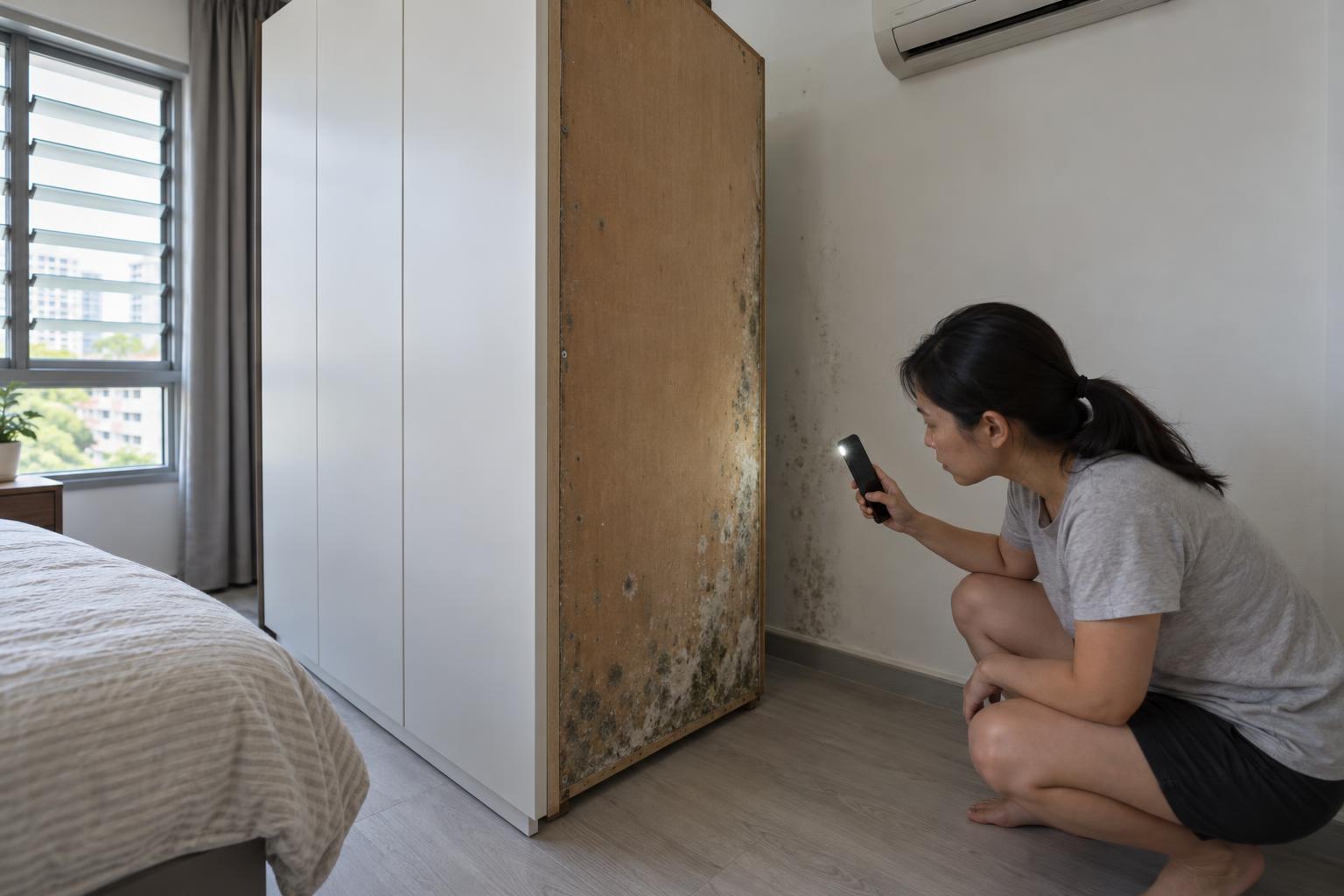
Clean the laminate fronts and insides with detergent and water. The raw back panels and edges are the real target, and they're usually the side against the wall. If the carpentry is built in and the back is mouldy, there's a good chance the wall behind it is too (look closely at the hero photo above). Clean both, then leave a gap of a few centimetres between carpentry and wall if the fittings allow it. If your clothes inside picked up a musty smell, our guide to removing mould from clothes covers the wash.
Solid wood and teak furniture
Varnished or lacquered pieces get the detergent wipe and nothing more. Oiled teak is closer to raw wood, so vinegar, a thorough dry and then a fresh coat of oil. Expect dark specks that follow the grain on coarse-grained timbers to fade but not always vanish. If the piece has leather seats or panels, don't use vinegar on those, and see our leather guide instead.
Rattan and wicker
Brush the weave out thoroughly first, since the mould lives in the gaps. Wipe with a barely damp soapy cloth, then dry it in the shade with good airflow. Rattan holds water in its joints, so the drying matters more here than the cleaning.
Chopping boards and wooden utensils
Surface spots on a smooth board can be scrubbed off with hot soapy water and dried upright. If the mould is down in the knife grooves, replace the board. The US Department of Agriculture's food-safety advice is to discard boards that are excessively worn or have hard-to-clean grooves, and mould in the cuts is exactly that.
Doors, frames and skirting
Painted or varnished: wipe and dry. If the mould is concentrated at the bottom of a door frame or skirting board near the floor, press the wood with a screwdriver before you do anything else (more on that below). Mould on wood flooring or parquet, especially if it's coming up from underneath, is not a surface clean. That's moisture under the floor.
White, green or black: does the colour matter?
Not much for cleaning. The Wood Handbook describes mould on wood as fuzzy or powdery growth in colours from light shades to black, with green and yellowish hues common. White mould on wood is cleaned exactly like green or black. Colour also doesn't tell you how harmful a mould is, which we explain properly in our black mould guide. What matters is how much there is and whether the wood underneath is still sound.
Bleach, Vinegar and What Actually Works
Bleach is the first thing most people reach for, and on wood it's the wrong tool. It lightens the stain so the surface looks clean, it can strip colour from dark finishes, and it does nothing about the moisture that grew the mould. The US EPA is blunt about it: the use of a biocide such as chlorine bleach "is not recommended as a routine practice during mold remediation."
Vinegar is the usual alternative, and it's a reasonable one for raw wood, but it's not magic. You'll see it claimed online that vinegar kills a precise percentage of mould species. We couldn't find a study behind that figure. The best lab evidence we found is more modest: a 2015 University of Adelaide study found household vinegar (about 4% acetic acid) stopped the growth of one common indoor mould, Penicillium, but not another, Aspergillus fumigatus, though it did cut spore production in both.
What to use on which wood.
| Option | Good on | Watch out for |
|---|---|---|
| Mild detergent and water | Any sealed, varnished or laminated wood | Too much water. Wipe, don't soak |
| Undiluted white vinegar, at least 15 minutes | Raw and oiled wood, plywood, rattan | Works on some moulds better than others. Test dark finishes first |
| 3% hydrogen peroxide | Raw wood where vinegar's smell is a problem | Can lighten dark wood and finishes. Test a hidden spot |
| Fine sanding | Stain left in raw softwood and plywood after cleaning | Makes dust. Outdoors, with a mask, after the mould is dead |
| Chlorine bleach | Not recommended on wood | Lightens the mark without dealing with the cause, can discolour wood, toxic gas if mixed with ammonia |
Here's our slightly contrarian view: on most furniture, the product matters less than people think. The cleaning removes the growth. What decides whether it comes back is how dry the wood stays afterwards. If you do want to compare shop-bought options, our roundup of mould removers in Singapore covers which ones are safe on wood.
Save It or Replace It?
Most mouldy wood can be saved, because mould and rot are different things. Mould lives on and near the surface and, per the Wood Handbook, barely affects strength. Rot (decay) eats the wood itself, and the handbook says serious decay only happens when wood is above its fibre saturation point, around 30% moisture. Humid air can't get wood that wet. Rain, a leak, a wet floor or condensation that keeps running down a surface can.
So the test is physical. Press the tip of a screwdriver into the wood where the mould is worst.
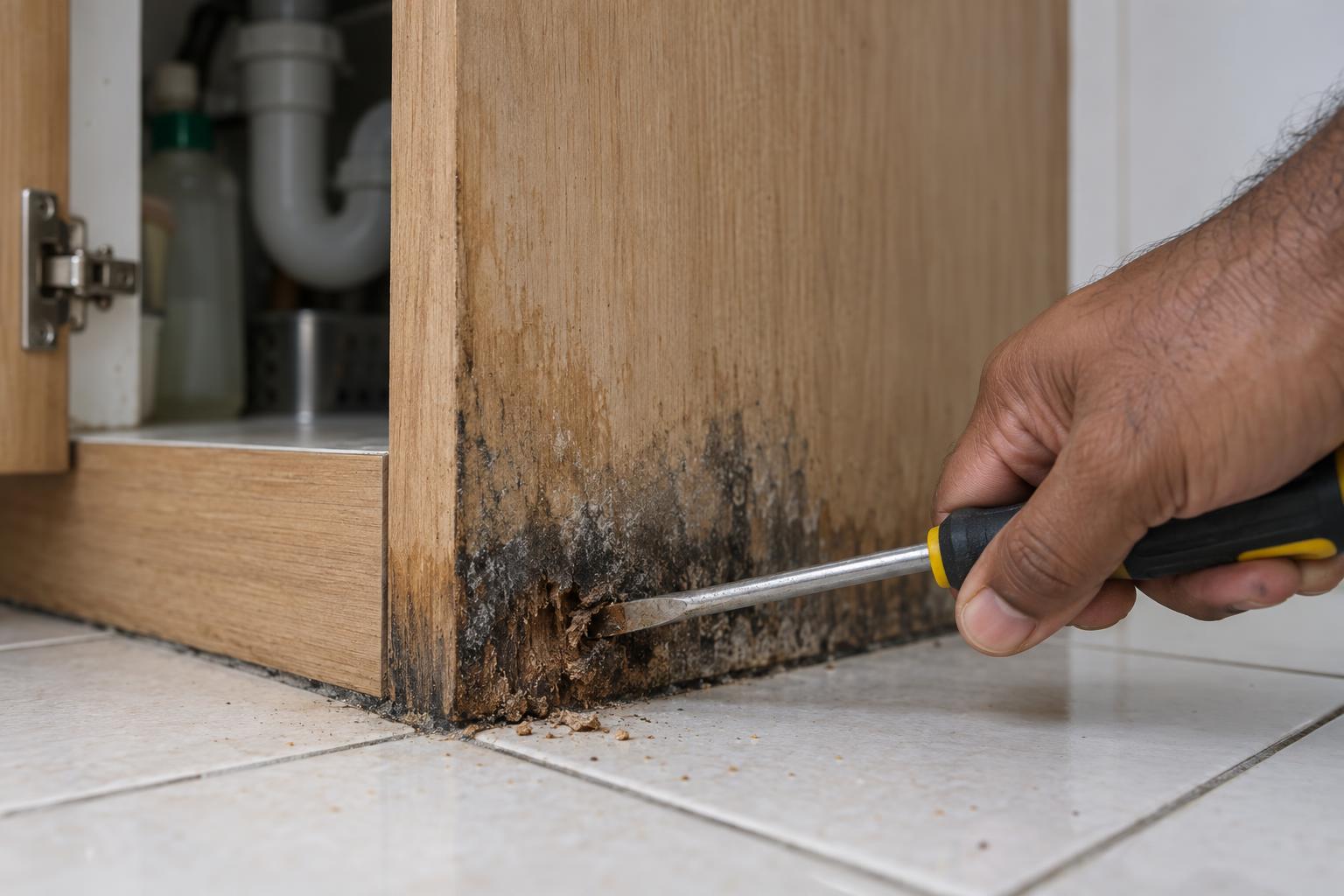
- Firm, and the screwdriver barely marks it. It's mould. Clean it using the steps above.
- Soft, spongy, or the tip sinks in. That's decay. The piece or panel needs replacing, and the water source needs finding first.
- Cracking into small cubes, or white fan-shaped or stringy growth across the wood, are also signs of decay fungi rather than surface mould.
- A mark that won't sand out of an open-grained hardwood is cosmetic, not a safety problem. Refinish, or live with it.
- Food-contact items with mould in the grooves: replace.
If the furniture is new
Photograph the mould with the date, note when the piece was delivered or installed, and raise it with the retailer or carpenter quickly. The Kallang case shows that retailers may blame the environment, so record the room conditions too: whether the aircon was used, whether the windows were open, and whether the flat was empty for a while.
Stopping It Coming Back
Cleaning takes an afternoon. Keeping wood dry in Singapore is a habit. The things that make the biggest difference:
- Leave a gap of a few centimetres between furniture and walls, especially exterior walls and the wall the aircon is on.
- Seal raw backs and edges of furniture you own, after cleaning. A finished surface is far easier to keep clean.
- Air closed rooms. Open the wardrobe doors and the window for a while each week, or run a dehumidifier in rooms that stay shut.
- Before a long trip, leave wardrobe doors ajar and, if you can, set a dehumidifier to run. A closed, empty flat is exactly the situation Feng described.
- Wipe up spills and mop water from wood quickly, and dry the floor after mopping, as our team told The Straits Times.
- Dust regularly. Dust carries spores and gives mould something to feed on.
Wardrobes get their own guide soon, since closets in Singapore have a few quirks of their own. If the wall behind the furniture was also marked, our guide to mould on walls covers that part, and anti-mould paint is worth a look once the wall is clean and dry.
When to Call Someone In
A mouldy chair is a DIY job. These situations usually aren't:
- Mould across more than about one square metre, or on several pieces in the same room
- It comes back within a few weeks of a proper clean and dry
- A musty smell with no visible source, which often means growth behind built-in carpentry
- Soft or crumbling wood, or mould at the base of cabinets, doors or frames near water
- Mould on or under wood flooring
In those cases, the useful next step is finding where the moisture is coming from. Our mould inspection is a visual inspection with humidity and surface moisture readings, which separates a ventilation problem from a leak. If there's established growth to treat, that's mould removal, which includes bio-fumigation to deal with airborne spores. Replacing rotten carpentry is normally arranged by the owner with a carpenter once the cause is fixed. And if you'd rather start with a quick, free opinion, a virtual inspection over video is often enough to tell which situation you're in.
Not sure if it's mould or rot?
Send us a photo on WhatsApp. We'll tell you straight whether it's a cleaning job or something that needs a proper look.
Frequently Asked Questions
How do you clean mould off wood?
Can wood furniture with mould be saved?
How do you clean white mould off wood?
What kills mould permanently on wood?
Should I use bleach on mouldy wood?
Can varnish prevent mould on wood?
Is mould on wood furniture dangerous?
What we do and don't do
Mold Busters Singapore finds moisture problems and treats mould in buildings. We don't sell cleaning products or furniture, and we have no arrangement with any brand mentioned on this site. Replacing damaged furniture or carpentry is normally arranged by the owner. This guide exists because cleaning furniture is usually the first thing people try, and most of the time it works.