
 John Ward
The Short Version
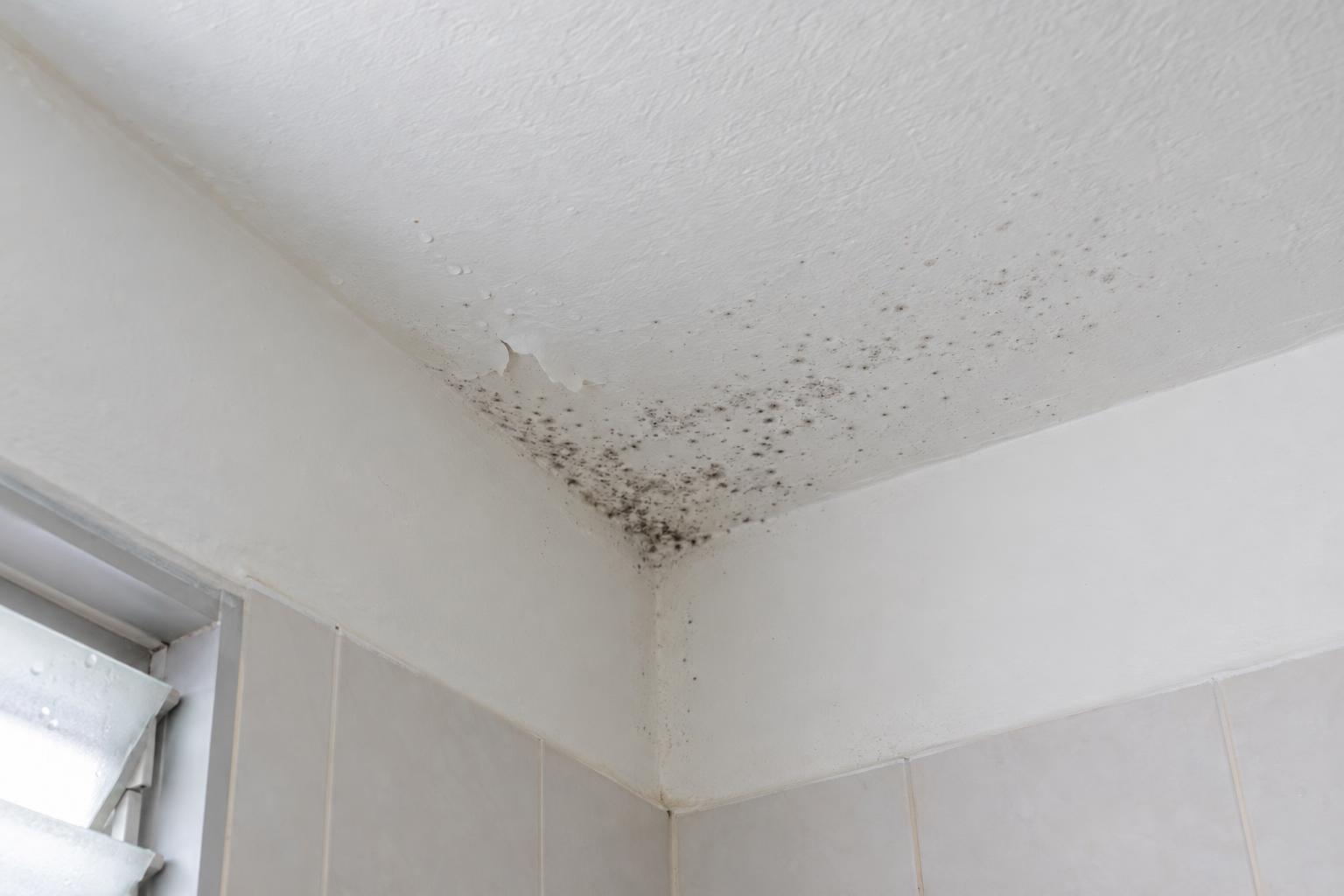
You repainted the bathroom ceiling eight months ago and the grey specks are back in the same corner. So you're standing in the hardware shop looking at a tin of anti-mould paint and wondering if it's the fix. Here's the honest answer. Anti-mould paint (or anti-mold paint, same thing) does work, but only at one job: it slows mould from growing on the paint film itself, on a surface that was cleaned and fully dried first. It doesn't kill mould that's already in the wall, it doesn't remove moisture, and its protection wears out over time.
That's not us being difficult about a product we don't sell. The US Environmental Protection Agency puts it in one line: "Do not paint or caulk moldy surfaces." Clean the mould up and dry the surface before painting, it says, because paint applied over mould is likely to peel.
So the paint is the last step of a fix, never the fix. Used that way it's worth buying, and in a Singapore bathroom it buys you real time between repaints. Used as a cover-up, it's an expensive way to hide a problem for a few months. The rest of this guide is about telling those two situations apart, what's really on the shelf here, and how to put it on so it lasts.
Key Takeaways
- Anti-mould paint slows new growth on the paint surface. It does not kill existing mould or fix damp
- The US EPA says not to paint over mouldy surfaces, because paint applied over mould is likely to peel
- Nippon's own instructions call for a fungicidal wash left on for at least 2 hours and wall moisture below 4% before painting
- No maker we checked publishes how many years the protection lasts on its Singapore product page
- If mould returns through anti-mould paint within months, the wall is staying wet and paint will not solve it
What Is Actually in the Tin
Anti-mould paint is ordinary emulsion paint with a biocide mixed in, a chemical that stops fungi from growing on the dried film. That's the whole trick. The paint doesn't waterproof your wall, and it doesn't reach into the plaster to kill anything. It makes the top fraction of a millimetre a bad place for mould to settle.
The part the label skips is that the biocide is a consumable. It has to be slightly mobile to work, which also means it slowly washes out of the film. A paint-industry review of fungicides in coatings noted that film porosity and the water solubility of the fungicide are major factors in how fast it is lost, and that the film becomes open to fungal growth at the point the fungicide runs out. Put simply, the wetter the surface, the quicker the protection is used up.
84%
Singapore average relative humidity
60%
Indoor humidity the EPA says to stay below
4%
Max wall moisture before painting, per Nippon
2 hrs
Minimum fungicidal wash contact time, per Nippon
Look at the first two numbers together. Outdoor air here averages around 84% relative humidity, and the EPA advises keeping indoor air below 60 percent. A bathroom ceiling that gets steamed twice a day and never fully dries is about the hardest place you could ask a paint film to do this job. It can still help. It just won't last as long as it would on a dry bedroom wall.
So Does It Work Here?
Yes, in the right situation. The useful question isn't whether the paint works, it's what was causing the mould in the first place. If the cause is surface condensation that comes and goes (shower steam, a cold patch beside the aircon), the paint has a fair fight. If the cause is water coming through the wall or ceiling, it has already lost.
Where anti-mould paint is worth the money, and where it is not.
| Your situation | Will anti-mould paint help? | Why |
|---|---|---|
| Bathroom or kitchen ceiling that gets steamy, then dries | Yes | Occasional surface damp is exactly what the biocide is for |
| Wall or ceiling patch beside the aircon | Partly | It slows regrowth, but the cold spot keeps collecting condensation until the cause is dealt with |
| Wall behind a wardrobe pushed flush against it | Partly | Move the wardrobe out a few centimetres as well, or the still air wins |
| Ceiling stain under the upstairs bathroom | No | That is a leak. Paint over wet plaster blisters and peels |
| Wall that feels damp or cool to the touch | No | The moisture is in the wall, not on it |
| Mould that came back within months of the last repaint | No | You already ran this test. The surface is staying wet |
Here's the slightly contrarian bit. In the first row, the paint probably matters less than the habit. A bathroom that's aired out properly after showers will stay clean for a long time with ordinary paint. One that isn't will defeat the best tin on the shelf. Paint is the cheap, visible part of the job, which is why it gets all the attention.
What You Can Buy in Singapore
We went to each maker's own Singapore page rather than to round-up lists, because several of the lists going around name products we could not find on sale here at all. The table below is limited to what the maker or its local dealer actually states. What they leave out matters as much, and we get to that right after the table.
Maker and dealer listings as checked on 13 October 2026. Prices and stock change, so confirm before you buy.
| Product | What it is | What the maker says |
|---|---|---|
| Nippon Odour-less Anti-Mould Ceiling White | Matt ceiling finish coat, 1 L and 5 L | Broad-spectrum protection against most species of mould. Suggested for kitchens, bathrooms and around air conditioners. About 9 to 10 square metres per litre |
| Nippon anti-mould interior range (Odour-less All-in-1, Vinilex 5000, Matex, EasyWash and Clean, others) | Wall and ceiling finish coats | Listed by Nippon under its anti-mould category, seven products when we checked |
| Dulux Pentalite | Interior wall finish coat | Protects walls from the growth of mould and fungus. Low odour, Singapore Green Label |
| Zinsser Perma-White Interior | Self-priming interior paint, sold by the Singapore Zinsser dealer | Listed by the dealer at S$109 for 3.78 L untinted, S$159 tinted |
| Gush MouldSeal | Water-based acrylic sealer that goes under a finish coat | Listed at S$50 for 5 L. Described as improving mould prevention when used under the maker's own paints |
Now the gap. Not one of these pages tells you how many years the mould protection lasts, and none names an independent test. That doesn't mean the products are poor. It means nobody can honestly rank them, which is why you won't find star ratings here.
If you're searching for Nippon anti-mould paint specifically, which a lot of people in Singapore are, the practical point is this: the well-known Ceiling White is a ceiling paint. For walls, Nippon lists other products in the same anti-mould category. And Dulux's anti-mould claim sits on Pentalite.
A note on Zinsser Mold Killing Primer
This is the product most overseas guides recommend, and people search for it here. Its maker describes it as an EPA-registered fungicidal coating that can go over existing mould, while still telling you to fix the moisture first. We could not find a regular Singapore stockist for it when we checked, only an import service. The local Zinsser dealer sells Perma-White instead. Don't plan a job around a tin you may not be able to get.
Primer, Sealer, Topcoat: Which Is Which
These three words get used as if they meant the same thing, and they don't. Getting them straight saves you buying the wrong tin.
- Sealer. The first coat on bare or patched plaster. It binds a chalky surface and gives the paint something to grip. Nippon's own advice is to put a sealer on before its anti-mould paint.
- Primer. Much the same role, and the usual word in American and British guides. A stain-blocking primer also stops old marks bleeding through new white paint.
- Topcoat, or finish coat. The paint you see. With most products sold here as anti-mould paint, this is the coat carrying the biocide.
Two things follow. An anti-mould topcoat over a failing surface still fails, because the sealer underneath is what holds it on. And a mould-killing primer isn't a shortcut past cleaning. Even Nippon, which would happily sell you the paint, tells you on its own product page to wash the area and treat it with a fungicidal solution before a drop of paint goes on.
Can You Just Paint Over Mould?
No. This is the single most common mistake, and it's easy to see why people make it. Fresh white paint hides the marks completely for a few weeks, and it feels like a result.
What's happening underneath is less cheerful. The growth is still there, and so is whatever was keeping the surface damp. Emulsion paint won't bond properly to a film of mould, so the new coat sits on a weak layer. Then the marks ghost back through, or the paint lifts in blisters, usually starting in the same corner as before.
Never paint over active mould
This applies to anti-mould paint as much as ordinary paint. The EPA's guidance is to clean up the mould and dry the surface before painting, and it warns that paint applied over mouldy surfaces is likely to peel. If the patch is bigger than about one square metre, or the surface is still damp, stop and find out why before you buy any paint at all.
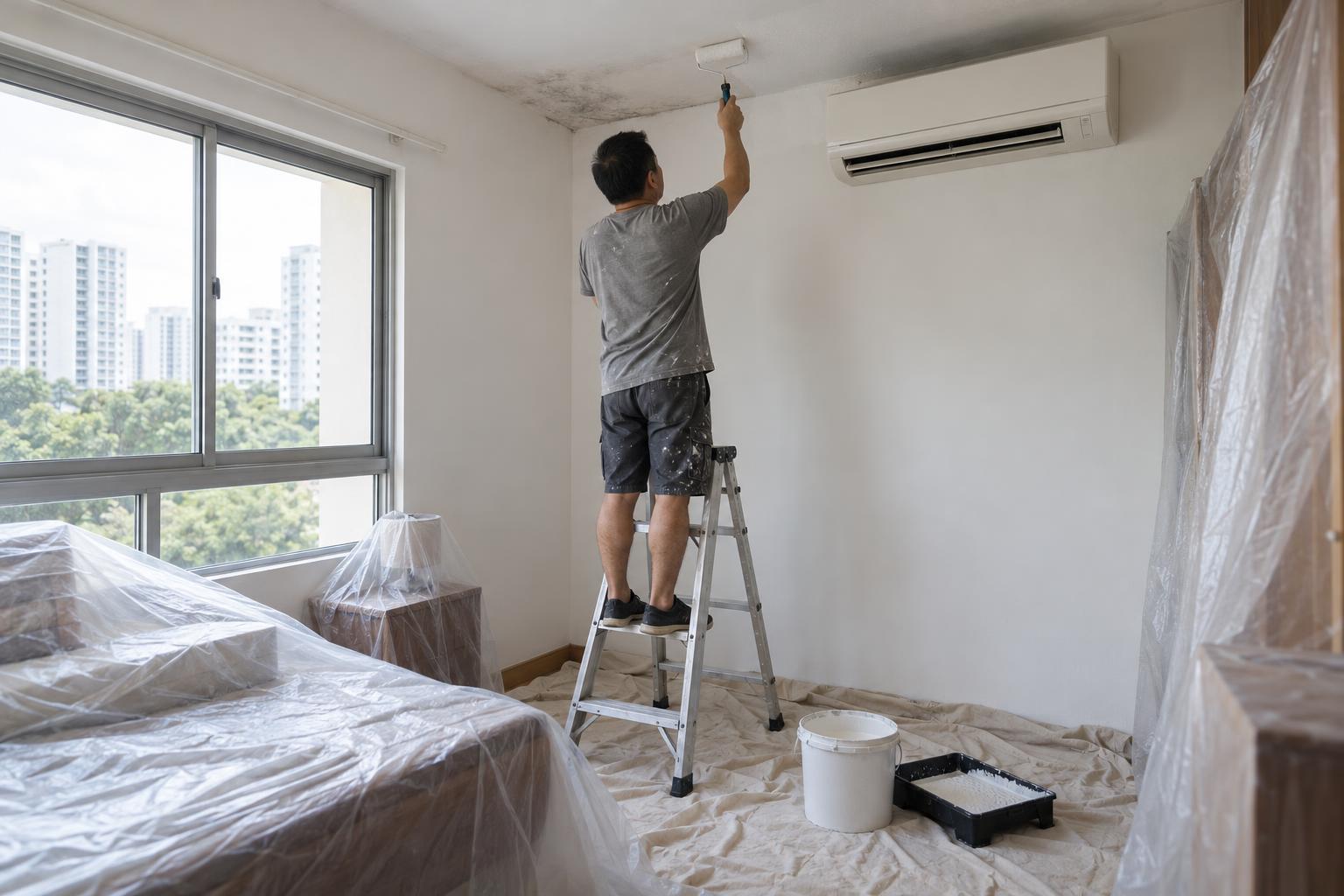
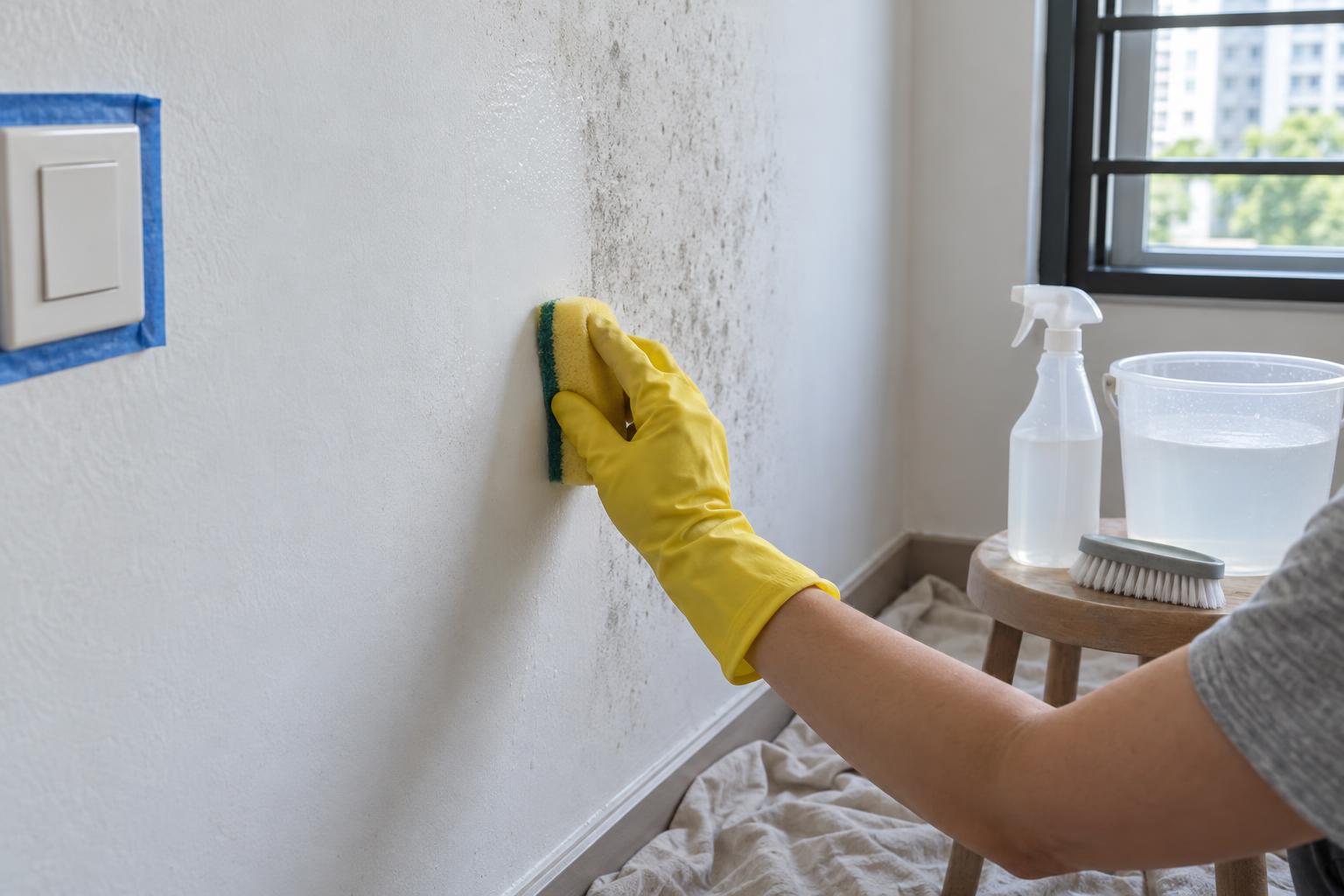
If you want the cleaning part in detail, we've written it up separately for mould on walls and for mould on ceilings, and there's a plain comparison of what actually kills mould if you're choosing between vinegar, bleach and a shop product.
Mould back through the new paint?
Then the wall is telling you something the paint can't fix. Show us on a free video call and we'll tell you honestly whether it's a cleaning job or a moisture problem.
Doing It Properly, Step by Step
Most of the work happens before the tin is opened. If you only have time to do half of this list, do the first half and paint another day.
Find out why the surface was wet
Steam with nowhere to go, a cold patch by the aircon, or water coming through from above or behind. If it's the last one, stop here. Paint is not the next step.
Clean the growth off completely
Gloves and a mask on, window open. Wipe rather than dry-scrub so you're not putting spores into the room. Work from the edge of the patch inward.
Treat the surface and leave it
Nippon's instructions for its ceiling paint call for an anti-fungus solution left on for at least 2 hours. Whatever you use, the contact time matters more than the scrubbing.
Dry it properly, then check
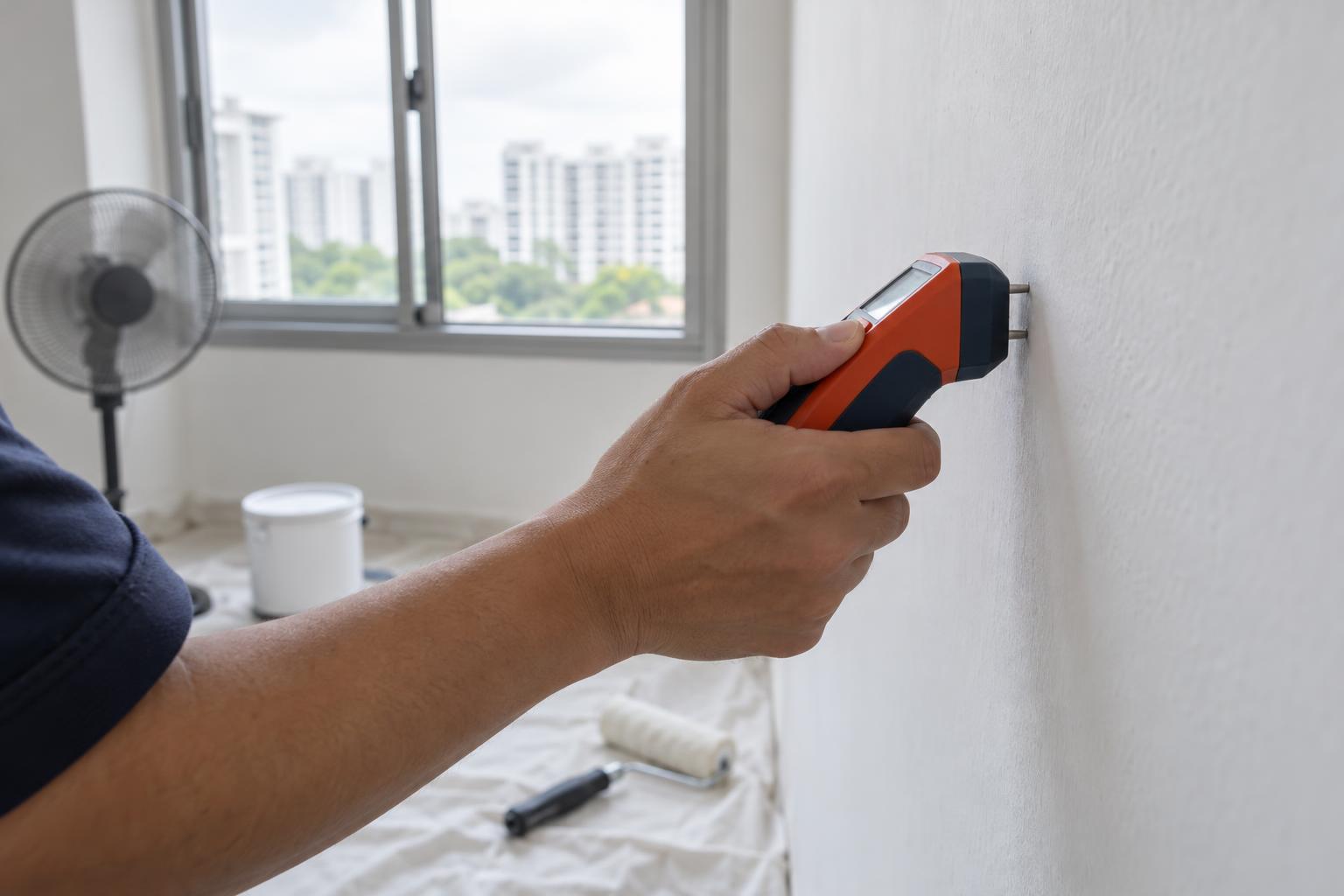
A fan across the surface and a dehumidifier or the aircon running with the door shut. Give it a day or two. Nippon specifies moisture below 4% before painting, which is a meter reading and not a guess.
Scrape and fill
Take off any paint that is loose, blistered or flaking, back to a sound edge. Fill hairline cracks with a water-resistant filler and let it cure.
Seal the bare patches
A coat of sealer on any exposed plaster or filler, following the maker's system for the paint you bought. This is what the finish coat hangs on to.
Two coats of the anti-mould finish
Thin, even coats. Nippon gives a 2 hour overcoating time for its ceiling paint at around 30 degrees. Don't rush the second coat on a humid afternoon.
Keep air moving while it cures, then watch it
Leave windows open or the fan on for the first day. Then check that corner once a month. It is your early warning if the moisture comes back.
The step people skip
A moisture meter takes the guessing out of this, so if you're hiring a painter, ask whether they'll check the wall with one before they start. If you're doing it yourself and don't have one, be patient instead: two full days of fan and dehumidifier after washing, longer in a wet week. A wall that feels dry to the hand can still be holding water.
Where It Earns Its Money
You don't need anti-mould paint through the whole flat. Spend it where surfaces get damp and then dry out again.
- Bathroom ceilings. The classic case, and what most of the ceiling products are made for.
- Kitchen ceilings and the wall above the hob, where steam and grease settle together.
- The patch around an aircon unit. Nippon names this spot in its own guidance, and it's a very common place for bedroom mould to start.
- Walls that sit behind wardrobes and bed heads, where air doesn't move.
- The service yard or enclosed laundry corner, if it has a painted ceiling.
A Singapore detail that causes confusion: the paint on the outside of your block is a different product doing a different job. The Ministry of National Development has said that HDB external walls get one coat of sealer and two coats of algae-resistant emulsion, and that repainting the outside is usually done by the town council as part of looking after common property. Nothing about that tells you what to use indoors.
Indoors is yours. The ministry's position, given in a written parliamentary answer in February 2020, is that flat owners are responsible for maintaining the interior of their flats, including ceilings and walls. The same answer says mould is usually caused by insufficient ventilation, and that HDB was receiving about 1.4 reported mould cases per 1,000 homes a year. Ventilation first, then. Paint second.
How Long Does It Last?
Honestly, nobody selling it will tell you, and we're not going to invent a number. None of the Singapore product pages we checked states a duration for the mould protection. You'll see confident figures online (three years, five years, and so on). The one specific figure we traced, about 18 months and less in hot, humid environments, comes from a company describing ordinary paint biocides while pitching its own replacement. Treat it as a rough signal, not a measurement.
What you can rely on is the direction. The protection runs down, and it runs down faster the wetter the surface is. A dry bedroom wall will keep its protection far longer than a ceiling above a shower. If you've sorted the ventilation, the paint will probably outlast your patience with the colour. If you haven't, expect to see the corner again within the year.
Signs the paint has stopped protecting
Small grey or black specks returning in the same spot. A musty smell in a room that looks clean. Paint that has gone slightly tacky, bubbled or started to lift. One cycle of this is normal wear in a wet room. Two cycles in quick succession means the surface is wetter than paint can handle.
When Paint Is Not the Answer
Everything above assumes the wall is basically sound and the damp is on the surface. Sometimes it isn't, and no tin fixes that.
From Our Experience
From our experience: people rarely call us to ask which paint to buy. They call after the second or third repaint, when a ceiling that looked perfect after painting is spotted again a few months later. At that point the paint has done its job as a test. It has shown you the surface is staying wet, and the useful question becomes where the water is coming from.
Any of these means the next step is finding the moisture, not choosing a better paint:
- It has come back through anti-mould paint within a few months
- The paint is blistering, bubbling or peeling as well as marking
- There's a brown or yellow tide mark, which points to water coming through rather than condensation
- The patch is on a ceiling below someone else's bathroom, or on a wall shared with your own
- The wall feels cool or damp when the rest of the room doesn't
- The affected area is larger than about one square metre
- More than one room is showing the same thing
Two or more of those, and repainting again is money spent on the wrong thing. What helps is a proper look at where the water is coming from. Our mould inspection is a visual inspection with humidity and surface moisture readings, which is what separates a condensation problem from a leak. If there's active growth to deal with first, that's mould removal. And if you'd rather start with something quick and free, a virtual inspection over video is often enough for us to tell you which situation you're in.
Not sure if it's a paint job or a moisture job?
Send us a photo on WhatsApp. We'll tell you straight whether repainting is enough or whether something needs looking at first.
Frequently Asked Questions
Does anti-mould paint actually work?
Can I paint over mould with anti-mould paint?
What is the best anti-mould paint in Singapore?
How long does anti-mould paint last?
Do I need a sealer or primer under anti-mould paint?
Who pays for mould repainting in an HDB flat?
Mould came back through my new anti-mould paint. What now?
What we do and don't do
Mold Busters Singapore finds moisture problems and treats mould in buildings. We don't sell paint, we have no arrangement with any paint brand, and repainting afterwards is normally arranged by the owner with a painter of their choice. This guide exists because repainting is so often the first thing people try, and we'd rather it worked.