
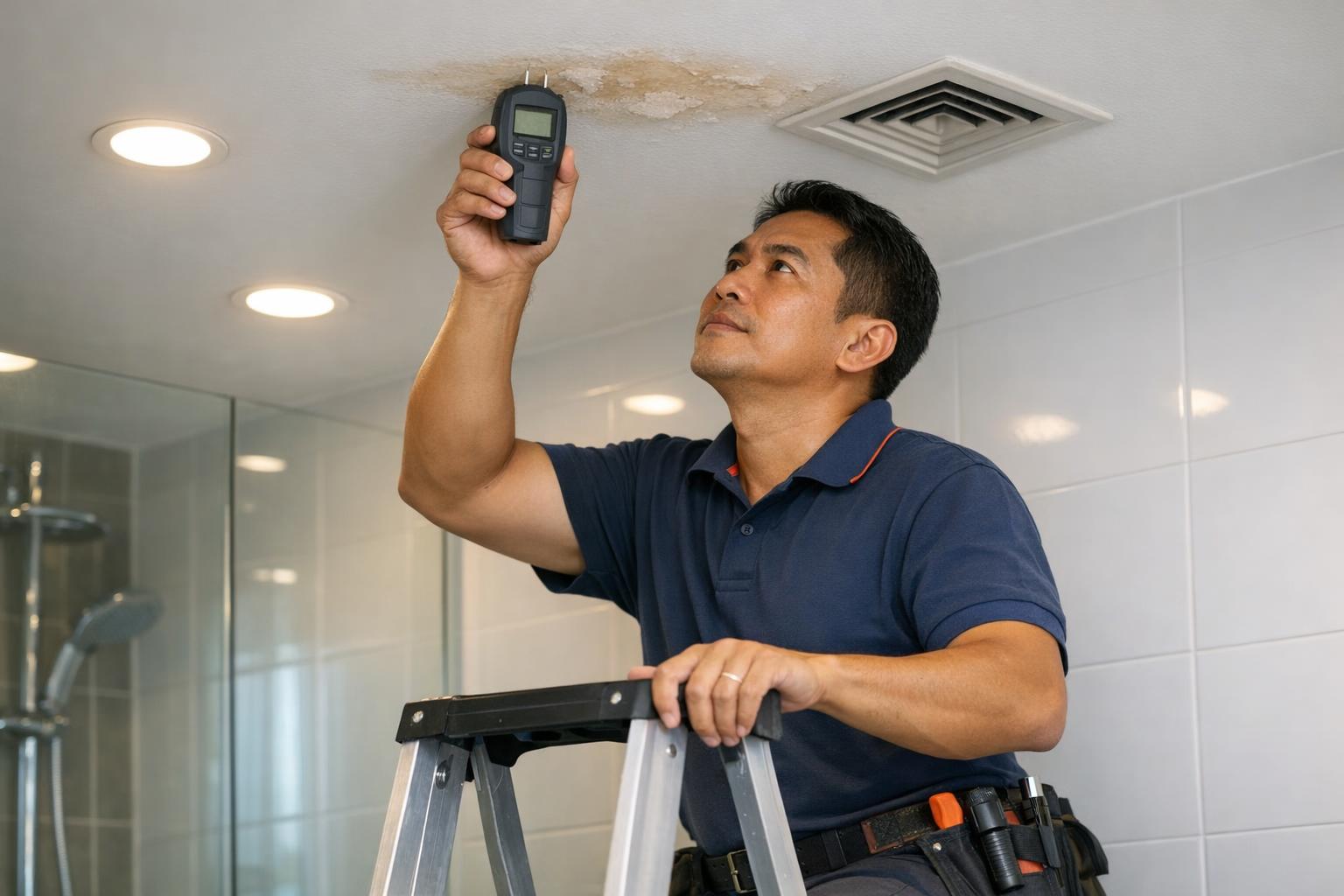
Keep a room-by-room record
Note affected surfaces, odours, recent rain or leak events, AC use and previous treatment. Include behind furniture and fixed-cabinet concerns without opening inaccessible construction yourself.
For a landed home, tell the assessor about known roof, facade, drainage and wet-area history. For a condo, mention adjacent units and building services only as observations, not assumed causes.
Coordinate condo access and seepage questions
Arrange permission with the owner and, where relevant, the MCST or managing agent. BCA’s water-seepage guide discusses joint investigation between affected owners; it does not diagnose the source of an individual complaint.
Provide available repair records and access constraints. A mould quotation should explain which investigation or remedial steps are included and who will manage separate repairs.
Review wardrobes and enclosed spaces
Damp belongings, limited air circulation, cold surfaces and leaks can present differently. Moving items and spraying a visible face does not establish the condition of a cabinet backing or wall.
Identify valuable or delicate items before any cleaning proposal. Product labels and material-care instructions matter, and widespread or recurring contamination may need professional assessment.
Compare written scopes
Ask which materials will be cleaned or removed, what protection is proposed, how waste will be handled and what drying or moisture correction is required. Confirm any painting, reinstatement or follow-up testing separately.
Keep the quote and handover records. Recurrence should be discussed with the original scope and any new water history available.