
Thermal Imaging
Non-Invasive Thermal Imaging Inspection
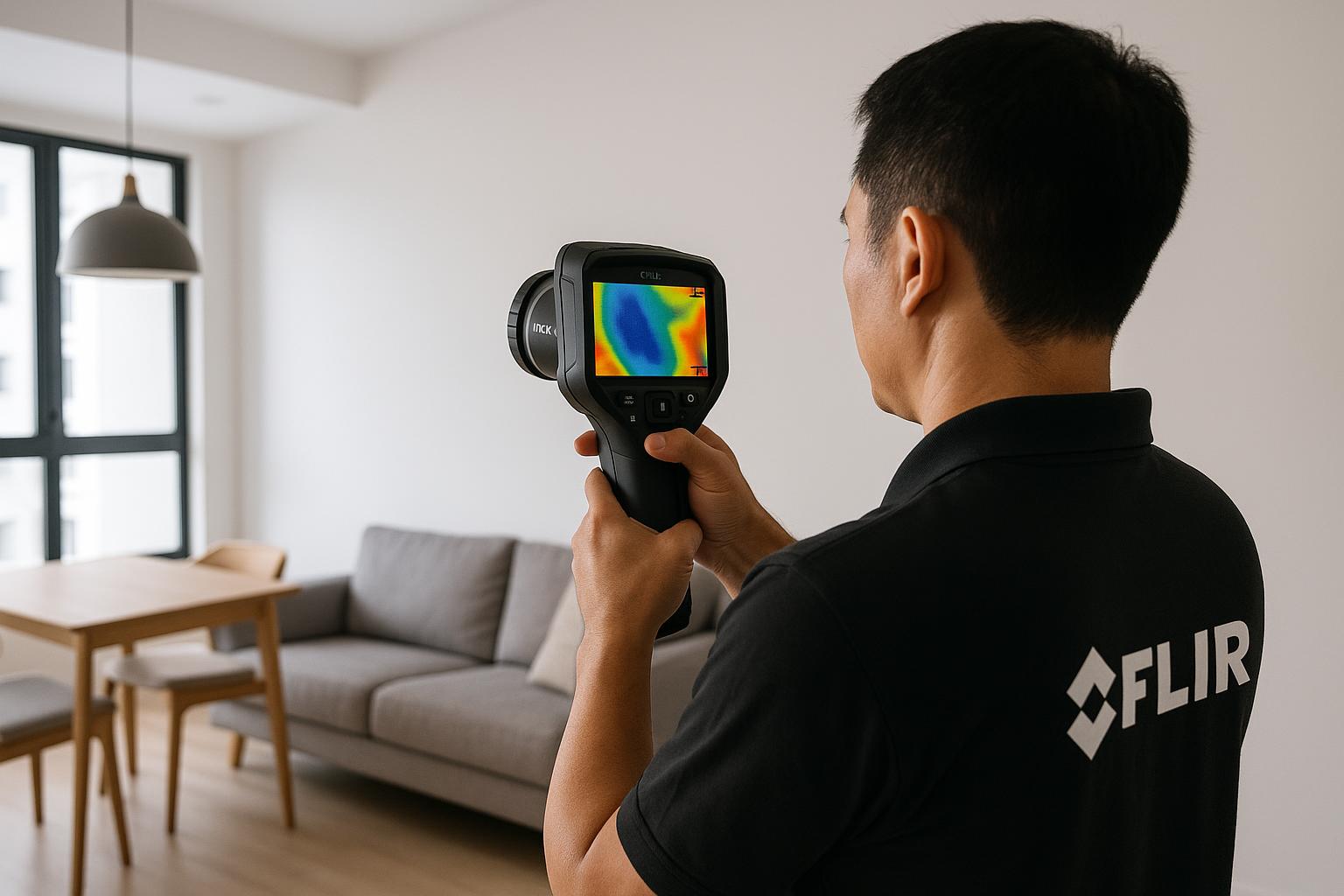
Detect hidden moisture, water leaks, and mold behind your walls — without a single hole drilled. Our Palmer Wahl certified thermographers use professional-grade infrared cameras to see what the naked eye cannot.
What Is Thermal Imaging?
Thermal imaging — also called infrared thermography — uses specialised cameras to capture the heat signatures emitted by every surface in your property. Because moisture, air leaks, and hidden mold colonies alter the temperature of surrounding materials, they create distinct thermal patterns that are invisible to the naked eye but clearly visible on an infrared scan.
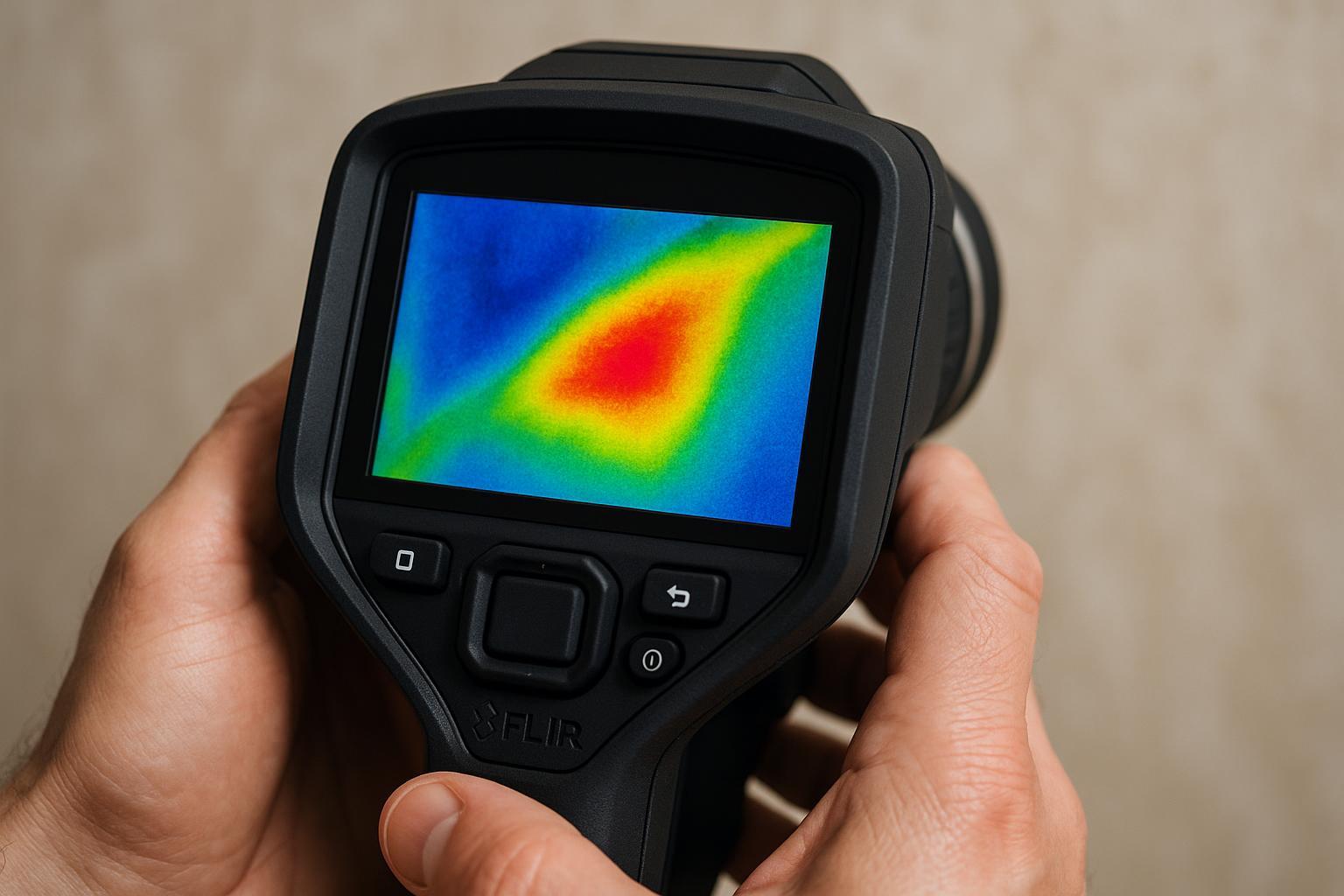
Unlike traditional inspection methods that may require cutting into walls or removing ceiling panels, thermal imaging is completely non-invasive. The camera reads surface temperatures from a distance, building a colour-coded heat map that highlights anomalies in seconds. Cooler zones often indicate trapped moisture or evaporative cooling from an active leak, while warmer patches may reveal electrical faults or missing insulation.
In Singapore's tropical climate — where relative humidity regularly exceeds 80% — moisture can migrate deep into building materials and remain undetected for months. By the time mold becomes visible on a surface, the problem behind the wall can be far more extensive. Thermal imaging catches these hidden issues early, saving property owners from costly repairs and potential health risks.
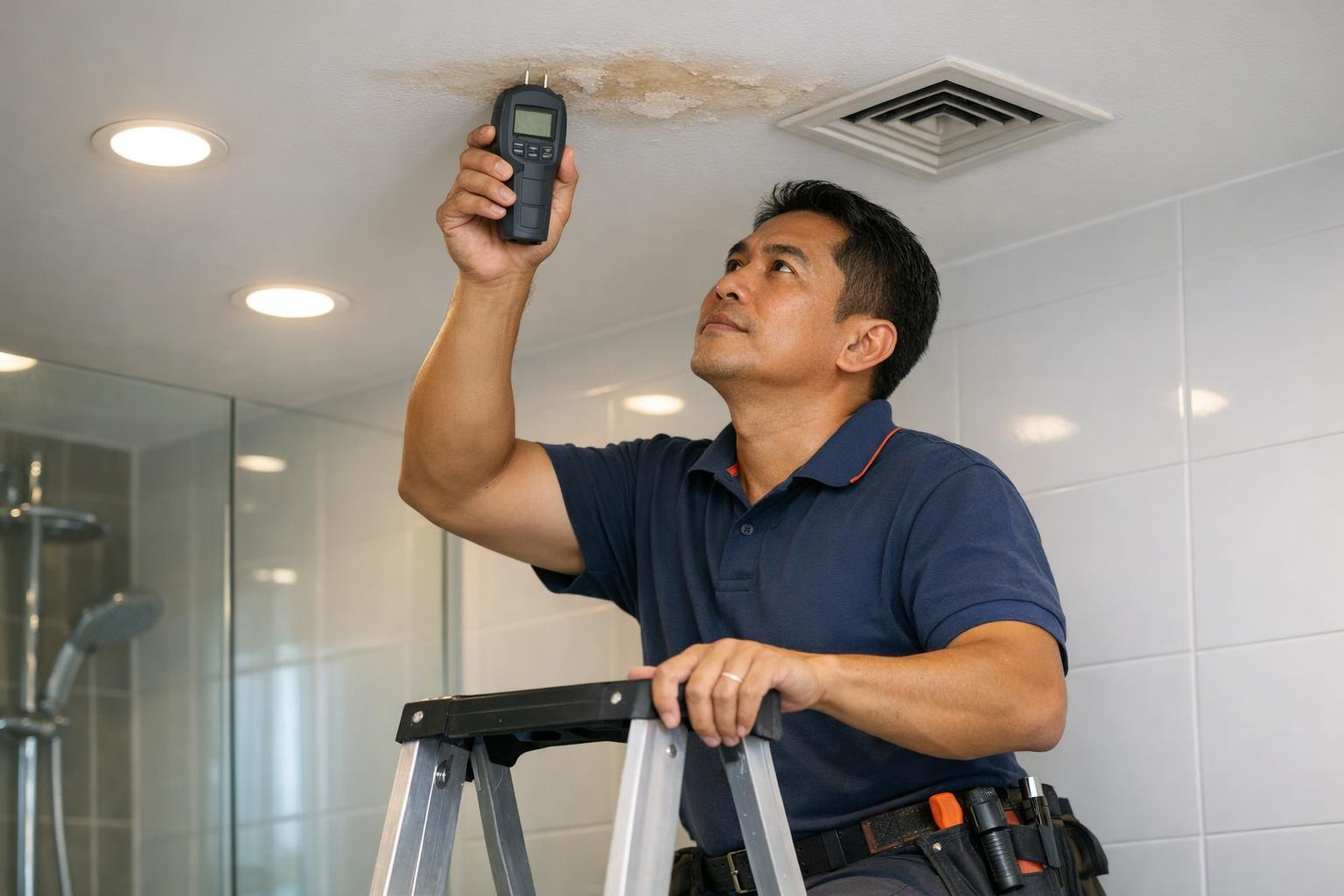
Our inspectors pair every thermal scan with calibrated moisture meter readings, providing two layers of confirmation before any conclusions are drawn. This dual-verification approach eliminates guesswork and gives you evidence-based data you can act on.
What Thermal Imaging Reveals
Infrared technology uncovers problems hidden behind walls, above ceilings, and beneath floors — without any demolition.
Hidden Moisture Behind Walls
Trapped water inside drywall, plaster, or concrete shows up as cooler zones on a thermal scan, revealing leaks that visual inspection would miss entirely.
Water Leaks from Pipes
Pinpoint the exact location of leaking pipes concealed inside walls or beneath floor slabs, reducing the need for exploratory hacking and minimising repair costs.
Insulation Gaps & Defects
Missing, compressed, or water-damaged insulation creates temperature differentials that are immediately visible on an infrared image, explaining uneven cooling and energy waste.
Electrical Hotspots
Overloaded circuits, loose connections, and faulty breakers generate excess heat. Thermal imaging identifies these fire hazards before they become dangerous.
Hidden Mold Colonies
Active mold growth behind walls is often associated with elevated moisture. The cooler thermal signature of wet materials points directly to areas where mold is likely thriving unseen.
HVAC System Issues
Blocked ducts, refrigerant leaks, and condensation problems within air-conditioning systems show distinct thermal anomalies, helping you maintain efficient and mold-free HVAC operation.
Our Equipment & Certification
Thermal imaging is only as reliable as the person behind the camera. Interpreting infrared images requires formal training in thermodynamics, emissivity, reflected temperature compensation, and environmental variables like humidity and airflow. Without this expertise, a thermal scan can produce misleading results.
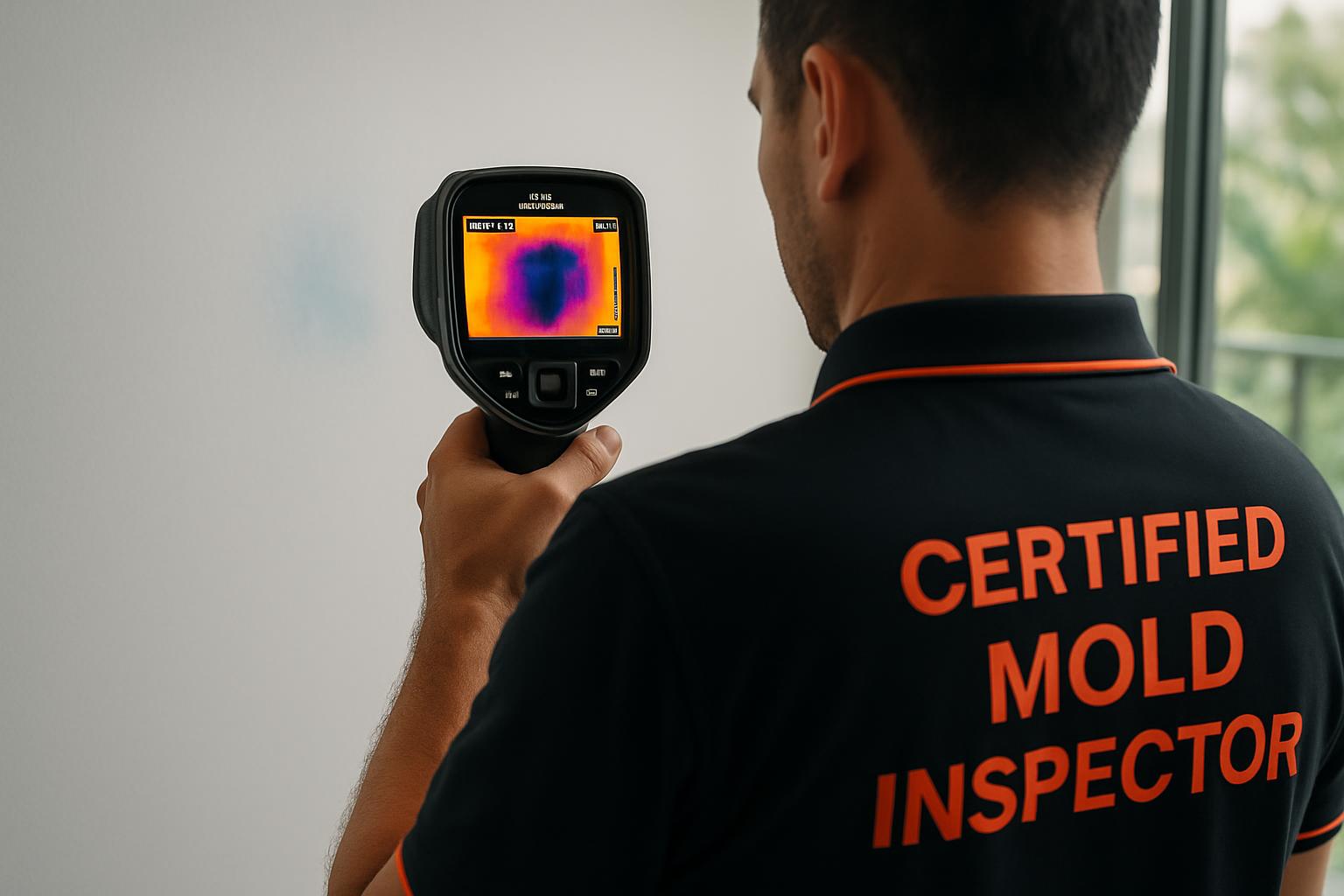
Our thermographers hold Palmer Wahl Level I and Level II certifications — the internationally recognised standard for infrared thermography. This certification covers the physics of infrared radiation, camera operation, image analysis, and reporting protocols used across building diagnostics, electrical systems, and moisture investigation.
We use FLIR professional-grade thermal cameras with resolution and sensitivity specifications designed for building envelope analysis. These cameras detect temperature differences as small as 0.05°C, providing the precision needed to differentiate between normal thermal variation and genuine moisture intrusion.
0.05°C
thermal sensitivity of our FLIR cameras
Level II
Palmer Wahl certified thermographers
100%
non-invasive — zero damage to your property
When You Need Thermal Imaging
Thermal imaging is valuable across a wide range of scenarios — from investigating active leaks to protecting your property investment.
Water Damage Investigation
After a leak, flood, or water intrusion event, thermal imaging maps the full extent of moisture penetration — including areas behind walls and under floors that look dry on the surface.
Mold Hunting
Suspect mold but can't see it? Thermal imaging locates the hidden moisture that feeds mold growth, guiding targeted mold inspections and reducing guesswork.
Pre-Purchase Property Inspection
Before buying a condo, HDB flat, or landed property, a thermal scan reveals hidden defects that could cost thousands to repair. Make informed decisions with hard data.
Energy Audit
Identify where cooled air is escaping through insulation gaps, poorly sealed windows, or building envelope failures. Fix them and reduce your monthly electricity bills.
Post-Remediation Verification
After mold removal, thermal imaging confirms that moisture levels have returned to normal and no hidden wet spots remain that could trigger regrowth.
Insurance Claims Documentation
Thermal images provide objective, time-stamped evidence of water damage extent — valuable documentation for insurance claims and dispute resolution.
How Thermal Imaging Works with Mold Detection
Mold doesn't grow without moisture. That simple fact is what makes thermal imaging one of the most powerful tools in a mold inspector's arsenal. While the camera cannot photograph mold spores directly, it excels at finding the one thing mold absolutely requires: water.
When building materials absorb water, they cool down through evaporation. This temperature drop — sometimes just 1–2°C below the surrounding dry surface — creates a distinct thermal anomaly that our FLIR cameras detect instantly. By mapping these cold spots, we build a moisture profile of your entire property in a fraction of the time it would take using moisture meters alone.
Once thermal imaging identifies suspect areas, we verify with pin-type and pinless moisture meters to quantify the actual moisture content. If readings exceed the threshold for mold growth (typically 16–20% moisture content in wood, or above 70% relative humidity in wall cavities), we know mold is either actively growing or conditions are ripe for it to begin.
This targeted approach means we can recommend air quality testing or surface sampling only where it matters, saving you money on unnecessary lab fees while ensuring no contaminated area goes undetected.
For properties with recurring mold problems, periodic thermal imaging scans serve as an early warning system — catching new moisture intrusion before mold has a chance to establish itself. This proactive approach is especially valuable in Singapore, where building materials are under constant humidity stress year-round.
Frequently Asked Questions About Thermal Imaging
How does thermal imaging detect mold?
Is thermal imaging safe?
How much does thermal imaging cost in Singapore?
Can thermal imaging see through walls?
How long does a thermal imaging scan take?
Do I need thermal imaging before mold removal?
See What's Hidden in Your Walls
Don't wait for water damage to become visible. A single thermal imaging scan can save you thousands in repair costs by catching moisture problems before they escalate. Book your certified infrared inspection today.
Mold Busters Singapore • 60 Ubi Crescent #01-01, Ubi TechPark 408569
Got Mold? Get Expert Help Today.
Don't let mold compromise your health or property. Call Mold Busters Singapore for fast, professional service.
Request a Free Quote
Describe your mold concern and we'll get back to you within 24 hours with a detailed assessment and quote.
Thank You!
We've received your message and will contact you within 24 hours.