
Asbestos Testing
Certified Asbestos Testing in Singapore
Safe, professional asbestos identification with accredited laboratory analysis. Protect your family and employees from hidden asbestos hazards with testing that meets full Singapore regulatory compliance.
What Is Asbestos and Why Is It Dangerous?
Asbestos is a group of naturally occurring mineral fibres that were widely used in construction materials from the 1950s through the 1980s. Prized for their heat resistance, tensile strength, and insulating properties, asbestos fibres were mixed into hundreds of building products — from ceiling tiles and floor adhesives to pipe insulation and roof sheeting.
The danger lies in the fibres themselves. When asbestos-containing materials (ACMs) are disturbed — through renovation, drilling, cutting, or natural deterioration — microscopic fibres become airborne. These fibres are so fine that they bypass the body's natural defences and lodge deep in lung tissue, where they can remain for decades.
Prolonged exposure to airborne asbestos fibres is directly linked to three serious diseases: mesothelioma (a rare and aggressive cancer of the lung lining), asbestosis (progressive scarring of lung tissue leading to breathing difficulties), and lung cancer. These diseases have long latency periods — symptoms may not appear until 15 to 40 years after exposure.
Because asbestos cannot be identified by sight, smell, or touch, laboratory testing is the only way to confirm its presence. If your property was built or renovated before 1990, professional testing before any renovation or demolition work is essential.
Where Asbestos Is Found in Singapore Buildings
Asbestos was used in a wide range of building materials. These are the most common locations in pre-1990s Singapore properties.
Ceiling Tiles
Acoustic ceiling tiles and panels in older commercial buildings, schools, and industrial facilities frequently contain chrysotile asbestos, particularly those installed between the 1960s and 1980s.
Insulation Materials
Pipe insulation, boiler wrapping, and HVAC duct insulation in older buildings may contain friable asbestos — the most dangerous form because fibres are easily released when disturbed.
Floor Tiles & Adhesives
Vinyl floor tiles (especially 9"×9" tiles), linoleum backing, and the black mastic adhesive used to bond them are common asbestos sources in older Singapore homes and offices.
Pipe Wrapping & Lagging
Asbestos-containing lagging was applied around hot water pipes, steam pipes, and plumbing joints for thermal insulation. Deteriorating lagging is a high-risk exposure source.
Roofing Materials
Corrugated cement roofing sheets (often called "asbestos cement") are still found on older industrial buildings, warehouses, and some residential structures across Singapore.
Textured Coatings
Artex-style textured wall and ceiling coatings applied before 1990 may contain chrysotile asbestos. Sanding, scraping, or removing these coatings without testing can release dangerous fibres.
Our Asbestos Testing Process
A systematic, safety-first approach from initial assessment through to actionable recommendations.
Initial Visual Assessment
Our certified inspector conducts a thorough walkthrough of your property, identifying materials that may contain asbestos based on age, appearance, and construction era. We document the location, condition, and extent of every suspect material.
Safe Sample Collection
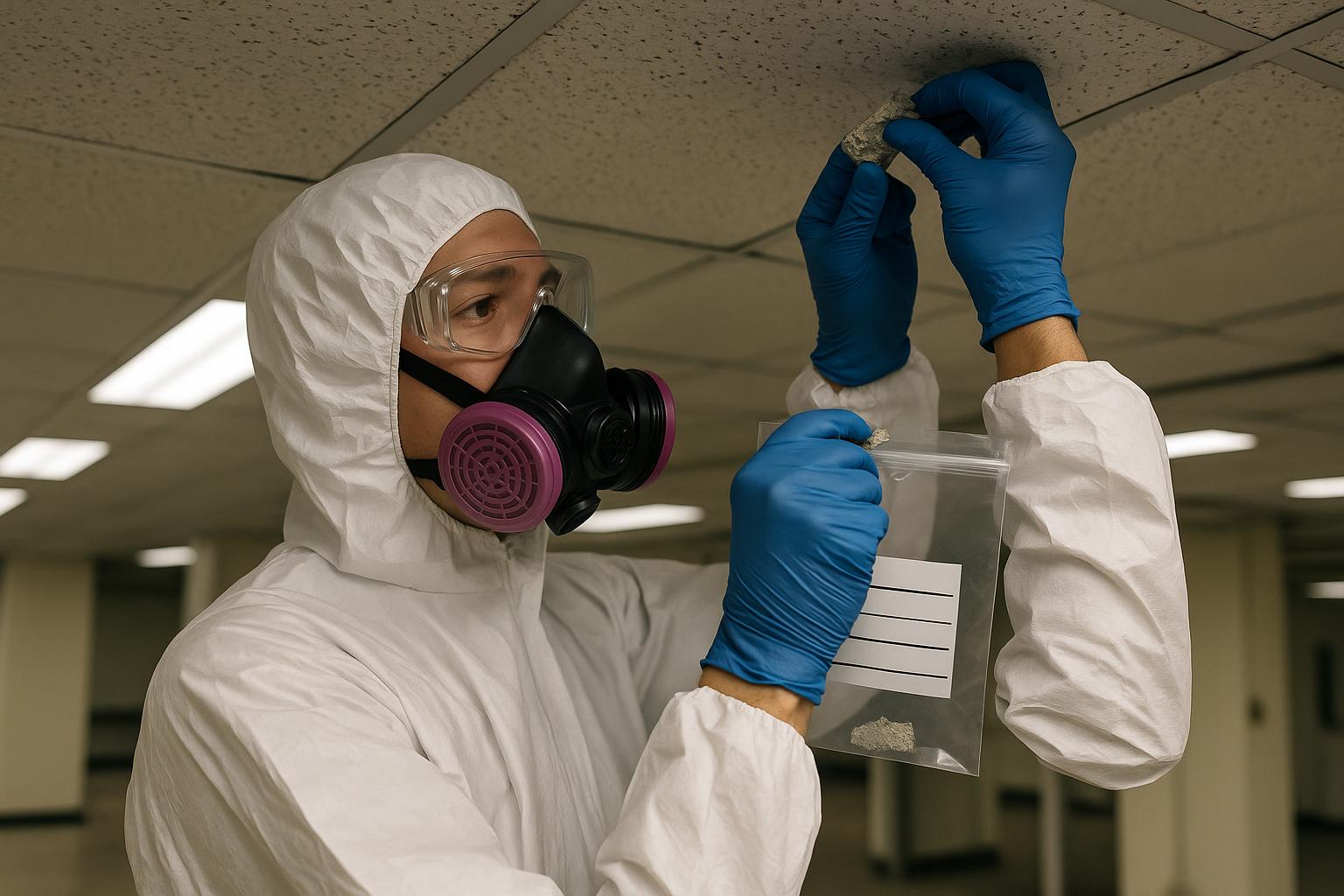
Samples are collected following strict safety protocols. Our inspectors wear full PPE — respirators, disposable coveralls, and gloves — and use wet-cutting methods to minimise fibre release. Each sample is sealed in a labelled, airtight container.
Accredited Lab Analysis
Samples are analysed at an accredited laboratory using Polarised Light Microscopy (PLM) for bulk materials and Transmission Electron Microscopy (TEM) for air samples. These methods identify asbestos fibre type and concentration with high precision.
Results Report & Recommendations
You receive a detailed report identifying which materials tested positive, the type and percentage of asbestos present, risk assessment for each location, and clear recommendations — whether to encapsulate, manage in place, or remove.
Management Plan
If asbestos is confirmed, we develop a management plan that outlines monitoring schedules, labelling requirements, safe work procedures, and when professional abatement is necessary. This plan keeps your building compliant and your occupants safe.
Singapore Asbestos Regulations
Singapore regulates asbestos under the Workplace Safety and Health (WSH) Act and its subsidiary legislation. While the import of raw asbestos has been banned since 1989, asbestos-containing materials installed before the ban remain in many older buildings across the island.
Under the WSH (Asbestos) Regulations, building owners and employers have a legal duty to identify asbestos-containing materials before any renovation, refurbishment, or demolition work begins. Failure to test can result in significant penalties and, more importantly, endanger workers and occupants.
The permissible exposure limit (PEL) for asbestos fibres in workplace air in Singapore is 0.1 fibres per millilitre (f/ml) averaged over an 8-hour period — aligned with international standards. Any exposure above this level requires immediate containment and remediation action.
When Testing Is Legally Required
- Before any renovation or refurbishment of buildings constructed prior to 1990
- Prior to demolition of any building where asbestos may be present
- When damaged or deteriorating materials suspected of containing asbestos are discovered
- As part of workplace safety compliance for commercial and industrial buildings
- For due diligence during property transactions involving older buildings
Types of Asbestos Testing We Offer
Different situations call for different testing approaches. We tailor our service to match your property's specific needs and regulatory requirements.
Bulk Sample Analysis
Physical samples of suspect materials (tiles, insulation, coatings, adhesives) are collected and analysed under Polarised Light Microscopy (PLM) to determine whether asbestos fibres are present and, if so, which type — chrysotile, amosite, or crocidolite.
Best for: Identifying asbestos in building materials before renovation, refurbishment, or demolition.
Air Monitoring
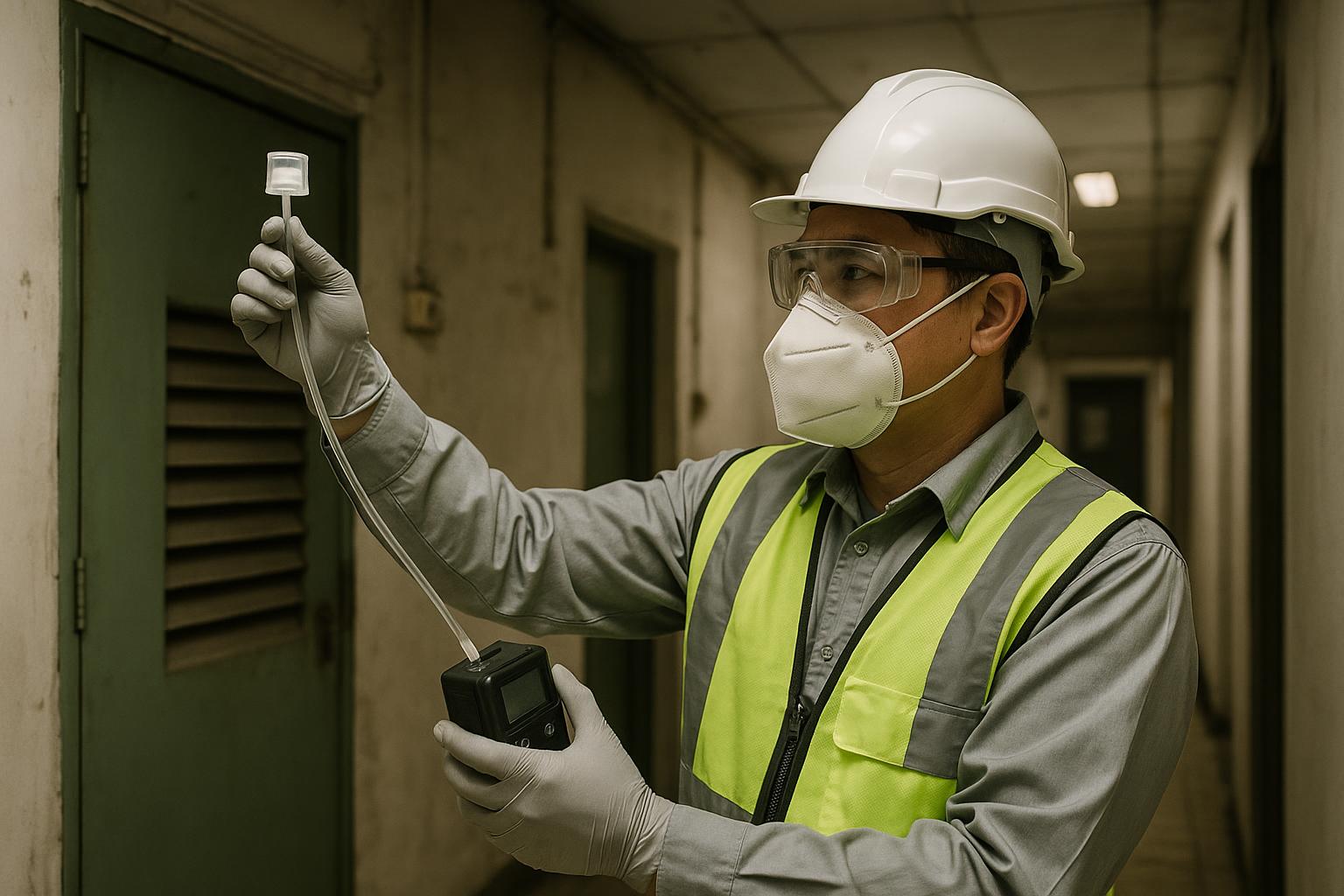
Calibrated air pumps draw measured volumes of air through membrane filters. Captured fibres are analysed using Phase Contrast Microscopy (PCM) or Transmission Electron Microscopy (TEM) to determine airborne fibre concentrations against the PEL of 0.1 f/ml.
Best for: Workplace compliance monitoring, during and after asbestos removal projects, and occupant safety verification.
Soil Testing
Asbestos fibres can contaminate soil through deteriorating asbestos cement products, demolition debris, or illegal dumping. We collect soil samples for laboratory analysis to determine fibre content and assess exposure risk during excavation or landscaping work.
Best for: Construction sites, land development projects, and properties with suspected buried asbestos waste.
Management vs Refurbishment Surveys
Management surveys assess the condition of known or suspected ACMs during normal occupancy — determining whether materials pose an immediate risk and establishing monitoring protocols. Refurbishment/demolition surveys are more intrusive, identifying all ACMs in areas where building work is planned, including those behind walls and above ceilings.
Best for: Ongoing building management (management survey) or planned construction work (refurbishment survey).
Frequently Asked Questions About Asbestos Testing
Is asbestos still found in Singapore buildings?
How much does asbestos testing cost?
How long do asbestos test results take?
What happens if asbestos is found?
Is it safe to stay in a building with asbestos?
When is asbestos testing required in Singapore?
Don't Guess — Test for Asbestos
If your building was constructed before 1990 or you're planning renovation work, professional asbestos testing protects your health, your workers, and your legal compliance. Get certified results you can trust.
Mold Busters Singapore • 60 Ubi Crescent #01-01, Ubi TechPark 408569
Got Mold? Get Expert Help Today.
Don't let mold compromise your health or property. Call Mold Busters Singapore for fast, professional service.
Request a Free Quote
Describe your mold concern and we'll get back to you within 24 hours with a detailed assessment and quote.
Thank You!
We've received your message and will contact you within 24 hours.