
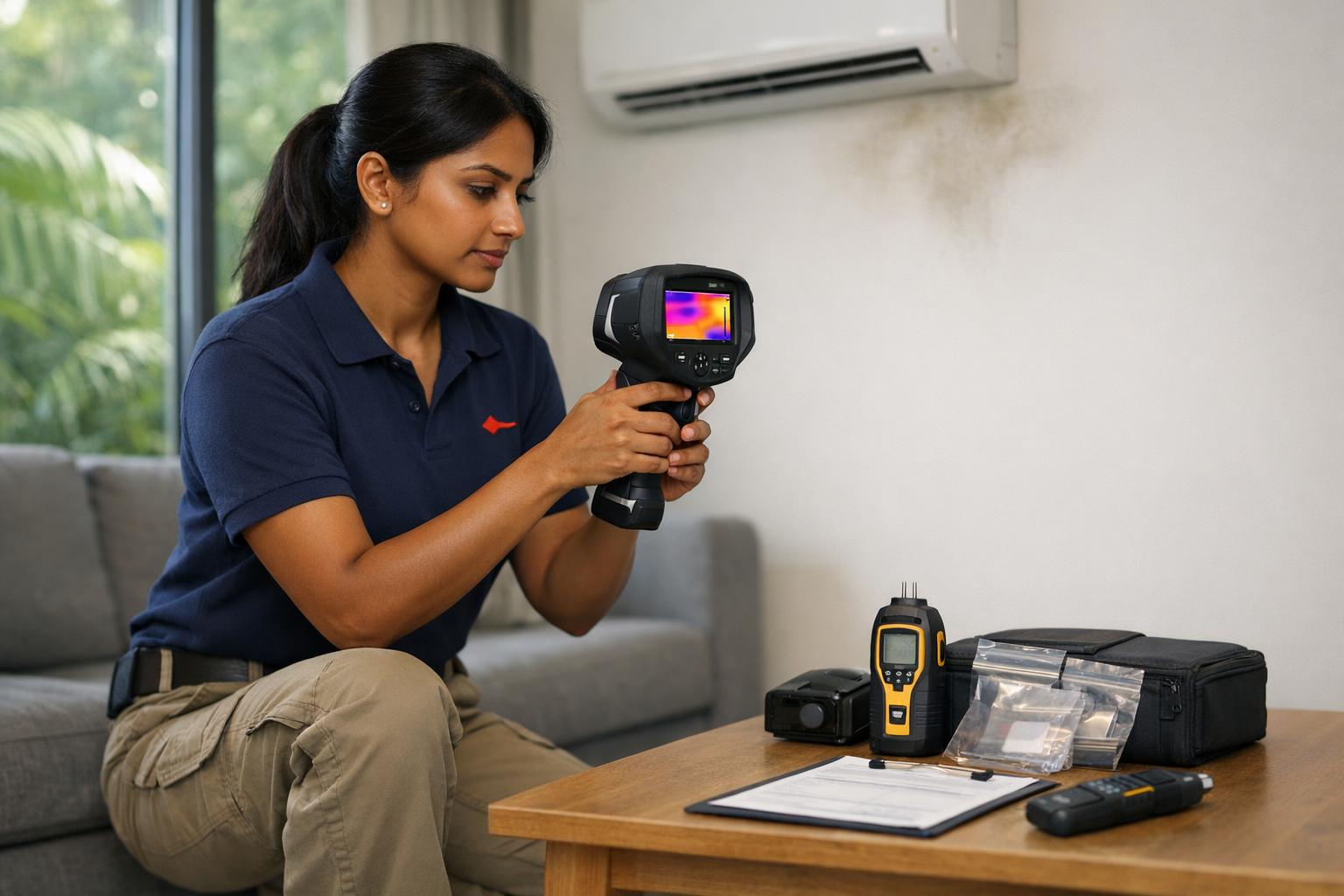
Create a useful complaint record
Record where and when the concern occurs, occupancy, odour descriptions, recent renovation, water events and maintenance history. A floor plan and named site contact help coordinate access.
Do not circulate occupants’ medical details through a general inquiry. Health symptoms require an appropriate healthcare or occupational-health discussion.
Choose measurements for a purpose
A CO₂ measurement may inform ventilation assessment but does not detect every pollutant. Formaldehyde, particles and mould sampling are different parameters with different methods and limitations.
Discuss the premises, operating conditions, sampling locations, laboratory arrangements and report interpretation before commissioning work.
Apply local guidance to the right premises
NEA’s building guidance addresses ventilation and air-conditioning maintenance. Bringing in excessive humid outdoor air can create moisture problems; the appropriate approach depends on the system and conditions.
The public scope of SS 554:2026 excludes residential and several specialist premises. Confirm applicable standards and requirements for the particular building rather than assuming a universal certificate.
Coordinate work and follow-up
Agree access, occupant communication, any work-area restrictions and the relationship between treatment and maintenance repairs. State whether reinstatement, verification testing or repeat visits are included.
AOM is Mold Busters’ Singapore partner. Share the building details so the team can confirm suitable local arrangements and the proposed assessor’s role.