
 John Ward
Does vinegar kill mold? Will bleach do the job? If you've discovered mold in your Singapore home — on bathroom tiles, behind furniture, or creeping along window frames — your first instinct is probably to grab whatever cleaning product is closest. But not all methods work equally well, and some can actually make the problem worse.
We've spent nearly two decades and over 15,000 inspections testing what actually kills mold in real-world conditions — not in a lab, but in Singapore's HDB flats, condos, and landed homes where 80%+ humidity is the daily reality. Some widely recommended methods work brilliantly on certain surfaces but fail completely on others. Some are outright dangerous if used incorrectly.
This guide breaks down every common DIY mold-killing method: how it works, what it's effective against, where it fails, and how to use it properly. We've also included the comparison table at the end so you can make a quick decision based on your specific situation.
Key Takeaways
- Undiluted white vinegar kills ~82% of mold species — but only with a 60-minute soak (spraying and wiping immediately does almost nothing)
- Bleach works on non-porous surfaces only — it cannot penetrate porous materials like wood, drywall, or grout
- Hydrogen peroxide (3%) is the best all-rounder: effective, low-toxicity, and safe for most surfaces
- Never mix bleach with vinegar or ammonia — the chemical reaction produces toxic gases that can be lethal in enclosed spaces
- If mold covers more than 10 square feet or returns within 3 months, DIY methods won't solve the underlying problem
Does Vinegar Kill Mold?
Yes — white vinegar kills approximately 82% of known mold species. It's one of the most effective household mold killers available, and at SGD 2–3 per bottle from any NTUC FairPrice or Cold Storage, it's also the cheapest. But most people use it wrong, which is why it gets a mixed reputation online.
Vinegar's acetic acid (5% concentration in standard white vinegar) breaks down the cellular structure of mold. It disrupts the pH balance that mold needs to survive, killing both the visible colony and many of the underlying root structures (hyphae) that anchor mold into surfaces. Unlike bleach, vinegar can partially penetrate porous materials — making it more effective on grout, wood, and painted walls.
~82%
Mold species killed by vinegar
60 min
Minimum soak time required
SGD 2–3
Cost per bottle
5%
Acetic acid concentration
How to Use Vinegar to Kill Mold
Fill a spray bottle with undiluted white vinegar
Do not dilute. The 5% acetic acid concentration is the minimum needed for effectiveness. Diluting reduces it below the threshold where it kills mold.
Saturate the moldy area completely
Spray generously until the surface is visibly wet — not just lightly misted. For vertical surfaces, spray from the top down so the vinegar runs over the entire affected area.
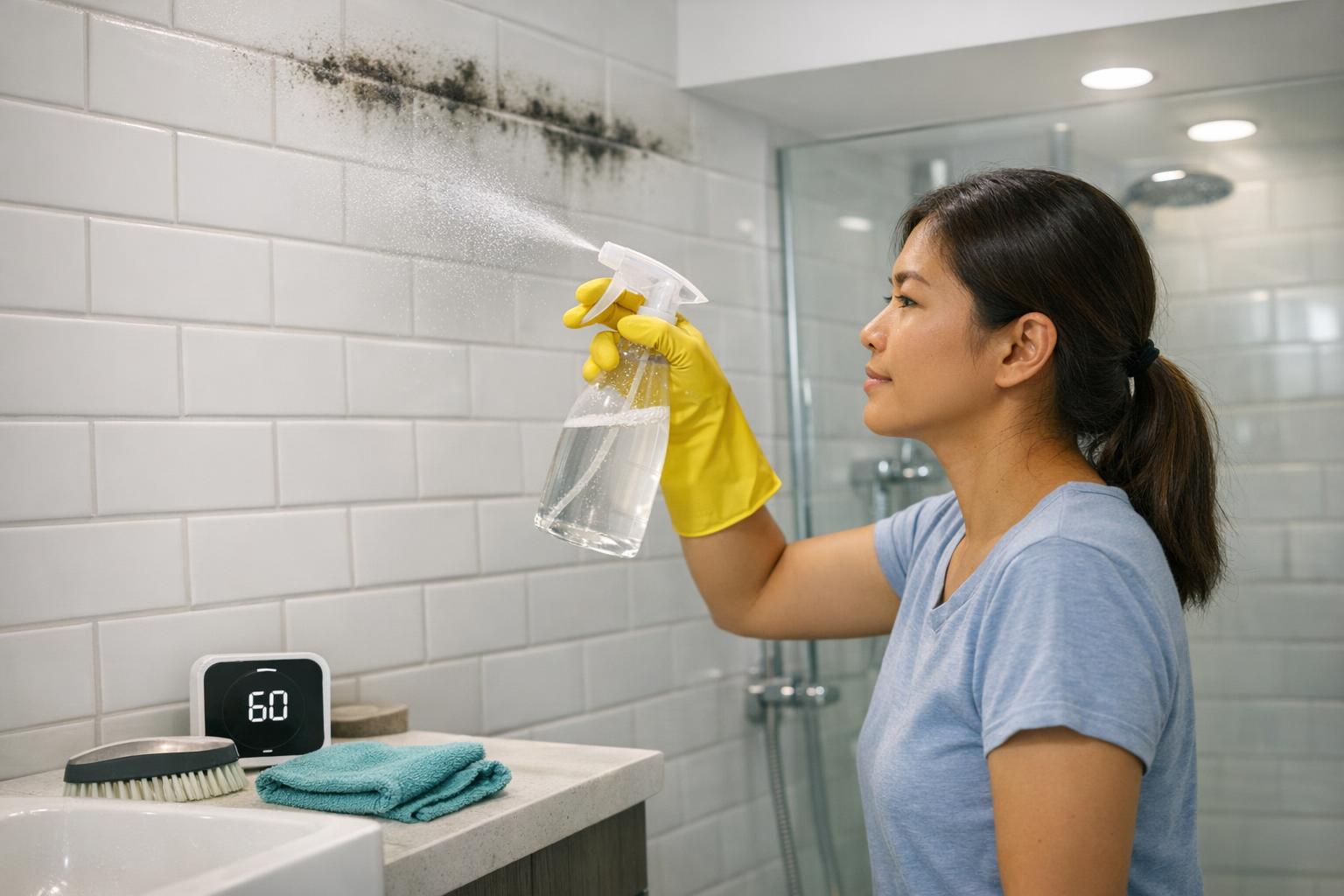
Walk away for 60 minutes
This is the step most people skip. The acid needs sustained contact time to penetrate and kill the mold structure. Set a timer.
Scrub with a stiff brush
After 60 minutes, scrub the area with a nylon brush (soft brush for painted walls). An old toothbrush works well for grout lines.
Wipe clean and dry thoroughly
Wipe with a clean damp cloth, then dry the area completely with a dry cloth or fan. In Singapore's humidity, leaving surfaces wet invites immediate regrowth.
Field-Tested Insight
From our experience treating mold across thousands of Singapore homes: the single biggest mistake with vinegar is insufficient soak time. We've tested side-by-side comparisons — spray-and-wipe removes the visible stain but leaves the root structure alive, leading to regrowth within days. A full 60-minute soak actually kills the colony. The vinegar smell dissipates within 2–3 hours.
Vinegar Limitations
- The remaining ~18% of mold species — including some Stachybotrys (black mold) strains — are resistant to acetic acid
- Less effective on deeply embedded mold in silicone sealant or severely deteriorated grout
- The smell, while temporary, is strong — not ideal for bedrooms or nurseries during the soak period
- Repeated use on natural stone (marble, granite) can cause etching over time due to the acidity
Will Bleach Kill Mold? Myths vs Reality
Bleach kills mold on non-porous surfaces — but it's far less effective than most people believe. The internet is full of advice recommending bleach as the ultimate mold killer. The reality is more nuanced, and in many Singapore homes, bleach does more harm than good.
Household bleach (sodium hypochlorite, typically 3–5% concentration) is a powerful surface disinfectant. On non-porous surfaces like ceramic tiles, glass, bathtubs, and countertops, it kills mold on contact and whitens stains effectively. The problem is what happens on porous surfaces — and in Singapore's humid climate, most mold grows on or near porous materials.
Why Bleach Fails on Porous Surfaces
Bleach is mostly water with a small percentage of sodium hypochlorite. On porous materials like wood, drywall, grout, and concrete — the most common surfaces in Singapore HDB flats — the water component soaks in while the active chlorine stays on the surface.
The result: the surface looks clean because bleach whitens the visible stain, but the mold roots beneath the surface survive and regrow. Worse, the water you've just added to a porous surface feeds the mold colony.
We see this constantly in Singapore inspections — homeowners who've been bleaching the same bathroom wall monthly for years, with the mold returning each time. The wall looks clean for a week, then the dark patches reappear.
Critical Safety Warning: Never Mix Bleach with These
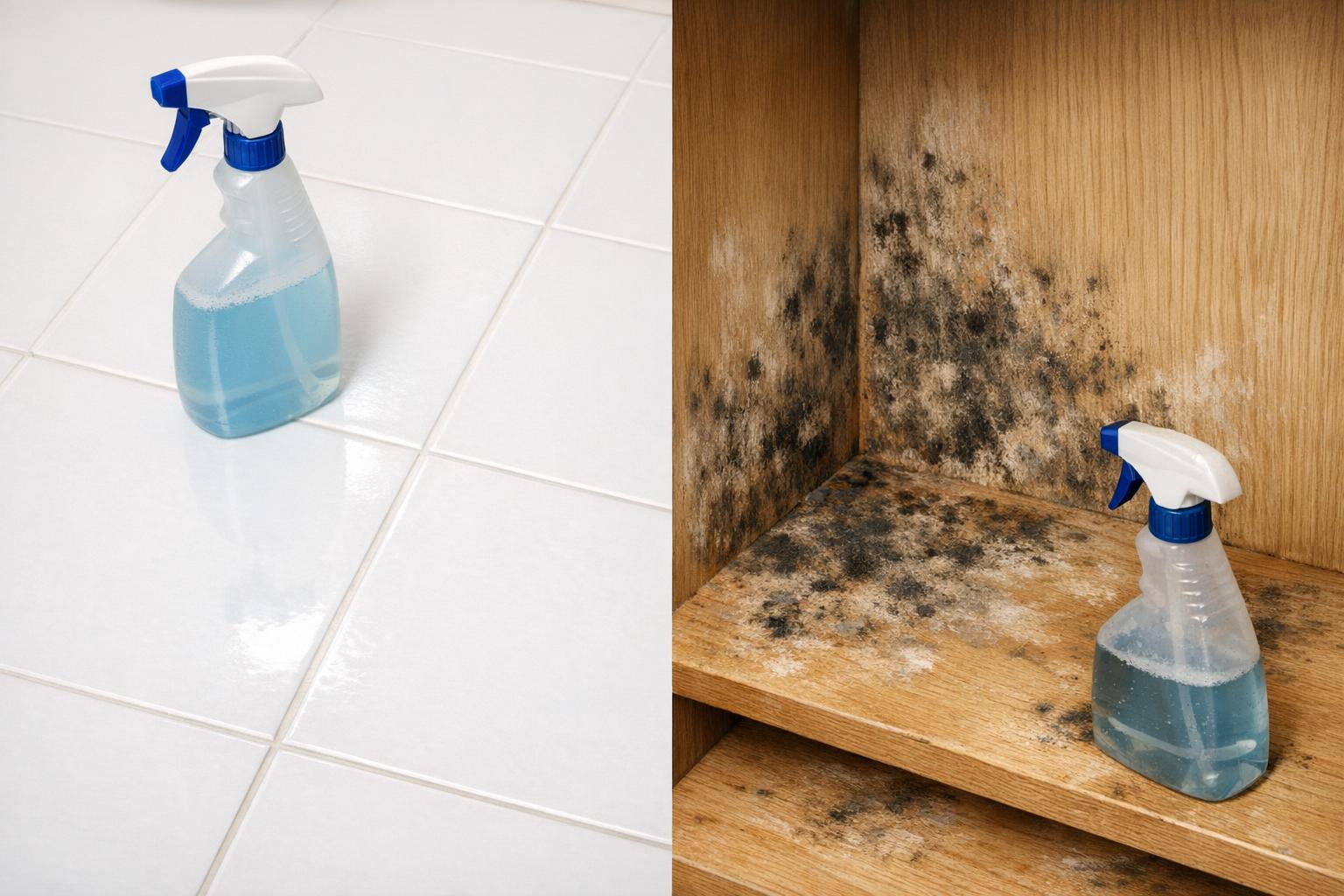
Bleach + vinegar = toxic chlorine gas. Bleach + ammonia = toxic chloramine vapour. Both reactions can cause severe respiratory damage or death in enclosed spaces. Many Singapore HDB bathrooms are windowless with only an exhaust fan — a dangerous environment for chemical mixing. If switching between products, rinse surfaces thoroughly with water and wait at least 30 minutes between applications.
When Bleach Actually Works
- Ceramic and porcelain tiles: The glazed, non-porous surface lets bleach reach and kill the mold completely
- Glass shower screens: Effective at removing mold and hard water stains simultaneously
- Bathtubs and sinks: Non-porous enamel, acrylic, or steel surfaces respond well
- Stain removal: Even where bleach doesn't kill deeply, it's the most effective stain whitener for cosmetic improvement
When Bleach Does Not Work
- Wood furniture, cabinets, shelving: Bleach can't penetrate — use vinegar or hydrogen peroxide instead
- Drywall and painted walls: The mold roots extend into the material; bleach only addresses the surface
- Grout and concrete: Porous materials that absorb the water while the chlorine stays on top
- Fabric, carpet, mattresses: Bleach damages the material and doesn't kill subsurface mold
The Bleach-and-Water Myth
Many cleaning guides recommend diluting bleach 1:10 with water. While this is the correct dilution for general disinfection, adding more water to a bleach solution makes it even less effective against mold on porous surfaces — you're increasing the water that penetrates while the chlorine concentration drops further. On non-porous tiles, diluted bleach still works fine.
Hydrogen Peroxide
3% hydrogen peroxide is arguably the best all-round DIY mold killer. It's antifungal, antibacterial, and antiviral. It kills mold through oxidation — releasing oxygen that destroys the cell walls of mold colonies. Unlike bleach, it doesn't produce toxic fumes, and unlike vinegar, it doesn't leave a lingering smell.
Standard 3% hydrogen peroxide — available at Guardian and Watsons for SGD 3–5 — is effective on both porous and non-porous surfaces. The effervescent (fizzing) action helps lift mold from textured surfaces and grout lines. It also lightens stains, making it particularly useful on white grout that has darkened.
How to Use
- Pour 3% hydrogen peroxide into a dark spray bottle (light degrades its potency)
- Spray directly onto the moldy area until saturated
- Wait 10–15 minutes — you'll see fizzing as the oxidation reaction works
- Scrub with a brush, then wipe clean
- For stubborn stains, apply a second round and wait another 10 minutes
Pro Tip
Hydrogen peroxide degrades when exposed to light — that's why it comes in dark brown bottles. If you transfer it to a clear spray bottle, use it within a few days. Better yet, buy a dark-coloured spray bottle from Daiso (SGD 2) to keep it potent longer.
Limitations: Can cause bleaching on coloured fabrics, dark wood finishes, and dyed surfaces. Always test on a hidden area first. Higher concentrations (10%+) are more effective but require careful handling — 3% is the safe consumer-grade option.
Baking Soda
Baking soda (sodium bicarbonate) is a gentle mold remover that doubles as a deodoriser and moisture absorber. It's the safest option on this list — non-toxic, food-grade, safe around children and pets, and won't damage any surface. The trade-off is that it's less potent than vinegar or hydrogen peroxide against established mold colonies.
Baking soda works through mild alkalinity (pH ~8.3) that disrupts mold growth, combined with gentle abrasive action that physically removes mold from surfaces. It also absorbs moisture — a valuable secondary benefit in Singapore's humidity — and neutralises the musty odour that mold produces.
Two Ways to Use Baking Soda
Spray solution: Dissolve 1 tablespoon of baking soda in 500ml of water. Spray onto moldy surfaces, scrub, and wipe. Good for light surface mold and regular maintenance.
Paste method (more effective): Mix baking soda with a small amount of water to form a thick paste. Apply directly to moldy grout lines or stubborn spots. Leave for 15–20 minutes, then scrub with a stiff brush. The paste clings to surfaces better than a spray — similar to how commercial gel removers work. For extra effectiveness, spray vinegar over the paste — the fizzing reaction helps lift mold from crevices.
Baking Soda + Vinegar Combination
Spraying vinegar onto a baking soda paste creates a vigorous fizzing reaction (carbon dioxide release). While the resulting sodium acetate solution is chemically neutral, the physical fizzing action effectively loosens mold from textured surfaces and grout. The combination is more effective than either ingredient alone — not because of chemistry, but because of the mechanical lifting action.
Rubbing Alcohol (Isopropyl)
Isopropyl alcohol (70% concentration) kills mold on contact by denaturing the proteins in mold cells. It works fast, evaporates cleanly, and leaves no residue — making it ideal for electronics, leather goods, and surfaces where moisture is a concern.
70% isopropyl alcohol is available at Guardian and Watsons for SGD 3–6. The 70% concentration is actually more effective than 90%+ — the added water helps the alcohol penetrate cell walls before evaporating.
Best Uses
- Leather items: Bags, shoes, belts — spray lightly, wipe, and air dry
- Electronics: Computer cases, keyboards, phone covers — alcohol evaporates without leaving moisture
- Hard non-porous surfaces: Effective on countertops, glass, metal
- Small spot treatments: Quick cleanup of isolated mold spots
Limitations: Alcohol evaporates too quickly for large areas — the contact time is brief, making it less effective on established colonies. It doesn't penetrate porous materials. Highly flammable — keep away from open flames, stoves, and lit cigarettes. Not cost-effective for treating large areas.
Not Sure Which Method to Use?
Send us a photo of your mold problem and our certified team will recommend the right approach — DIY or professional — with a free virtual inspection.
UV Light & Heat
Does UV Light Kill Mold?
Yes — UV-C light (254 nm wavelength) kills mold spores by destroying their DNA. This is the same technology used in hospital sterilisation and water treatment. Consumer UV-C devices are available on Shopee and Lazada for SGD 30–80, typically as handheld wands or small cabinet sanitisers.
However, consumer UV-C devices have significant limitations for mold removal. They only kill what they can directly shine on — UV light doesn't penetrate surfaces, corners, or grout crevices where mold roots live. They're slow, requiring extended exposure times (30+ minutes per small area) to kill surface spores. And UV-C light is dangerous to eyes and skin — never use without proper shielding.
Best use case: UV-C is better for mold prevention than removal. Some Singapore homeowners install UV-C lights inside wardrobes or shoe cabinets to prevent mold establishing in enclosed, humid spaces. For active mold removal, chemical methods are far more practical.
Can Heat Kill Mold?
Most mold species die at sustained temperatures above 60°C (140°F). Steam cleaners that produce steam at 100°C+ can effectively kill surface mold. However, the heat must be sustained — a brief pass with a steamer won't penetrate deeply enough.
- Steam cleaners: Effective on tiles, grout, and hard surfaces. Direct the steam nozzle at the moldy area for 30+ seconds per spot. The heat kills mold and the moisture loosens it for wiping. Kärcher and similar brands are available at Courts and Harvey Norman (SGD 80–200).
- Hot water: Washing mold-contaminated clothing and fabrics in hot water (60°C+) kills most mold. Singapore's washing machines typically have a hot wash setting — use it for contaminated items.
- Microwave: Microwaving mold-contaminated items is sometimes suggested online. This works only for microwave-safe items (sponges, certain cloths) and is impractical for actual mold problems.
Field-Tested Insight
We use professional-grade steam systems during our remediation work in Singapore. Steam is excellent as a supplementary tool — it kills surface mold without chemicals and works well in food preparation areas, children's rooms, and spaces where chemical residues are a concern. But steam alone can't address the root cause of persistent mold: the underlying moisture source.
Full Comparison: What Kills Mold?
Use this table to quickly find the right method for your situation. Effectiveness ratings are based on our field experience across Singapore homes, not manufacturer claims.
DIY Mold Removal Methods Compared — Based on Field Testing in Singapore Homes
| Method | Effectiveness | Best For | Safety | Cost (SGD) |
|---|---|---|---|---|
| White vinegar (undiluted) | High — ~82% of species | Tiles, grout, painted walls, wood | Very safe — food grade | 2–3 |
| Bleach (diluted) | High on non-porous only | Ceramic tiles, glass, bathtubs | Moderate — toxic fumes | 3–5 |
| Hydrogen peroxide (3%) | High — broad spectrum | Most surfaces, stain removal, grout | Safe — mild irritant | 3–5 |
| Baking soda paste | Moderate — gentle action | Sensitive surfaces, deodorising, fabric | Very safe — non-toxic | 2 |
| Rubbing alcohol (70%) | Moderate — fast kill | Leather, electronics, spot treatment | Safe — flammable | 3–6 |
| UV-C light | Low — surface only | Prevention in wardrobes, shoe cabinets | Caution — eye/skin hazard | 30–80 |
| Steam (100°C+) | Moderate to high | Tiles, grout, chemical-free areas | Caution — burn risk | 80–200 (device) |
| Hot water (60°C+) | Moderate | Washable fabrics and clothing | Safe | Free |
Key Takeaways
- For bathroom tiles and non-porous surfaces: vinegar or hydrogen peroxide are the most effective and safest options
- For grout and porous surfaces: vinegar with a 60-minute soak, or baking soda paste with vinegar spray
- For electronics and leather: 70% isopropyl alcohol
- For fabric and clothing: hot water wash (60°C+)
- Bleach only for non-porous surfaces where stain whitening is also needed
- UV-C and steam are supplementary tools — not primary mold killers for established growth
When DIY Isn't Enough
Every method on this list has limits. DIY mold removal works well for small, surface-level problems on accessible surfaces. But there are clear thresholds where no household product will solve the problem — because the issue isn't the mold itself, it's the moisture source feeding it.
Signs You Need Professional Help
If any of these apply, DIY methods are treating the symptom, not the cause. A professional assessment is the cost-effective next step — not another bottle of vinegar.
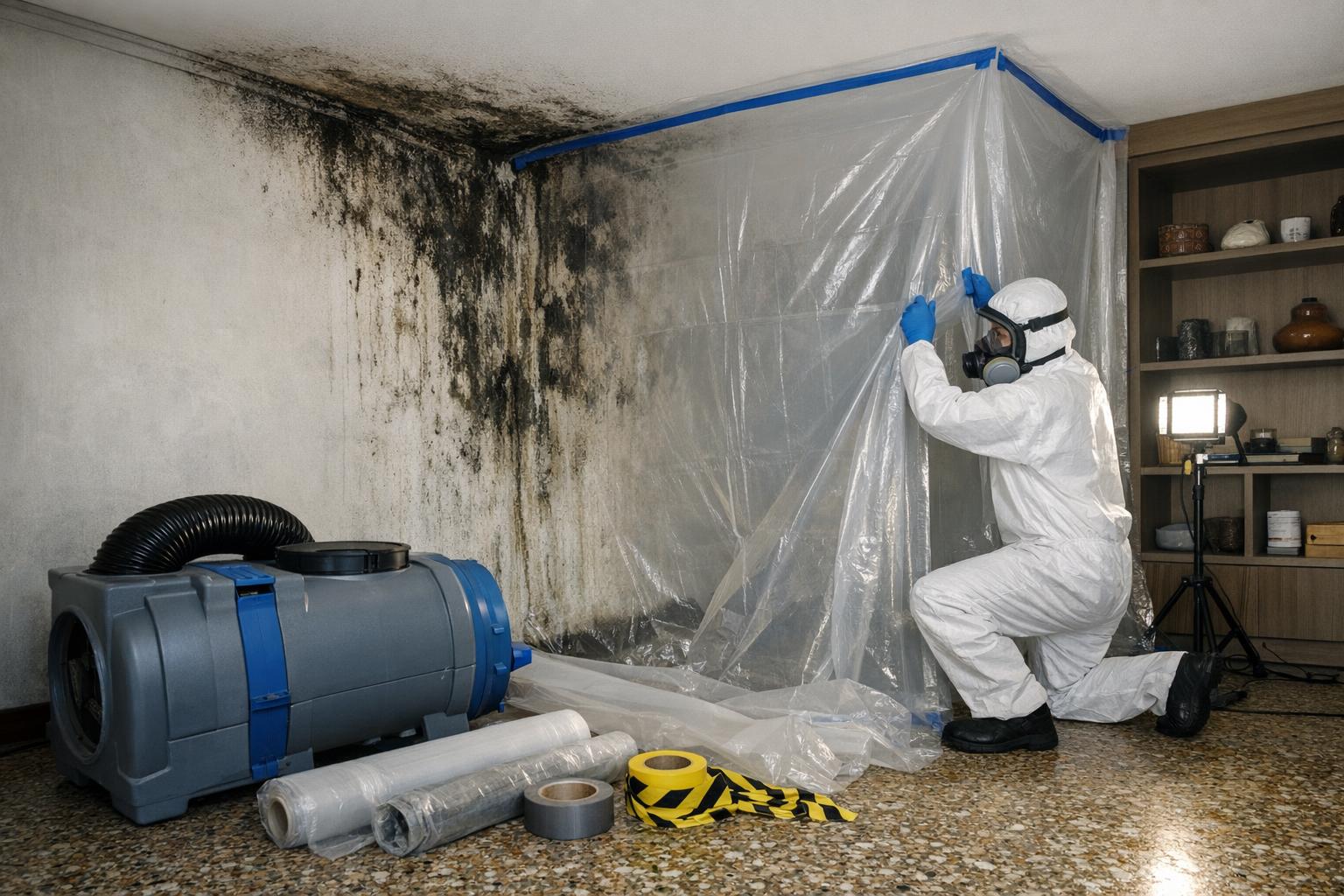
- The affected area exceeds 10 square feet (~1 square metre): The internationally recognised threshold for professional remediation. Large colonies release dangerous levels of spores when disturbed without proper containment.
- Mold returns within 3 months of cleaning: Recurring mold is the clearest signal of an unresolved moisture problem — a leaking pipe, failed waterproofing, or inadequate ventilation that no spray will fix.
- Mold is inside walls, under flooring, or in the aircon system: Hidden mold requires thermal imaging and air quality testing to locate and assess.
- You suspect black mold (Stachybotrys): Dark, slimy mold on chronically wet surfaces should never be disturbed without professional containment. Professional mold testing can confirm the species.
- Health symptoms are present: Persistent coughing, wheezing, skin rashes, or allergic reactions that improve when you leave the home suggest significant exposure levels.
Field-Tested Insight
From our 15,000+ inspections across Singapore: when homeowners tell us they've been cleaning the same mold patch for months, the root cause is almost always a moisture issue — a slow pipe leak behind the wall, failed bathroom waterproofing seeping into the adjacent bedroom, or an aircon system that's not draining properly. A SGD 200–400 repair at the source is always cheaper than years of buying cleaning products.
At Mold Busters Singapore, our 5-step remediation process starts with identifying the moisture source — not just treating the visible mold. Our team holds internationally recognised certifications in mold inspection and remediation. For expert product recommendations, see our guide to the best mold removers and sprays in Singapore, or learn about specific surface treatment in our mold on walls guide.