
 John Ward
If you've ever searched for information about mould and mold, you've probably noticed both spellings being used — and wondered whether they refer to different things. Here's the short answer: mould and mold are exactly the same thing. The difference is purely a matter of spelling convention, not science. But understanding what mold actually is, how it grows, and why Singapore's tropical climate makes it such a persistent problem — that's where things get interesting.
This guide covers everything you need to know about mold — from its biology and the conditions that let it thrive, to the specific types most commonly found in Singapore homes, the health risks it poses, and when it's time to stop Googling and call a professional.
Key Takeaways
- Mould and mold are identical — the spelling varies by region (British vs American English)
- Mold is a type of fungus with over 100,000 known species — and it can colonise a damp surface in 24 to 48 hours
- Singapore's average 84% relative humidity and 27°C temperatures create ideal conditions for year-round mold growth
- Health risks range from mild allergies to serious respiratory issues — especially for children, elderly, and immunocompromised individuals
- Professional remediation is recommended when mold covers an area larger than 10 square feet
Mould vs Mold: What's the Difference?
The difference between "mould" and "mold" is purely regional spelling — similar to "colour" vs "color" or "favour" vs "favor." Both words refer to exactly the same organism: a multicellular fungus that grows in filamentous structures called hyphae.
Quick Clarification
Mould and mold are the same thing. Singapore, following British English conventions, typically uses 'mould' — but both spellings are correct and interchangeable. Throughout this article we'll use 'mold' for consistency.
Regional Spelling Conventions for Mould/Mold
| Spelling | Regions That Use It | Context |
|---|---|---|
| Mould | UK, Australia, New Zealand, Singapore, Malaysia, India | British English standard — used in Singapore government publications, local media, and everyday writing |
| Mold | United States, Canada, Philippines | American English standard — dominates scientific literature, international research, and internet searches |
| Both accepted | International scientific community | Scientific papers may use either spelling depending on the journal's editorial style |
For Singaporeans, "mould" is the spelling you'll encounter in HDB notices, BCA guidelines, and local newspapers. However, when searching online — particularly on Google — "mold" tends to return significantly more results, as most English-language web content follows American English conventions.
Pro Tip
When searching online for mold removal advice, try both spellings. Searching for 'mold removal Singapore' will yield more international results, while 'mould removal Singapore' may surface more locally relevant content.
What Is Mold? Biology & Classification
Mold is a type of fungus — specifically, a multicellular organism belonging to the kingdom Fungi. Unlike plants, mold cannot produce its own food through photosynthesis. Instead, it survives by decomposing organic matter — breaking down dead plant material, wood, paper, fabric, and even the dust that settles on your walls.
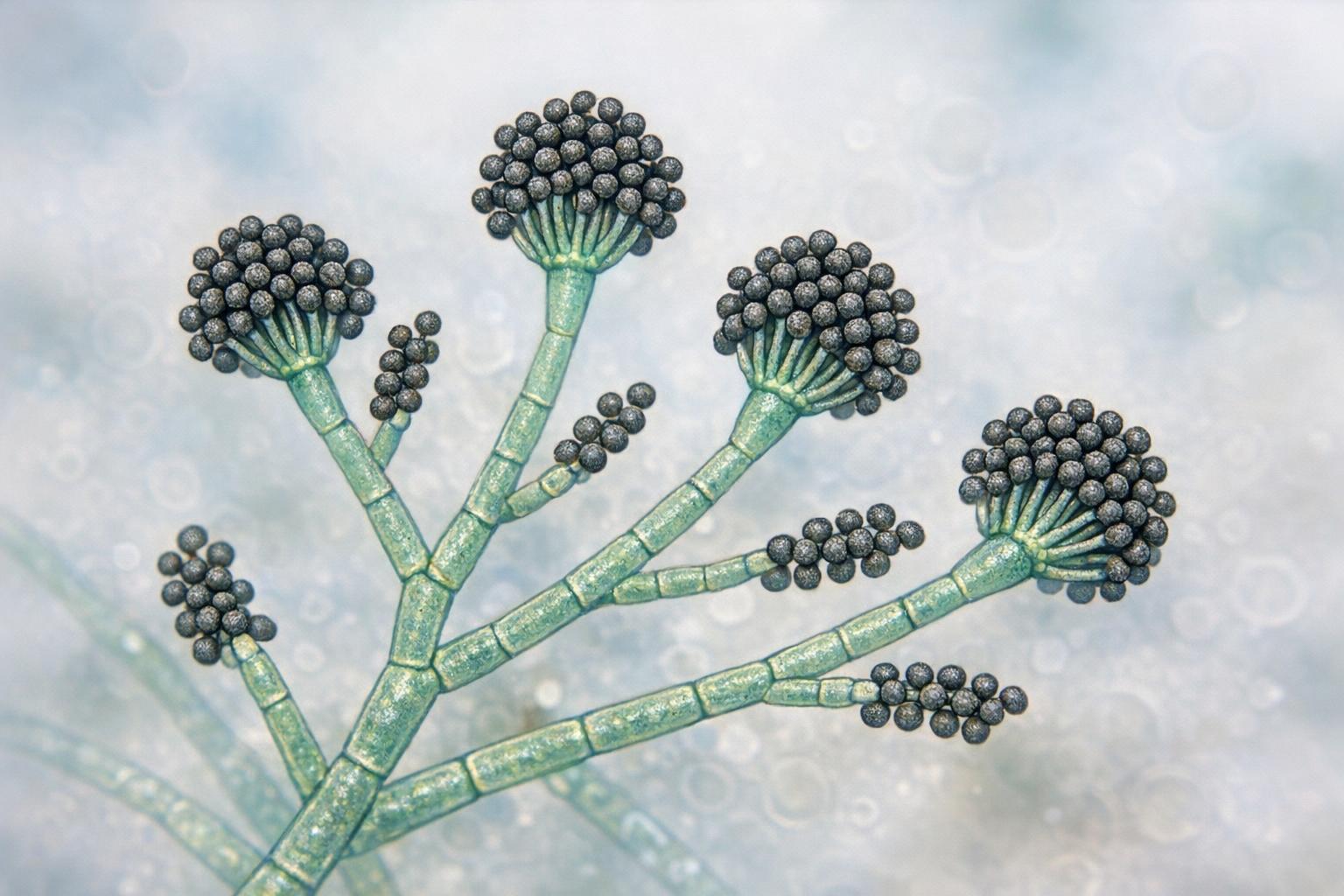
The Microscopic World of Mold
Under a microscope, mold reveals a complex structure. The main body consists of thread-like filaments called hyphae — these branch and interweave to form a network called a mycelium. This mycelium is what you see as the fuzzy, coloured patch on your wall or ceiling.
At the tips of specialised hyphae, mold produces spores — microscopic reproductive cells that are released into the air. A single mold colony can release millions of spores, which drift on air currents and settle on new surfaces. When conditions are right (moisture + organic material + warmth), these spores germinate and start new colonies.
This life cycle is remarkably efficient. Mold spores are virtually everywhere — floating in outdoor air, carried indoors on clothing, pets, and through ventilation systems. They are so resilient that they can remain dormant for years, waiting for the right conditions to germinate.
100K+
Known mold species worldwide
1,000+
Species commonly found indoors
24-48h
Time to colonise a damp surface
Millions
Spores from a single colony
Is Mold a Fungus?
Yes — mold is classified under the kingdom Fungi, along with mushrooms, yeasts, and other organisms that decompose organic matter. While mushrooms form large, visible fruiting bodies, mold grows as flat, spreading colonies on surfaces. Both play a critical role in nature by recycling dead organic material back into the ecosystem.
Not all mold is harmful. Penicillium chrysogenum gave us the antibiotic penicillin. Aspergillus oryzae is essential in fermenting soy sauce and miso. However, the mold growing on your bathroom ceiling or behind your wardrobe is a different story entirely — and understanding the distinction matters for your health.
How Mold Grows: The Science Behind It
Mold needs four conditions to grow. Remove any one of these, and mold cannot establish a colony:
The Four Conditions Mold Needs to Grow
| Condition | What Mold Needs | Singapore Context |
|---|---|---|
| Moisture | Relative humidity above 60%, or direct water contact (leaks, condensation) | Singapore averages 84% RH — well above the mold growth threshold year-round |
| Temperature | Between 20°C and 35°C for most species; optimal around 25-30°C | Singapore's average temperature of 27°C sits right in the optimal zone |
| Organic material | Any carbon-based surface: wood, paper, drywall, fabric, dust, paint, wallpaper | HDB and condo interiors are full of organic materials — furniture, curtains, even the adhesive behind wallpaper |
| Oxygen | Mold is aerobic — it requires oxygen to grow | Normal indoor air contains approximately 21% oxygen — always sufficient |
The Hidden Moisture Problem
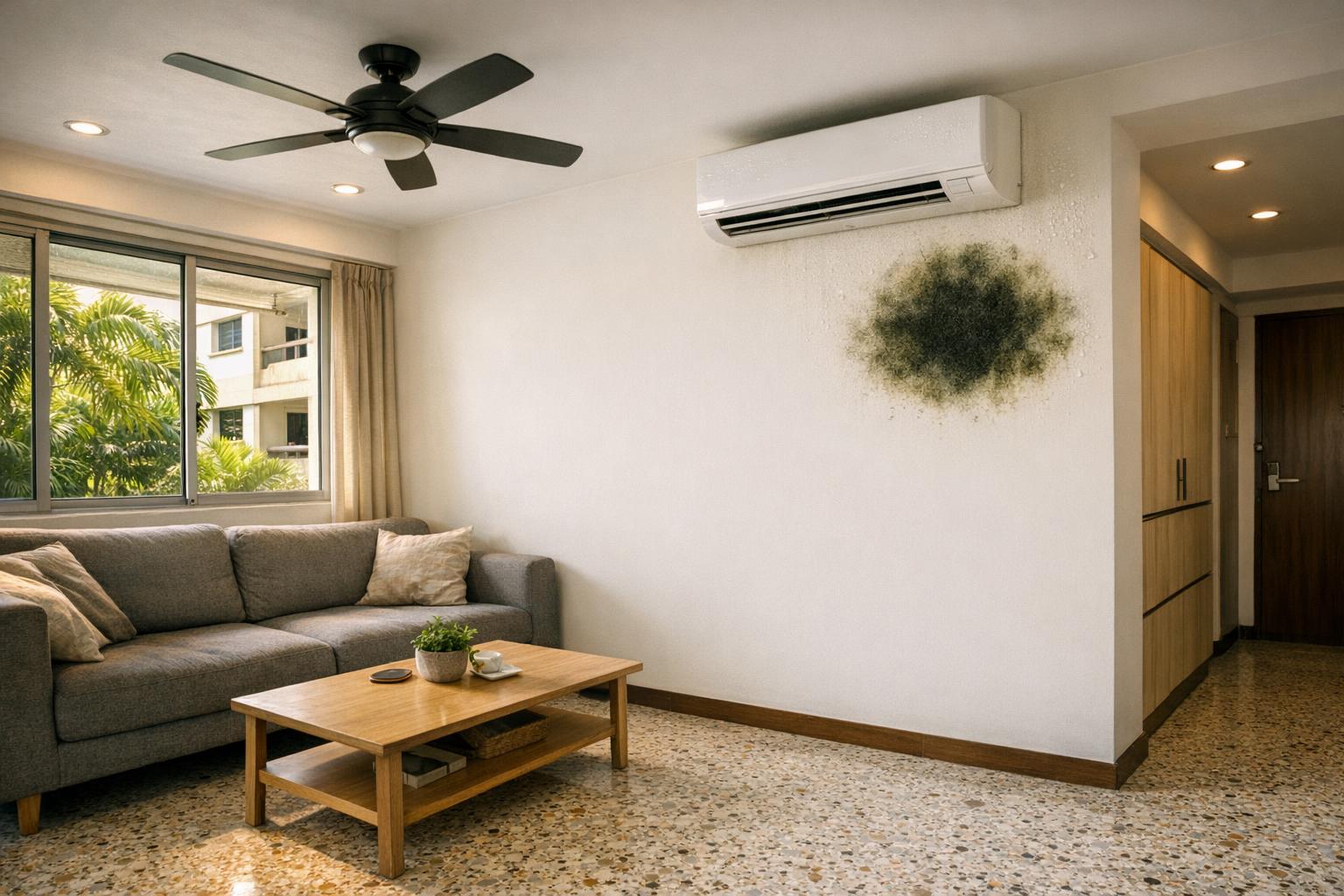
In Singapore's air-conditioned homes, the temperature difference between cool indoor air and warm humid outdoor air creates condensation on walls, windows, and inside wardrobes. This is why mold frequently appears near air conditioning units and on walls facing the building exterior — even in homes that appear perfectly dry.
The growth timeline is surprisingly fast. Once a mold spore lands on a damp surface with organic material:
- 0-4 hours: The spore absorbs moisture and begins to swell
- 4-12 hours: Germination begins — a tiny hypha emerges from the spore
- 12-24 hours: The hypha branches and begins forming a mycelium network
- 24-48 hours: Visible colony formation — the mold becomes apparent as a small coloured spot
- 48-72 hours: Spore production begins — the colony starts releasing new spores into the air
- 1-2 weeks: Mature colony — extensive growth with millions of airborne spores
Pro Tip
The key takeaway is speed. A water leak left unaddressed for just two days can result in visible mold growth. In Singapore's climate, that timeline can be even shorter — especially during the monsoon season (November to January) when humidity regularly exceeds 90%.
Suspect Mold in Your Home?
Don't wait for it to spread. Our certified inspectors can identify mold species, assess the extent of contamination, and recommend the right remediation approach — starting with a free virtual consultation.
Common Mold Types in Singapore Homes
While there are thousands of mold species, a handful are responsible for the vast majority of indoor mold problems in Singapore. Here are the ones our inspectors encounter most frequently:
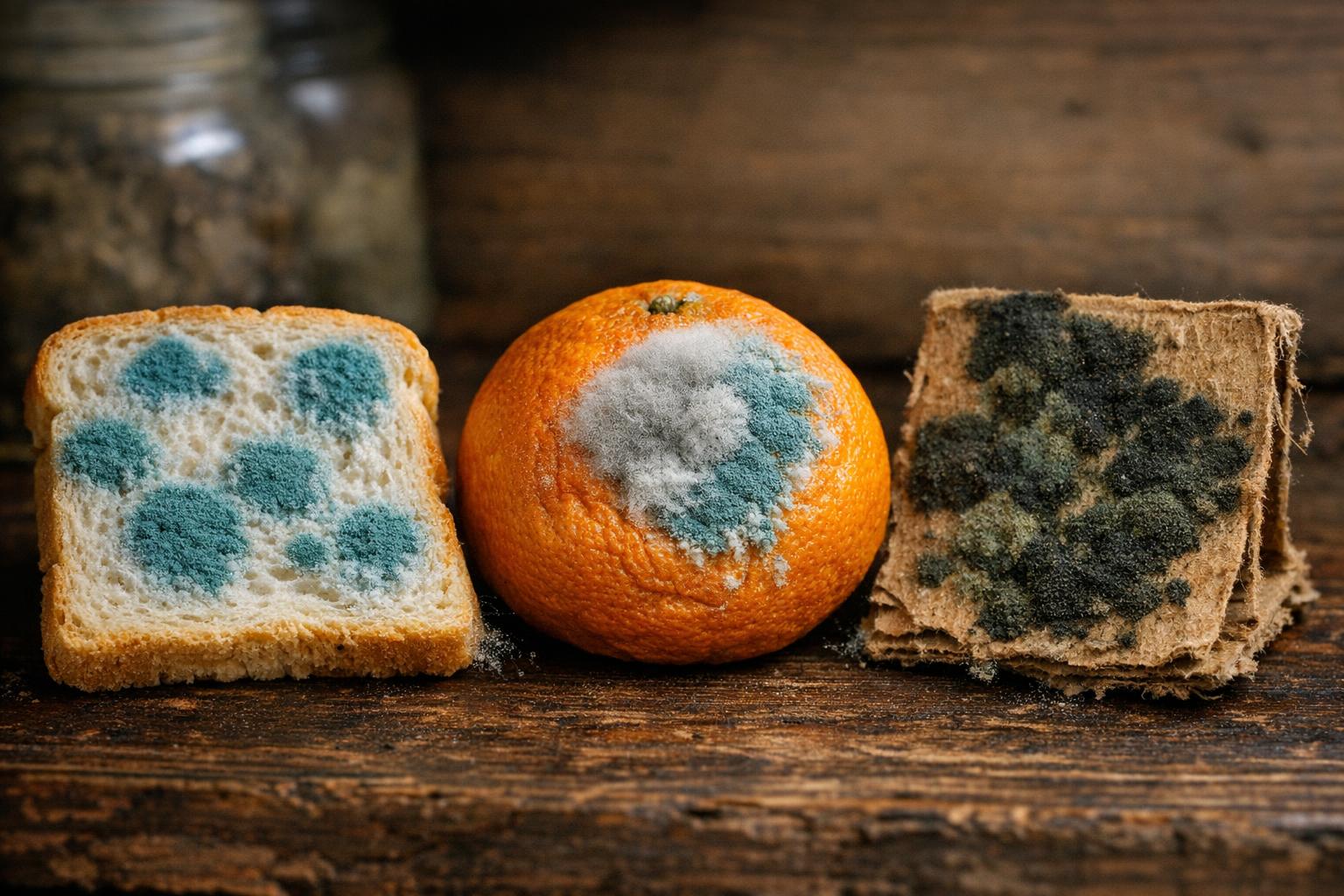
Cladosporium
Appearance: Olive-green to brown-black. Suede-like texture. Where it grows: Window frames, air conditioning units, bathroom ceilings, and fabrics. Cladosporium thrives on painted walls and is one of the most common outdoor molds that finds its way indoors. It's a frequent culprit behind the dark spots Singaporeans notice around their AC units.
Aspergillus
Appearance: Variable — green, yellow, white, or black depending on species. Powdery texture. Where it grows: Food, damp walls, air conditioning ducts, and bathroom grout. Aspergillus niger (the black variety) is the one that darkens bathroom silicone sealant. Some Aspergillus species produce mycotoxins that can cause serious health issues with prolonged exposure.
Penicillium
Appearance: Blue-green with a velvety or powdery surface. Where it grows: Behind wallpaper, inside wardrobes, on water-damaged carpet, and on leather goods. Penicillium is one of the fastest-growing indoor molds and spreads rapidly through spore dispersal. It's commonly responsible for that characteristic "musty" mold smell.
Stachybotrys chartarum (Black Mold)
Appearance: Dark greenish-black with a slimy, wet texture. Where it grows: Chronically damp areas with cellulose-rich materials — water-damaged drywall, wet cardboard, ceiling tiles after leaks. This is the infamous "toxic black mold" that produces mycotoxins. While not as common as Cladosporium or Aspergillus, it requires professional remediation when found.
Black Mold Warning
If you discover dark, slimy mold growth on chronically wet drywall or ceiling materials, do not disturb it. Disturbing Stachybotrys releases mycotoxin-laden spores into the air. Seal the room if possible and contact a professional mold remediation company immediately.
Why Singapore Is a Mold Hotspot
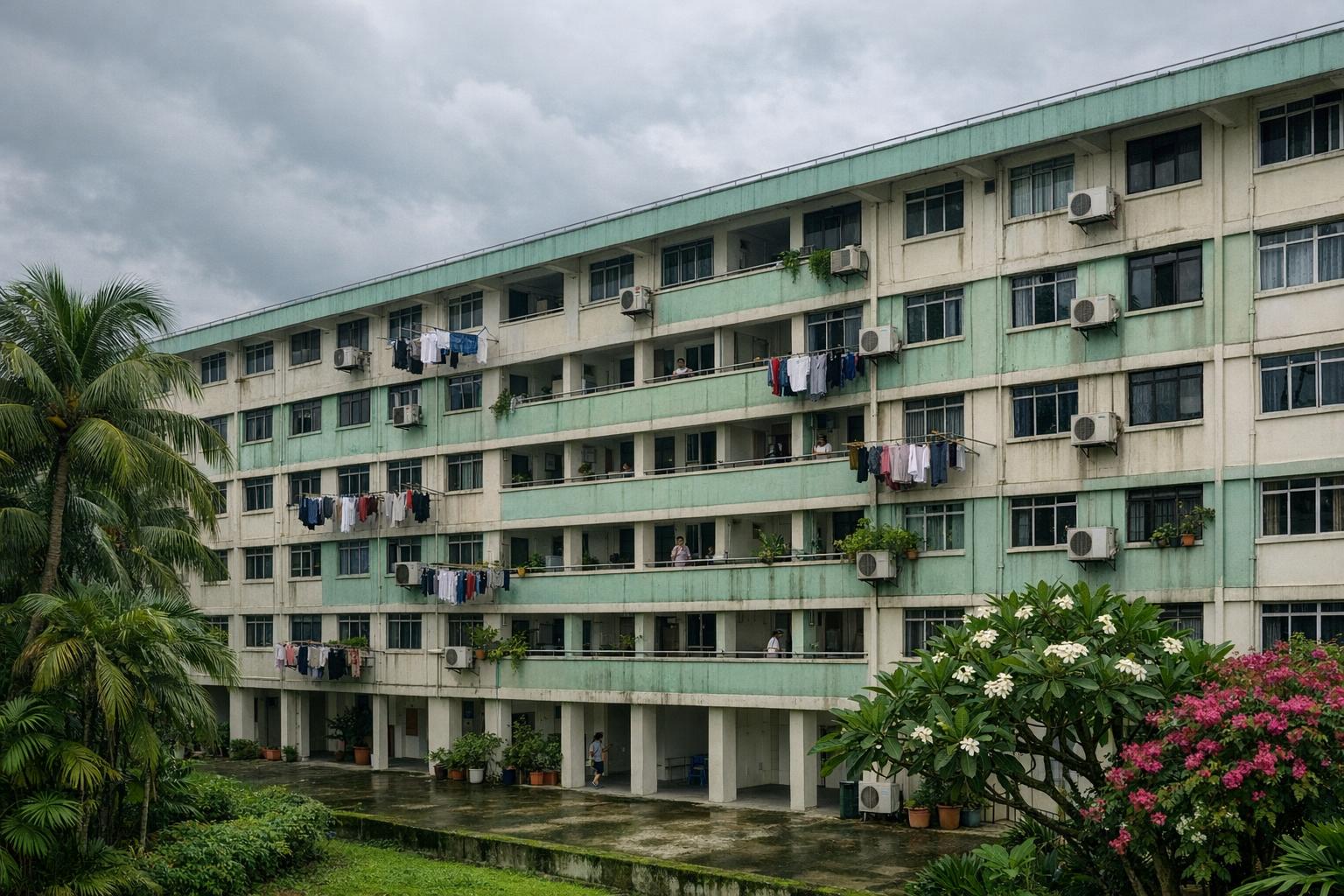
Singapore sits just 1° north of the equator with a tropical rainforest climate. This means consistently high temperatures and humidity year-round — conditions that are essentially a paradise for mold growth.
The Tropical Climate Factor
Singapore's annual average relative humidity of 84% far exceeds the 60% threshold at which mold begins to grow. During the Northeast monsoon (November-January), humidity regularly hits 90-95%.
Combined with average temperatures of 25-31°C — right in mold's optimal growth range — Singapore provides year-round growing conditions that simply don't exist in temperate climates.
The result: mold doesn't have an 'off season' here. While homes in Europe or North America might experience mold primarily in autumn and winter, Singapore homes face mold pressure 365 days a year.
84%
Average annual relative humidity
27°C
Average annual temperature
2,340mm
Average annual rainfall
365
Days per year mold can grow
The Air Conditioning Paradox
Over 90% of Singaporean households use air conditioning, which creates a unique mold dynamic. While AC reduces indoor humidity, it also creates temperature differentials between the cooled indoor air and warm outdoor air. This temperature difference causes condensation on walls, especially on exterior-facing walls and around window frames.
Additionally, AC units themselves are mold breeding grounds if not properly maintained. The evaporator coils, drip trays, and condensation lines provide exactly the conditions mold loves — constant moisture, organic debris (dust and fibres), and warm air circulation.
"In Singapore, mold isn't a seasonal problem — it's a year-round battle. The combination of tropical humidity, air conditioning condensation, and dense urban living creates conditions that demand proactive prevention, not reactive treatment."
— Mold Busters Singapore
High-Risk Areas in Singapore Homes
- Bathrooms — Constant moisture from showers, poor ventilation in windowless HDB bathrooms
- Wardrobes and closets — Enclosed spaces with poor air circulation, leather and fabric absorb moisture
- Behind furniture against exterior walls — Trapped air creates condensation zones
- Air conditioning units and surrounding walls — Temperature differentials cause condensation
- Kitchen areas — Cooking steam, under-sink moisture, food storage
- Ceiling corners — Where cool and warm air meet, creating dew point conditions
Health Risks of Mold Exposure
Mold affects health primarily through three mechanisms: airborne spore inhalation, direct skin contact, and in rare cases of toxic mold, mycotoxin exposure. The severity depends on the mold species, the duration of exposure, and individual sensitivity.
Health Effects of Mold Exposure by Category
| Category | Symptoms | Who's Most at Risk | Severity |
|---|---|---|---|
| Allergic reactions | Sneezing, runny nose, itchy eyes, skin rash, wheezing | Those with existing allergies or asthma — estimated 30% of the population | Mild to moderate |
| Respiratory issues | Persistent cough, shortness of breath, sinus congestion, throat irritation | Children, elderly, smokers, people with chronic lung conditions | Moderate |
| Asthma triggers | Wheezing, chest tightness, difficulty breathing, asthma attacks | Existing asthmatics — mold is a top 5 indoor asthma trigger | Moderate to severe |
| Mycotoxin exposure | Headaches, fatigue, nausea, cognitive difficulties, immune suppression | Anyone with prolonged exposure to toxic mold species (e.g., Stachybotrys) | Severe |
| Skin infections | Rash, dermatitis, fungal skin infections | People with compromised skin barriers, eczema sufferers | Mild to moderate |
Vulnerable Populations
Children under 5, adults over 65, pregnant women, and anyone with a weakened immune system are significantly more susceptible to mold-related health problems. If anyone in your household falls into these categories and you suspect mold, seek professional assessment promptly.
One of the challenges with mold-related health issues is that symptoms often mimic common conditions. Chronic nasal congestion might be attributed to Singapore's air quality or dust mites, when the actual cause is mold spores in the indoor environment. If symptoms improve when you leave the home and return when you come back, mold exposure should be investigated as a potential cause.
When to Take Action
Not all mold situations require professional intervention — but knowing where to draw the line is important for both your health and your property.
When to DIY vs When to Call a Professional
| Situation | Action | Why |
|---|---|---|
| Small surface mold (< 1 sq ft) on tile or glass | DIY cleaning with vinegar or commercial mold remover | Non-porous surfaces are easy to clean and mold hasn't penetrated the material |
| Mold on painted walls (< 10 sq ft) | DIY cleaning, then monitor. Consider professional inspection if it returns | May indicate a hidden moisture source that needs investigation |
| Mold covering > 10 sq ft | Professional remediation recommended | Large areas suggest systemic moisture problems and significant spore contamination |
| Black mold on drywall or ceiling | Professional remediation required | Potential mycotoxin risk — requires containment, HEPA filtration, and proper disposal |
| Mold after flooding or major water damage | Professional remediation required immediately | Water damage creates conditions for rapid, widespread mold growth within 24-48 hours |
| Recurring mold despite repeated cleaning | Professional inspection to find hidden moisture source | Recurring mold means the root cause hasn't been addressed — cleaning alone won't solve it |
| Unexplained health symptoms that improve away from home | Professional mold testing and air quality assessment | Hidden mold in wall cavities or HVAC systems can contaminate indoor air without visible signs |
Pro Tip
The general rule of thumb: if you can see it and it's small, you can probably clean it yourself. If it covers a large area, keeps coming back, or you can smell mold but can't see it — call a professional. Hidden mold behind walls or in air conditioning systems is a common problem in Singapore homes and requires specialised detection equipment.
At Mold Busters Singapore, we offer free virtual mold inspections — a quick video assessment where our certified inspectors can evaluate your situation remotely and advise on the best course of action before committing to an on-site visit. It's the easiest first step you can take.