
 John Ward
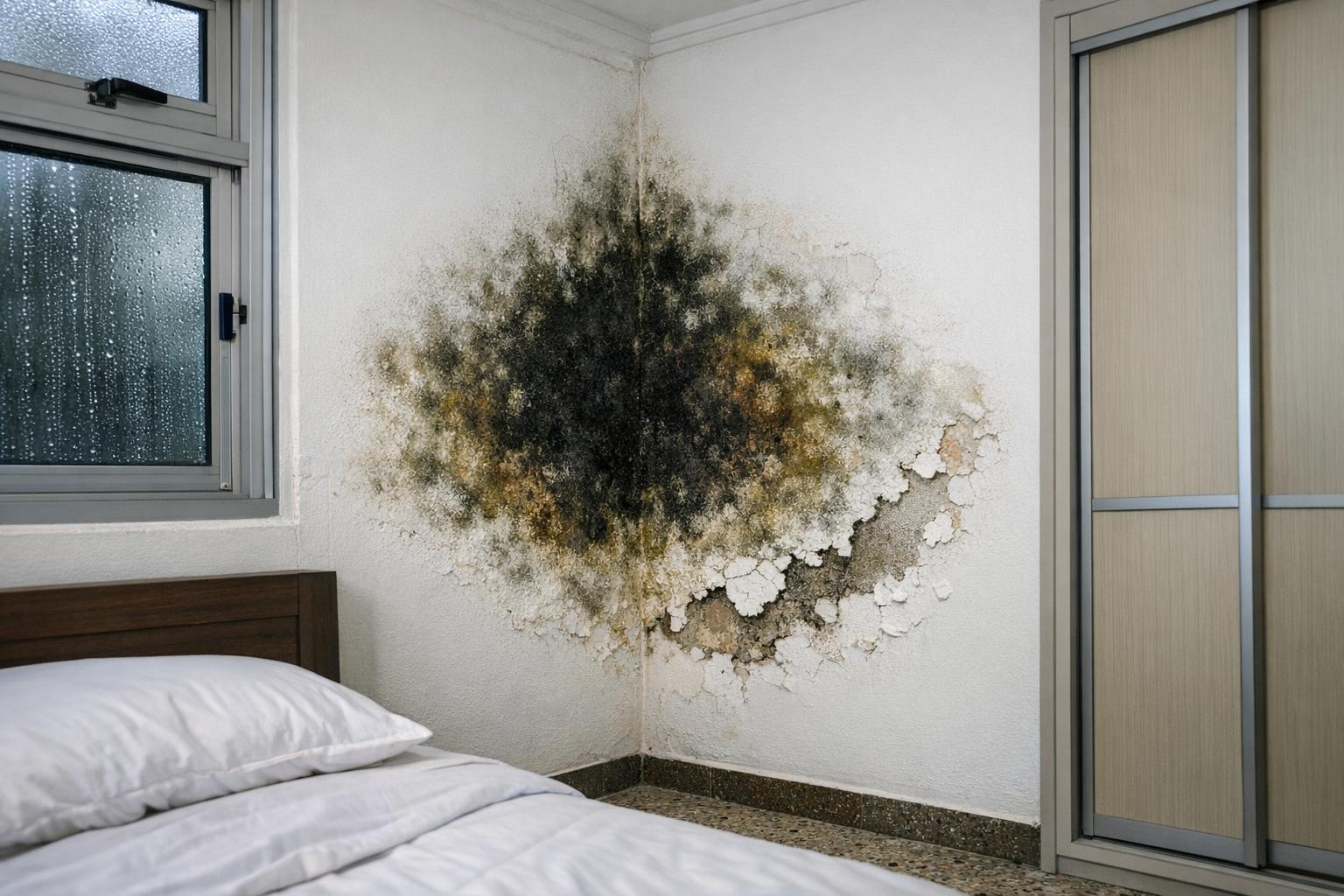
Wall mold is the single most common complaint we hear from Singapore homeowners — and after more than 15,000 inspections, we understand why. Singapore's year-round humidity of 80%+ combined with near-universal air conditioning creates a condensation cycle that turns interior walls into mold breeding grounds. Whether it's the bedroom wall behind your wardrobe or the bathroom ceiling that keeps turning black, the problem is the same: warm, moist air meeting cool surfaces.
The good news is that most wall mold in Singapore homes can be removed safely with the right approach. The bad news is that most people do it wrong — scrubbing surface mold without addressing the root cause, or worse, painting over active growth. Both approaches guarantee the mold will return, usually within weeks.
This guide walks you through the complete process: how to identify what's growing on your walls, how to remove it safely and effectively, how to handle different wall types (including HDB concrete), and most importantly, how to stop it from coming back. Every recommendation here comes from real-world experience in Singapore homes — not generic advice written for temperate climates.
Key Takeaways
- Wall mold is Singapore's #1 indoor mold problem — driven by 84% average humidity and AC condensation on walls
- Always kill mold before removing it — spraying vinegar and allowing 60 minutes of dwell time is critical for reaching the roots (hyphae)
- HDB concrete walls are non-porous, so mold typically stays on the surface — making DIY removal effective for small areas under 1 sqm
- The most common mistake: placing furniture flush against exterior walls, creating warm, humid pockets perfect for mold growth
- If mold covers more than 10 square feet or returns within 3 months, call a professional — the problem is likely behind the wall
Why Singapore Walls Are Prone to Mold
84%
Average humidity
25-31°C
Year-round temperature
80%+
Homes with AC
24-48h
Mold colonization time
Singapore's tropical climate is essentially a mold incubator. With average relative humidity sitting at 84% year-round and temperatures locked between 25°C and 31°C, the air always carries enough moisture to sustain mold growth. But humidity alone doesn't explain why walls are the primary target — that comes down to how Singaporeans cool their homes.
Here's the mechanism: your air conditioner cools indoor air to around 22-24°C, but the exterior wall surface stays closer to the outdoor temperature of 30-32°C. When warm, humid outdoor air meets the cooler interior wall surface, moisture condenses — exactly like water droplets forming on a cold glass. This condensation layer is invisible, but it provides the consistent moisture mold needs to colonize.
HDB flats present a unique challenge. Unlike homes in the US or UK that use timber-framed drywall (gypsum board), HDB walls are solid reinforced concrete. While concrete is more resistant to mold penetration, it retains thermal mass differently — exterior-facing concrete walls stay cool longer after the AC shuts off, extending the condensation window. Interior rooms and bathrooms without windows suffer from poor ventilation, trapping humid air in enclosed spaces.
The monsoon seasons amplify the problem significantly. During the Northeast monsoon (November to January) and the Southwest monsoon (June to September), humidity regularly exceeds 90%, and rainfall increases the moisture load on exterior walls. These are the peak months for wall mold complaints — and when we see the most urgent calls.
Moisture Is Always the Root Cause
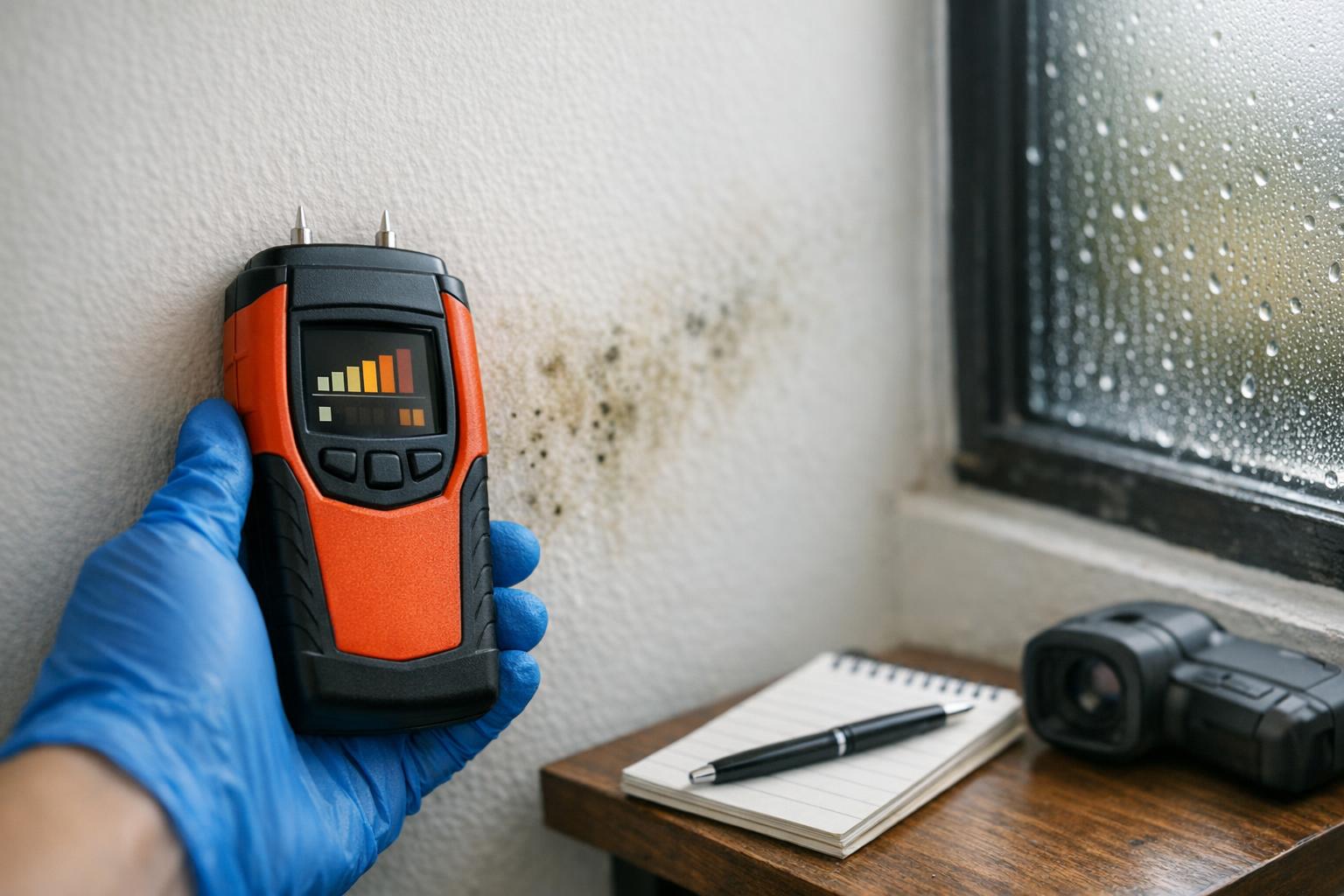
Every wall mold problem starts with moisture. The source might be condensation from air conditioning, a hidden water leak behind the wall, rising damp from the floor slab, or simply inadequate ventilation in a bathroom or kitchen.
Before you clean mold off a wall, you need to identify and fix the moisture source — otherwise you're treating a symptom, not the disease. A professional mold inspection uses thermal imaging and moisture meters to pinpoint exactly where the water is coming from.
In our experience, roughly 60% of wall mold cases in Singapore are caused by condensation alone — not leaks. That's a fixable problem.
Identifying Wall Mold: Types & Causes
Not all discoloration on walls is mold. Before you start cleaning, it's important to identify what you're dealing with. The colour of mold growth can tell you a lot about the species involved and the level of risk.
Wall Mold Identification by Color
| Color | Likely Species | Danger Level | Common Location |
|---|---|---|---|
| Black | Stachybotrys / Aspergillus niger | High | Damp walls behind furniture, chronically wet areas |
| Green | Cladosporium / Penicillium | Moderate | Bathroom walls, window frames, near AC units |
| White | Aspergillus / Penicillium | Low–Moderate | Concrete walls, ceiling corners, inside wardrobes |
| Orange-Pink | Aureobasidium | Low | Bathroom grout, shower walls, wet tile edges |
Mold vs Efflorescence: Know the Difference
One of the most common misidentifications we encounter is confusing efflorescence with white mold. Efflorescence is a white, powdery, crystalline deposit that appears on concrete and masonry walls when water carries mineral salts to the surface and evaporates. It looks similar to white mold but is not biological — it's a mineral deposit. The simple test: wipe it with a damp cloth. Efflorescence dissolves in water; mold doesn't. Efflorescence feels gritty and crystalline; mold feels fuzzy or slimy.
Don't Ignore Small Patches
A mold colony can double in size every 24 to 48 hours under Singapore's humidity conditions. That small spot behind your bedside table can become a full-wall problem within two weeks. Early intervention is always easier, cheaper, and safer than dealing with established growth.
What Causes Wall Mold?
Wall mold in Singapore homes typically stems from one or more of these sources:
- Condensation from air conditioning — the #1 cause, especially on exterior-facing walls
- Water leaks — from plumbing within walls, roof leaks, or failed waterproofing in bathrooms
- Poor ventilation — windowless bathrooms and interior rooms with no cross-ventilation
- Blocked drains — backed-up bathroom or balcony drains creating persistent dampness
- Rising damp — moisture wicking up from ground-level slabs in older HDB blocks
- Furniture against walls — restricting airflow and trapping warm, humid air pockets
Step-by-Step Wall Mold Removal
This method covers safe removal for small to moderate wall mold (under 1 sqm / 10 sq ft). For larger areas, professional mold remediation is strongly recommended.
Safety First: PPE Is Non-Negotiable
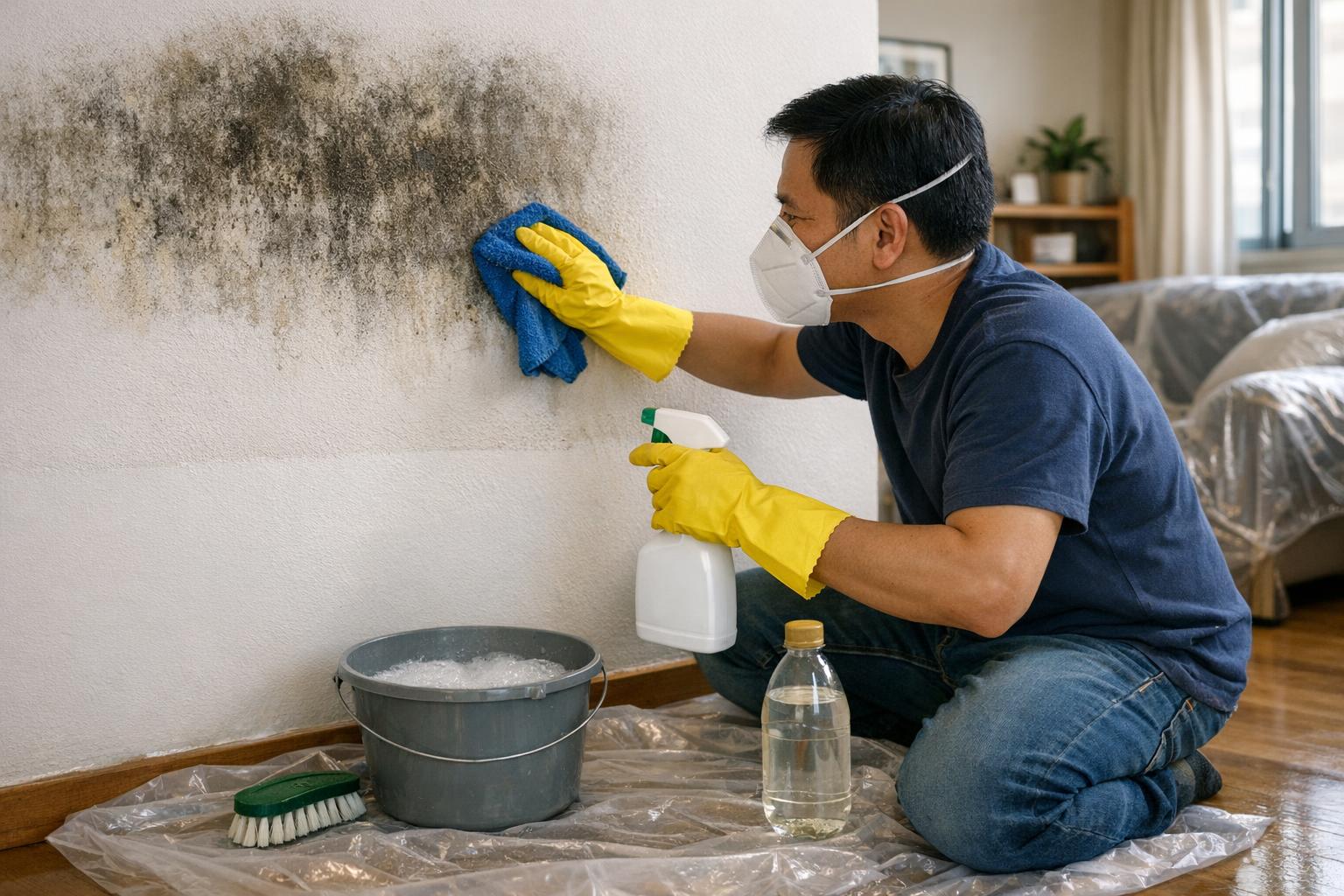
Disturbing mold releases concentrated spores into the air. Without proper protection, you'll inhale spores at many times the normal background level. At minimum: N95 respirator mask, safety goggles (sealed, not open-frame), and rubber gloves. For areas approaching 1 sqm, add a disposable Tyvek suit.
Prepare the area
Lay plastic sheeting (drop cloths) on the floor beneath the affected wall. Seal any vents or doorways leading to other rooms with painter's tape and plastic to prevent spore migration. Remove furniture, curtains, and personal items from the affected wall. Open windows in the room for ventilation — you want fresh air flowing while you work.
Put on protective equipment
N95 respirator mask (standard dust masks are not sufficient — mold spores are 1-30 microns and pass through basic masks). Sealed safety goggles to protect eyes from spores and cleaning solution spray. Rubber or nitrile gloves extending past the wrist. For larger areas approaching 1 sqm, wear a disposable Tyvek coverall suit.
Apply cleaning solution
For small areas (under 0.5 sqm): spray undiluted white vinegar directly onto the mold. Vinegar kills approximately 82% of mold species. For moderate areas: use a commercial mold remover such as Magiclean Mold Remover or Concrobium Mold Control, available at most Singapore hardware stores. For large areas exceeding 1 sqm: stop and call a professional — disturbing large mold colonies without proper containment spreads contamination.
Let the solution work
This is the critical step most people skip. Wait a minimum of 60 minutes after applying the cleaning solution. Do not scrub immediately. The solution needs dwell time to penetrate the paint surface and reach the mold's root structure (hyphae), which extends into the substrate beneath the visible growth. For heavily affected areas, allow up to 2 hours.
Scrub and clean
Using a stiff nylon-bristled brush (not wire — wire damages paint and concrete), scrub the affected area in circular motions. Work from the outside edges inward to avoid spreading spores to clean areas. Rinse your brush frequently in clean water. Wipe the cleaned surface with a damp microfiber cloth to remove loosened mold residue. If staining remains after the first pass, reapply the cleaning solution and repeat.
Dry the wall completely
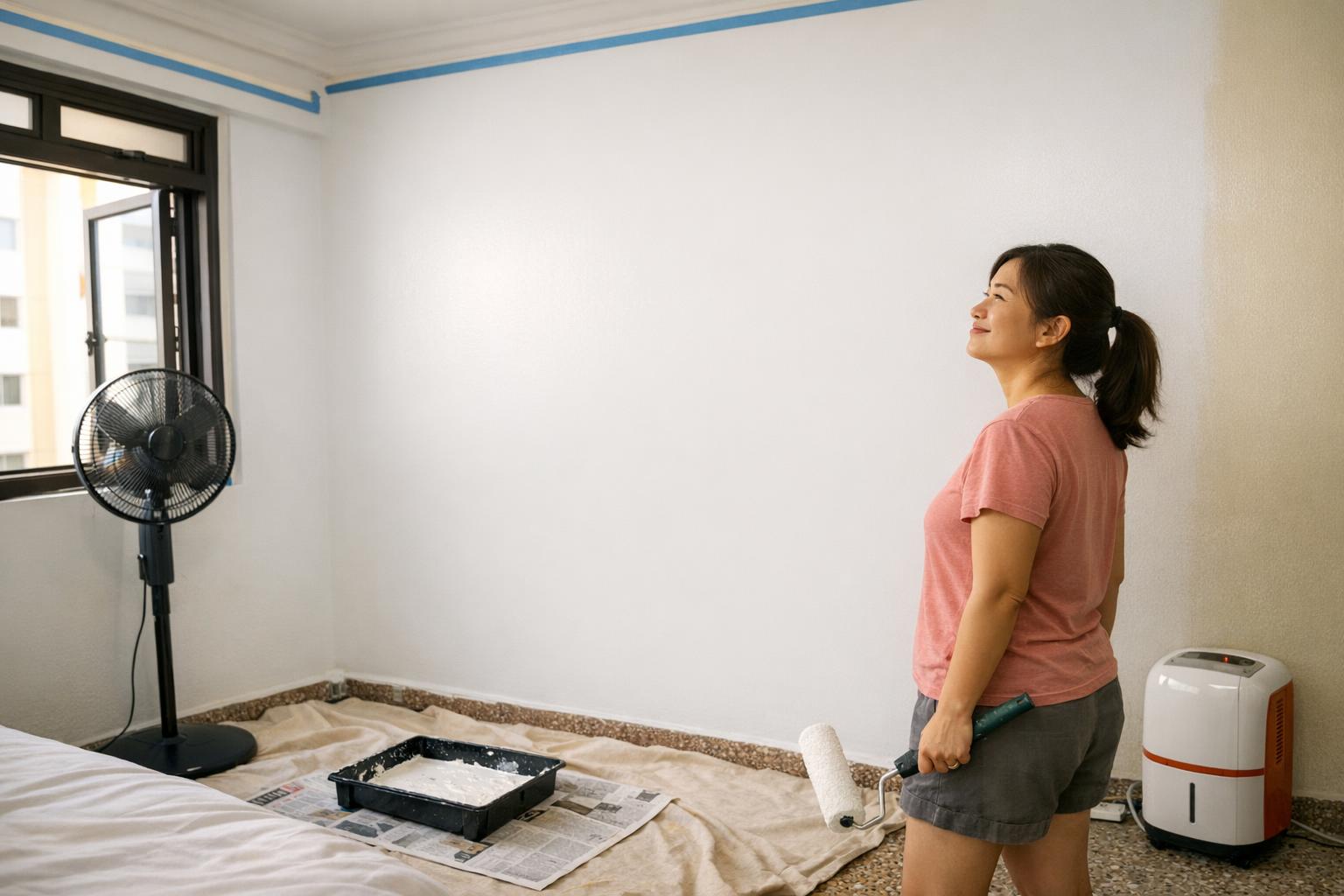
Position a fan to blow air across the cleaned wall surface. If you have a dehumidifier, run it in the room with the door closed. The wall must be completely dry before any painting or priming — residual moisture trapped under paint will guarantee mold returns. Allow 24 to 48 hours of drying time, depending on the wall type and room ventilation.
Apply anti-mold primer and repaint
Once the wall is bone-dry, apply a mold-killing primer such as Zinsser Mold Killing Primer or Nippon Odour-less Anti-Mold Ceiling White as a base coat. Allow the primer to cure fully per manufacturer instructions (typically 2 hours). Follow with a moisture-resistant topcoat — Nippon Odour-less Anti-Mold or Dulux EasyClean Anti-Mould are widely available in Singapore and formulated for tropical conditions.
Pro Tip
From our experience: the most common mistake we see is skipping Step 4 (dwell time). After 15,000+ inspections, we can tell you that the vast majority of homeowners who report 'mold came back after cleaning' sprayed and scrubbed immediately. Surface scrubbing only removes what you can see — the hyphae (root structures) penetrate into the paint film and substrate beneath. You need chemical soak time to kill the organism at its roots. Sixty minutes is the minimum; two hours is better for established growth.
Wall Mold Spreading?
Don't let a small patch become a full-wall problem. Our certified team can assess your situation with a free virtual inspection — no visit needed.
Wall Type Guide: Painted, Concrete & Wallpaper
Different wall surfaces require different cleaning approaches. What works on glossy bathroom tiles won't work on bare concrete, and wallpaper presents its own set of challenges. Here's what to do for each wall type commonly found in Singapore homes.
Mold Removal Methods by Wall Type
| Wall Type | Cleaning Method | Difficulty | Can You DIY? | Notes |
|---|---|---|---|---|
| Painted (emulsion) | Vinegar spray + scrub | Easy | Yes | Repaint with anti-mold paint after cleaning and drying |
| Painted (gloss/semi-gloss) | Bleach solution or commercial spray | Easy | Yes | Non-porous surface responds well to treatment |
| Bare concrete (HDB) | Vinegar + baking soda paste | Moderate | Yes for small areas | Concrete absorbs mold deeper — may need multiple treatments |
| Wallpaper | Remove affected sections entirely | Difficult | Yes if small area | Mold grows between wallpaper and wall — cleaning the surface doesn't reach it |
| Textured paint (e.g. artex) | Professional remediation recommended | Difficult | No | Texture traps mold spores in crevices that cannot be fully cleaned |
Special Note: HDB Concrete Walls
Most HDB flats have painted concrete walls — not the timber-framed drywall (gypsum board) common in US, UK, and Australian homes. This is actually good news for mold removal. Concrete is non-porous, which means mold typically stays on the surface or within the paint film rather than penetrating deep into the wall structure. Surface-level mold on HDB concrete walls can usually be cleaned effectively with the vinegar method described above.
However, if the concrete has cracks, spalling (surface deterioration), or if the wall has been water-damaged for an extended period, mold can establish itself within the damaged concrete matrix. In these cases, DIY cleaning may not reach all the growth, and professional remediation with specialized equipment may be needed.
For wallpapered walls, there's no shortcut — the wallpaper must come off. Mold grows on the adhesive between the wallpaper and the wall surface, so cleaning the visible surface accomplishes nothing. Remove the affected wallpaper sections, clean the exposed wall underneath using the step-by-step method above, let it dry completely, then re-wallpaper with a mold-resistant adhesive. For a deeper dive into cleaning solutions, see our guide to the best mold removers and sprays available in Singapore.
Preventing Mold from Returning
Removing mold is only half the battle. If you don't address the conditions that caused it, the mold will return — often within weeks. Prevention in Singapore's climate requires an ongoing strategy, not a one-time fix.
- Keep indoor humidity below 60% — Use a dehumidifier, especially during monsoon season. Set it to 50-55% RH for optimal comfort and mold prevention.
- Run AC in "dry" mode — During the monsoon season, running your AC in dry/dehumidify mode removes moisture from the air more effectively than cooling mode alone.
- Keep furniture 5-10cm away from exterior walls — This allows air circulation behind furniture and prevents the warm, stagnant air pockets where mold thrives.
- Use anti-mold paint — Products like Nippon Odour-less Anti-Mold and Dulux EasyClean Anti-Mould contain fungicidal additives that inhibit mold growth on the painted surface.
- Improve ventilation — Install or upgrade exhaust fans in bathrooms. Open windows during drier periods to promote cross-ventilation. Consider a mechanical ventilation system for interior rooms.
- Check for water leaks regularly — Inspect under sinks, around toilet bases, and along bathroom/kitchen wall joints for signs of slow leaks or failed waterproofing.
- Service your AC regularly — Dirty AC units with clogged filters and blocked drains increase indoor humidity and can themselves become mold sources. Service every 3-4 months in Singapore.
Pro Tip
From our experience: the single most effective prevention measure for Singapore homes is keeping furniture at least 10cm from exterior walls. We've inspected thousands of HDB bedrooms where the bed headboard was flush against the wall — creating a warm, still, humid pocket that's perfect for mold colonization. In one memorable case, a family had cleaned wall mold five times in a year before we visited. The fix? Moving the bed 10cm away from the wall. Eighteen months later, no recurrence. It's a counterintuitive finding — the mold wasn't caused by a leak or a building defect. It was caused by a bed.
For a comprehensive prevention strategy tailored to Singapore's climate, including our recommendations for dehumidifiers and indoor air quality testing, consult with our team. Understanding the difference between mould and mold terminology can also help when researching prevention products from different regions.
When Wall Mold Means a Bigger Problem
Most small wall mold patches in Singapore homes can be handled with the DIY approach above. But certain situations require professional expertise, specialized equipment, and proper containment protocols. Here's when to stop cleaning and start calling.
- The affected area exceeds 10 square feet (~1 sqm) — At this scale, disturbance releases dangerous quantities of spores. Professional remediation uses HEPA-filtered negative air pressure to contain contamination.
- Mold returns within 3 months despite thorough cleaning — Recurring mold means an unresolved moisture source: a hidden pipe leak, failed waterproofing, or a structural condensation problem that won't fix itself.
- You can smell mold but can't see it — A persistent musty odour without visible growth usually means mold is growing behind the wall, under flooring, or inside the AC ductwork. This requires professional inspection with thermal imaging and moisture meters.
- Structural damage is visible — Bubbling, peeling, or crumbling wall surfaces indicate prolonged moisture damage. The wall substrate itself may be compromised and need repair, not just cleaning.
- Health symptoms in household members — Persistent coughing, sneezing, headaches, or respiratory issues that improve when away from home suggest significant mold exposure. Consider professional air quality testing to measure airborne spore concentrations.
Large Mold Colonies: Do Not Disturb
Never attempt to remove mold that covers more than 10 square feet without professional help. Disturbing large mold colonies releases massive quantities of spores — potentially millions per square foot — that can spread contamination to other rooms through your home's ventilation system. Professional remediation uses containment barriers and HEPA air scrubbers to prevent cross-contamination.
At Mold Busters Singapore, our remediation process follows international IICRC S520 standards and includes containment, HEPA air filtration, antimicrobial treatment, and post-remediation verification testing. We're ACAC-certified and back every job with our satisfaction guarantee.
Frequently Asked Questions
Can I just paint over mold on walls?
What causes mold on walls in Singapore?
How long does it take to remove mold from walls?
Is wall mold dangerous?
What is the best anti-mold paint for walls in Singapore?
How do I stop mold from coming back on my walls?
Need Professional Help?
Whether it's a stubborn patch that keeps returning or a full-wall mold problem, our ACAC-certified team has resolved over 15,000 mold cases across Singapore. Start with a free virtual inspection to get expert advice — no commitment required.